Tag Archives: american revolution

The Road to Yorktown: How the Southern Campaign Won the Revolution

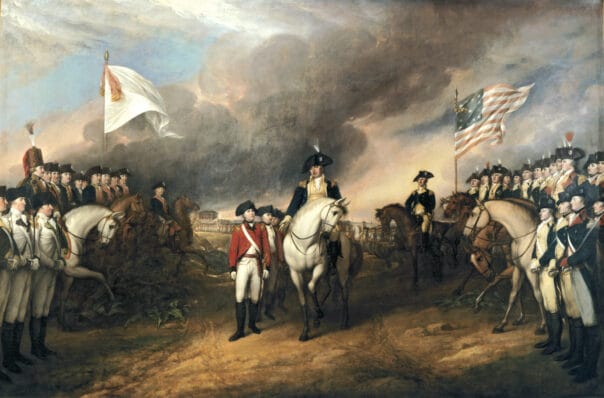
When Americans think of the Revolutionary War, they often picture Lexington and Concord, Valley Forge, or Washington crossing the Delaware, (all stories I have covered earlier in this series). Yet the road to independence did not end in New England. It ended hundreds of miles to the south at Yorktown, Virginia.

The final victory at Yorktown in October 1781 was not the result of a single battle. Instead, it was the culmination of a long and grueling Southern Campaign that slowly wore down British forces and changed the course of the war.

By 1778, Britain had shifted its focus to the southern colonies. British leaders believed they would find large numbers of Loyalists willing to support the Crown in Georgia and the Carolinas. Capturing the South, they hoped, would isolate the rebellious northern colonies and restore royal control.

Initially, the strategy seemed successful.

The British captured Savannah in 1778 and Charleston in 1780. Charleston’s surrender was one of the worst American defeats of the war. Thousands of Patriot soldiers were taken prisoner, and British General Charles Cornwallis appeared poised to restore British authority throughout the South. Then the tide began to turn.

Kings Mountain: The First Blow

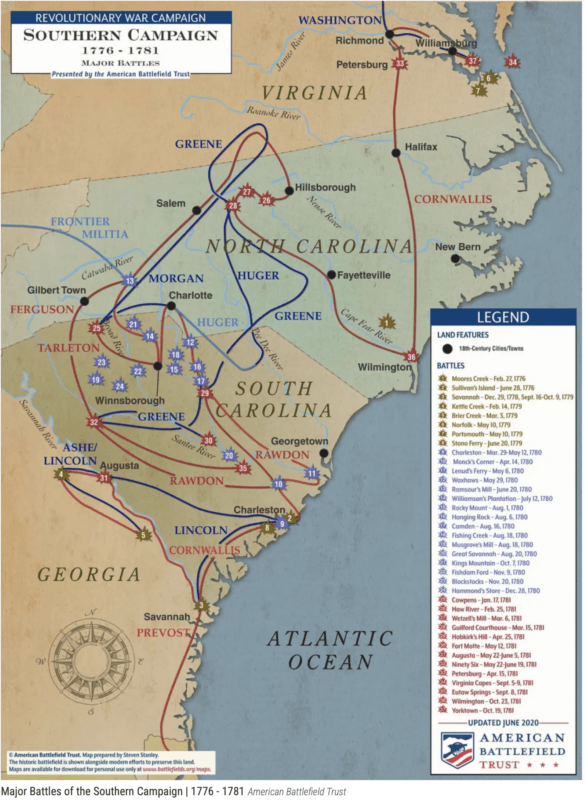
In October 1780, Patriot militia from the frontier settlements gathered at what is now known as the Overmountain Victory National Historic Trail. These rugged backcountry fighters crossed the Appalachian Mountains and pursued Loyalist forces under Major Patrick Ferguson.

At Kings Mountain, on the border of North and South Carolina, the Patriots surrounded Ferguson’s force and won a decisive victory. Ferguson was killed, and more than 1,000 Loyalists were captured, killed, or wounded.

Thomas Jefferson later called Kings Mountain “the turn of the tide of success.” The victory shattered British hopes of raising large numbers of Loyalist supporters in the Carolina backcountry.

Cowpens: A Tactical Masterpiece

Three months later, another Patriot victory further weakened British control.

At Cowpens, South Carolina, General Daniel Morgan devised one of the most brilliant battle plans of the Revolution. He arranged his militia and Continental troops in successive lines, carefully anticipating how the British would attack.

The plan worked perfectly. British commander Banastre Tarleton’s forces were routed. More than 800 British soldiers were killed, wounded, or captured.

Cowpens not only damaged British military strength but also boosted Patriot morale throughout the South.

The Race to the Dan

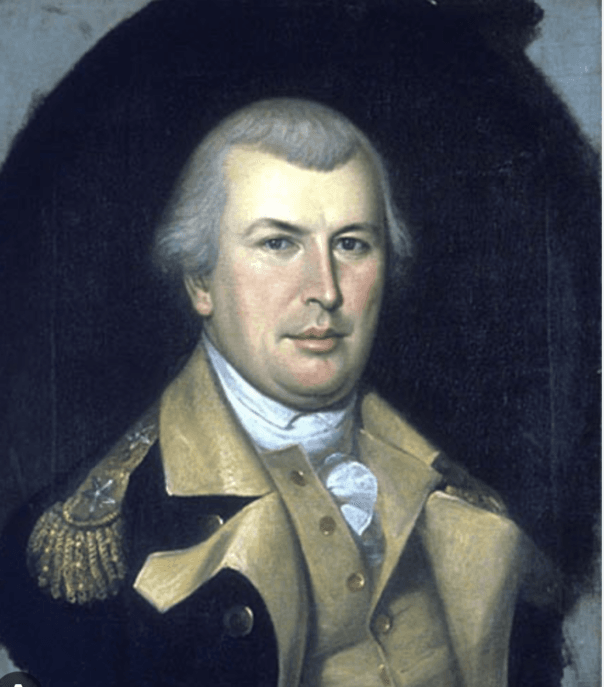
General Nathanael Greene

After Cowpens, General Nathanael Greene faced a difficult challenge. His army was smaller and less experienced than Cornwallis’s veteran troops. Rather than risk destruction in a major battle, Greene chose a strategy of movement and endurance.

For weeks, Patriot forces retreated across North Carolina while Cornwallis pursued them. The campaign became known as the Race to the Dan.

Greene successfully crossed Virginia’s Dan River and escaped. Cornwallis had failed to destroy the American army. Greene then turned and marched south again.

Guilford Courthouse: A Costly Victory

In March 1781, Greene confronted Cornwallis at Guilford Courthouse in present-day Greensboro, North Carolina. The British won the battle and held the field at day’s end. On paper, it appeared to be a British victory.

But the cost was enormous.More than a quarter of Cornwallis’s army became casualties. The British could not easily replace experienced soldiers operating far from their bases.

Greene’s army remained intact. The battle demonstrated a critical truth: Cornwallis could win battles and still lose the campaign.

The Long Fight for the South

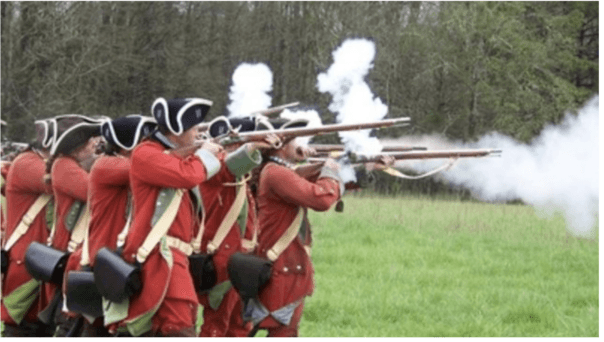
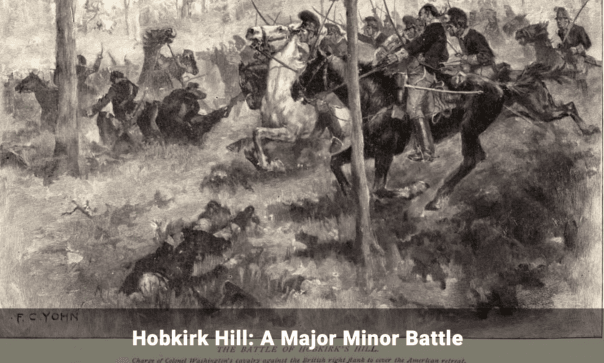
Photo from Journal of the American revolution

Greene continued to pressure British forces throughout the Carolinas.

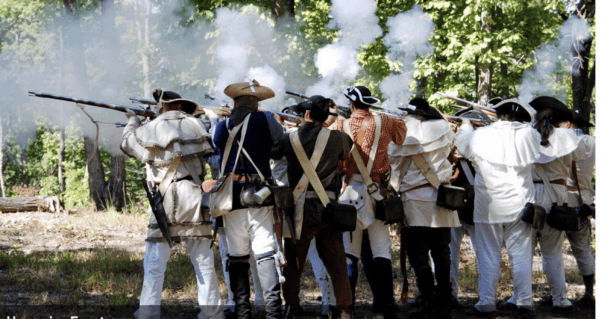
At Hobkirk’s Hill, Ninety Six, and Eutaw Springs, Patriot troops repeatedly challenged British positions. Although Greene did not win every engagement, he forced the British to expend men, supplies, and energy simply to hold territory.

British forces gradually abandoned much of the interior South and retreated toward coastal strongholds.

The Southern Campaign became a war of attrition.Greene later summarized his strategy:

“We fight, get beat, rise, and fight again.”

His persistence slowly achieved what dramatic victories alone could not.

Cornwallis Moves North

Unable to secure the Carolinas, Cornwallis shifted his attention to Virginia.

The decision marked a turning point in the war. British forces had captured major southern cities and won several battles, yet they had failed to crush the Patriot cause. Nathanael Greene’s relentless campaign had steadily weakened British control of the countryside and forced Cornwallis to seek a new strategy.

By the summer of 1781, the war’s center of gravity was moving north.

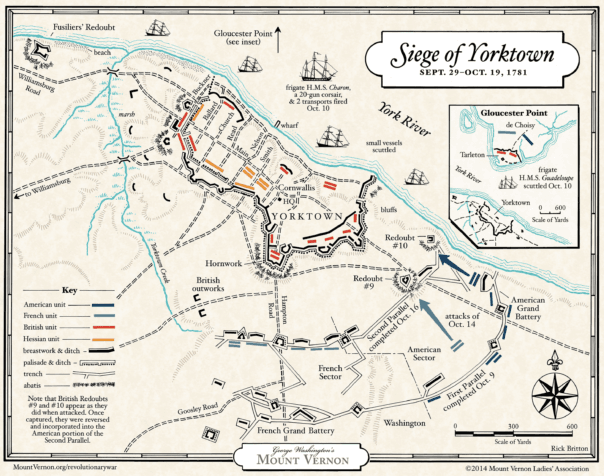
Cornwallis marched into Virginia, believing he could establish a secure base and continue British operations. Instead, he was heading toward a place that would become synonymous with the end of the Revolutionary War.

The Southern Campaign had accomplished its purpose. Through persistence, sacrifice, and a series of hard-fought victories, Patriot forces had worn down one of Britain’s finest armies and pushed the war toward its final chapter.

The road to Yorktown had begun.

Next in the America 250 series: Yorktown – The Victory That Won Independence.

Hikers may enjoy the Overmountain Victory Trail: Stretching 330-miles through four states (Virginia, Tennessee, North and South Carolina) the Overmountain Victory National Historic Trail traces the route used by Patriot militia during the pivotal Kings Mountain campaign of 1780. Follow their campaign by utilizing a Commemorative Motor Route along existing state highways marked with the distinctive trail logo, or 80+ miles of walkable trail.

Cowpens: The Battle That Turned the Tide in the South

Bylandersea America 250: Exploring the Road to Revolution

In the wake of the stunning Patriot victory at Battle of Kings Mountain, the momentum in the Southern Campaign began to shift. But it was at a quiet pastureland in South Carolina—an unassuming place called Cowpens, where that shift became undeniable.

On January 17, 1781, American forces under Daniel Morgan faced the aggressive British commander Banastre Tarleton. What followed was one of the most brilliantly executed tactical victories of the entire Revolutionary War.

Morgan knew his opponent well. Tarleton was bold, fast, and often reckless. Instead of meeting force with force, Morgan designed a clever plan that used terrain, timing, and psychology to outmaneuver the British.

He arranged his troops in three lines. First, sharpshooters. Then militia. Finally, his most reliable Continental soldiers. Each group had a role—and an escape plan. The militia were instructed to fire a few volleys and then retreat, creating the illusion of collapse.

It worked.

Tarleton, believing the Americans were fleeing, charged headlong into the trap. As British troops surged forward, they met disciplined resistance from the Continentals. At the same time, Patriot cavalry under William Washington swept around the flank.

Within an hour, the battle was over.

The result was staggering. The British suffered heavy losses, and Tarleton’s feared legion was effectively destroyed. Even more importantly, Cowpens weakened British control in the South and set the stage for the campaign that would lead to Yorktown.


Visiting Cowpens Today

Today, the Cowpens National Battlefield preserves this pivotal site with a sense of quiet reverence. Unlike larger, more crowded historic parks, Cowpens feels open and contemplative—much like it must have in 1781.

A walking trail loops through the battlefield, marked with interpretive signs that help you follow the action step by step. As you stand in the fields, it’s easy to imagine the unfolding strategy—militia falling back, British advancing, and the sudden turning of the tide.

The visitor center offers exhibits that explain the battle in detail, along with artifacts and a short film that brings the story to life.

For photographers, the soft light of morning or late afternoon adds depth and mood to the rolling landscape. It’s a place where history and atmosphere meet.


Why Cowpens Matters

Cowpens wasn’t just a victory—it was a masterclass in leadership and strategy. Morgan’s tactics are still studied in military academies today.

More importantly, the battle restored confidence to the Patriot cause in the South. Following defeats and uncertainty, Cowpens proved that the Continental Army could outthink and outfight the British.

Together with Kings Mountain, it marked the beginning of the end for British dominance in the region.


A Note for Outlander Fans

Fans of Outlander may find this chapter of the Southern Campaign especially compelling. The series touches on the complexities of loyalty, militia warfare, and frontier battles much like those fought here.

Cowpens offers a real-world glimpse into that turbulent time—where neighbors took sides, and the fate of a nation hung in the balance.


Planning Your Visit

US Monument and Visitor Center at Cowpens.

Cowpens National Battlefield

  • Location: Near Chesnee, South Carolina
  • Managed by the National Park Service
  • Allow 1–2 hours to explore
  • Combine with nearby Revolutionary War sites for a full day of history travel

Part of the Series

This article is part of my ongoing series:
Bylandersea America 250: Exploring the Road to Revolution

From Boston to the Delaware: When the Revolution Nearly Died and Was Reborn

By Debi Lander

By the spring of 1776, the rebellion that had begun in the fields of Lexington and Concord finally forced the British out of Boston. For eleven months, the city had been trapped in a slow, grinding standoff known as the Siege of Boston, while George Washington’s newly formed Continental Army surrounded it from the hills beyond.

The turning point came in the dead of winter when Henry Knox, a young bookseller turned artillery officer, accomplished what many believed impossible. He hauled fifty-nine heavy cannons and mortars from Fort Ticonderoga across frozen rivers, mountains, and snow-covered wilderness. When the guns arrived outside Boston, Washington wasted no time.

On the night of March 4, 1776, American troops silently dragged Knox’s cannon up Dorchester Heights, overlooking the city and the British fleet. At dawn, General William Howe looked out and saw the heights bristling with artillery. The position was so strong that an assault would have been catastrophic. On March 17, 1776, the British evacuated Boston.

The Revolution had its first great victory.

But victory did not mean security.


The War Moves to New York

With Boston lost, British commanders shifted their focus. They would take New York City, whose deep harbor and strategic position made it the most important military prize in North America.

By summer, the largest British armada ever assembled filled New York Harbor. Washington rushed his army south, but his forces were untested and inexperienced. The result was disaster.

In August 1776, the Battle of Long Island ended in crushing defeat. Washington’s army barely escaped annihilation, slipping away under cover of darkness and fog. What followed was a long, exhausting retreat across Manhattan and New Jersey.

Men deserted. Supplies vanished. Morale collapsed.

By December, the Continental Army was on the brink of extinction.


A Desperate Gamble

Washington knew he had one last chance.

Washington Crossing the Delaware by Emanuel Leutze

Across the icy Delaware River, in the small town of Trenton, a force of Hessian soldiers slept in their winter quarters. Washington decided to strike on Christmas night.

Snow fell. The wind howled. Ice floes smashed against the boats as soldiers ferried cannon, horses, and men across the freezing river. Many marched barefoot, leaving blood on the snow. Muskets jammed. Powder grew wet. Some men collapsed before they reached the far shore.

Still, they marched.

In the early hours of December 26, 1776, Washington’s army descended on Trenton. The attack was swift and overwhelming. In less than an hour, nearly the entire Hessian garrison was captured.

It was not a major victory in size.
It was a victory in belief.

A week later, Washington struck again at Princeton, forcing the British to retreat from much of New Jersey. The Revolution was alive.


Why This Moment Changed Everything

The evacuation of Boston proved the British could be beaten.
The crossing of the Delaware proved the Americans would not surrender.

From the frozen trails of Henry Knox to the storm-tossed river at Trenton, the Revolution became something larger than rebellion. It became a test of endurance, sacrifice, and faith in an idea that had never before existed.

The war would grow darker still before it reached the light of independence. But on that frozen Christmas night, the American cause was saved.

Travel Guide

I sadly admit that I have not visited the New York City and New Jersey Revolutionary Sites and Museums, but I’d love to! Here’s my recommendations:

Fraunces Tavern Museum in Lower Manhattan

A must-visit for Revolutionary history in NYC. This museum preserves artifacts and tells the story of the Revolution in New York, including Washington’s farewell to his officers in 1783. For more information: frauncestavernmuseum.org

  • Revolutionary era exhibits
  • Hands-on programs and special America 250 events
  • Located in the historic Fraunces Tavern building

The New York Historical — Manhattan

While not exclusively Revolutionary, this museum houses strong collections and exhibitions related to New York’s colonial and Revolutionary history. Visit:  New-York Historical Society


Bonus Revolutionary Sites While in NYC

Even in a modern city, history survives in places and tours:

  • Historic Revolutionary Tours NYC to explore sites tied to the 1776 campaign. Check out: American Battlefield Trust
  • Brooklyn War Memorial (tribute to military service) and historical markers around the city commemorating Revolution-era events. 

Trenton, New Jersey Revolutionary History

Old Barracks Museum — Trenton

One of the finest Revolutionary War museums in New Jersey, housed in a restored 1758 military barracks used during the war. It interprets the Battle of Trenton and life during the era. Reopening March 2026.

  • British soldiers were stationed here
  • Museum tours explain the war’s impact on soldiers and civilians

Trenton Battle Monument & New Jersey State House

Nearby historic landmarks connected to Revolutionary New Jersey and its role in the fight for independence. Click Trenton Historical Society for a Self-Guided Tours of Trenton’s Revolutionary War Battlefields.


Princeton Battlefield State Park

A preserved battlefield where Washington scored a key victory shortly after Trenton. Visitors can walk the grounds where Continental soldiers advanced and British forces retreated.


Princeton Battle Monument

Princeton Battlefield Monument in Princeton, NJ depicting George Washington and his troops.  Douglas Ullman, Jr.

A towering monument commemorating the decisive Revolutionary battle in Princeton.