Category Archives: Land Adventures

The Treaty of Paris: Winning the Peace That Created a Nation

Part of the ByLanderSea America 250: Road to Revolution Series

The War Was Won—But Peace Had Yet to Be Secured

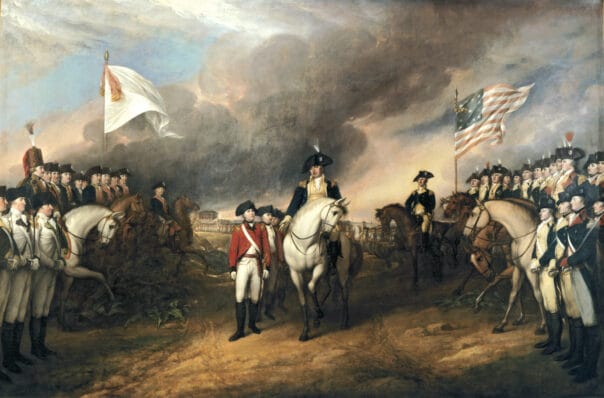
The surrender of British General Charles Cornwallis at Yorktown on October 19, 1781, marked the decisive military victory of the American Revolution. For many, the war seemed over.

Surrender of Cornwallis By John Trumbull
– http://www.aoc.gov/cc/photo-gallery/ptgs_rotunda.cfm, Public Domain, https://commons.wikimedia.org/w/index.php?curid=1379717

It wasn’t.

Although the guns had fallen silent in Virginia, Great Britain had not yet recognized the independence of its former colonies. British troops still occupied New York City, Charleston, and Savannah, and no treaty had been signed. Winning the war on the battlefield was only the beginning. Now came the equally challenging task of winning the peace.

For nearly two years, diplomats worked across the Atlantic to transform military victory into an internationally recognized nation. (I think most of us forget this piece of history.)

Diplomacy in Paris

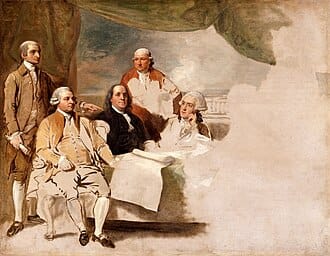
Peace negotiations began in Paris in the spring of 1782. Representing the United States were four remarkable men: Benjamin Franklin, already admired throughout France for his scientific achievements and diplomatic skill; John Adams of Massachusetts; John Jay of New York; and later Henry Laurens of South Carolina.

Benjamin West, Public domain, via Wikimedia Commons Unfinished Treaty of Paris: It shows, from left, John Jay, John Adams, Benjamin Franklin, Henry Laurens, and William Temple Franklin; the British refused to pose.

Franklin had spent years cultivating France’s friendship, securing the financial aid, military assistance, and naval support that proved essential to victory at Yorktown. Now he faced an equally difficult assignment—helping negotiate favorable terms for the new nation.

The negotiations were far from simple. Although France had been America’s indispensable ally during the war, French interests did not always align perfectly with those of the United States. John Jay became convinced the Americans would secure better terms by negotiating directly with Britain. John Adams agreed. Franklin, recognizing the importance of maintaining unity among the American commissioners, eventually supported the decision. The negotiations were delicate, sometimes tense, but ultimately successful.

A Remarkably Favorable Peace

On September 3, 1783, representatives of the United States and Great Britain signed the Treaty of Paris. Its terms exceeded nearly everyone’s expectations.

Great Britain formally recognized the independence of the United States. The new nation gained territory stretching from the Atlantic Ocean west to the Mississippi River and from Canada south to Spanish Florida. Americans retained valuable fishing rights off Newfoundland and agreed that pre-war debts would be honored. The treaty also recommended restitution for Loyalists whose property had been confiscated during the war, although enforcement varied from state to state.

Historians have often described the agreement as one of the most favorable peace treaties ever granted to a victorious former colony. The United States emerged not only independent but with abundant land and extraordinary opportunities for growth.

Yorktown had won the war. Paris secured the peace.

Following the Story Today

One of the pleasures of writing this Road to Revolution series has been visiting many of the places where history unfolded. You can see the actual document at the National Archives in Washington, D.C.

Although the treaty bears the name “Treaty of Paris,” surprisingly little marks the exact site where negotiations took place. The American commissioners met at the Hôtel d’York on Rue Jacob, where the building still stands as a private residence. During my upcoming visit to Paris, I hope to stand outside that historic address and imagine Franklin, Adams, and Jay negotiating the future of a new nation.

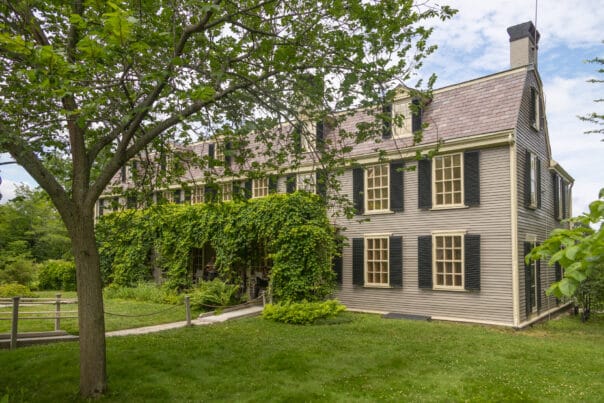
Peacefield in Quincy, Massachusetts, as I saw it in July 2025. Photo ©Bylandersea

Last summer, I visited the Adams National Historical Park in Quincy, Massachusetts, where John and Abigail Adams eventually retired after decades of public service. Their beloved home, Peacefield, reflected the quieter life Adams longed for after years spent helping build a nation through both war and diplomacy. Walking through its rooms, it was easy to forget that this peaceful gentleman had once helped negotiate one of the most significant treaties in American history.

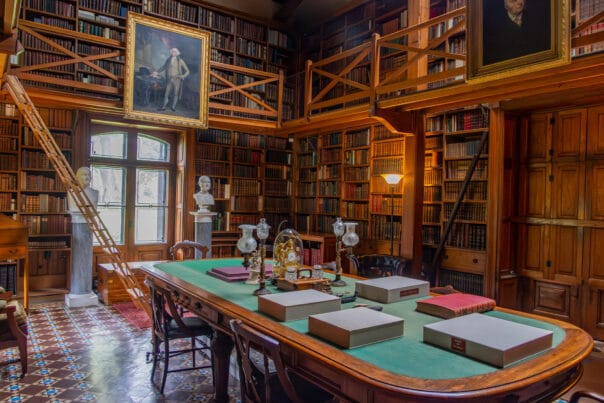
The library at Peacefield, the historic home of John Adams and his family in Quincy, Massachusetts, was built in 1870 (after his death) at the request of his son, Charles Francis Adams. The Stone Library houses thousands of volumes collected by generations of the Adams family—a remarkable reflection of one of America’s most influential political and intellectual dynasties.

History has a way of connecting places separated by hundreds of miles. I love that.

Did You Know?

Although the Treaty of Paris was signed on September 3, 1783, British troops did not evacuate New York City until November 25, 1783. Known today as Evacuation Day, the British departure marked the final withdrawal of British forces from the United States.

Looking Ahead

The Treaty of Paris formally ended the Revolutionary War and secured America’s independence. Yet one final chapter remained before the Revolution truly came to a close.

George Washington had led the Continental Army through eight long years of war. Like John Adams, he desired nothing more than to return home and resume the quiet life he had left behind. Many expected him to remain at the head of the army—or even seize political power. Instead, he performed an act that astonished the world.

He voluntarily resigned his commission, surrendered his military authority to Congress, and returned to Mount Vernon. His greatest victory did not come on the battlefield. It would come in walking away from power.

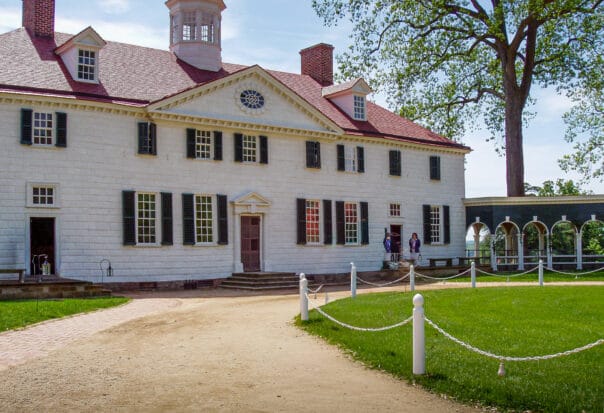
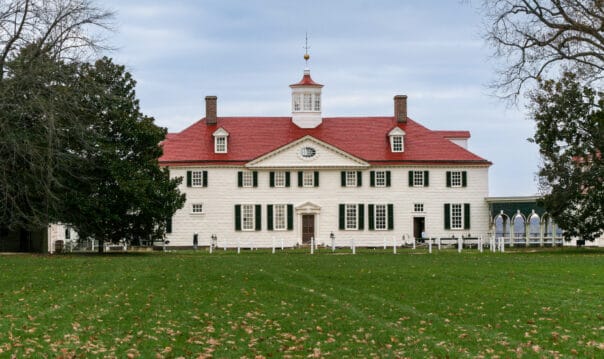
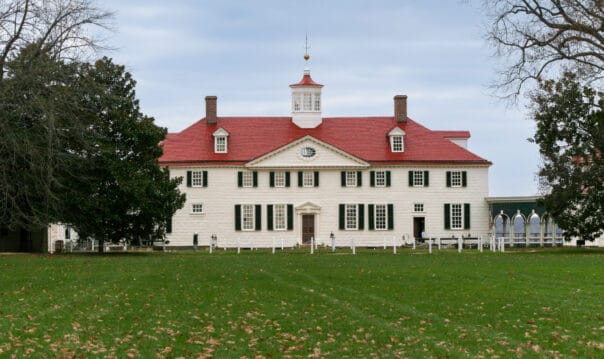
Mount Vernon, the home of George and Martha Washington in Alexandria, Virginia. Photo ©Bylandersea

In my next post,  I will take you on a tour of George and Martha Washington’s home, Mount Vernon in Alexandria, Virginia. It holds many memories as I grew up near there and have visited many times. 

Zion National Park: Beneath the Towering Cliffs

After flying into Las Vegas, I set out on a road trip to two of Utah’s most celebrated national parks—Zion and Bryce Canyon. Both had long been on my travel wish list, so I was excited to begin exploring some unforgettable landscapes.

Park entrance sign in Springdale, Utah. Photo ©Bylandersea

Established in 1919 as Utah’s first national park, Zion is a place of dramatic contrasts. Massive sandstone cliffs rise in layered shades of cream, pink, and rust, while the Virgin River threads its way through the narrow canyon below. Zion doesn’t gradually reveal itself. It surrounds you, and honestly made me gasp.

Getting there is straightforward. Most visitors fly into Harry Reid International Airport in Las Vegas, then drive approximately three hours northeast. You briefly pass through Arizona before reaching Springdale, Utah, at the park’s main entrance. The drive sets the tone as open desert gradually gives way to sculpted red-rock formations.

However, rather than driving directly from Las Vegas, I couldn’t resist spending a few hours enjoying Vegas casinos and attractions, then stopping in St. George, Utah. The late afternoon still permitted time to explore Snow Canyon State Park before an overnight stay. The next morning I toured a little of the historic downtown before continuing to Zion.

Snow Canyon State Park, St. George, Utah. Photo ©Bylandersea

Along the way, I also stopped in the lesser-visited Kolob Canyons section of Zion National Park. Many travelers bypass this northwestern corner, yet its soaring red cliffs, quieter trails and sweeping overlooks provide a very different introduction to the park. Even better, much of Kolob Canyons can be explored by car, with short walks leading to panoramic viewpoints.

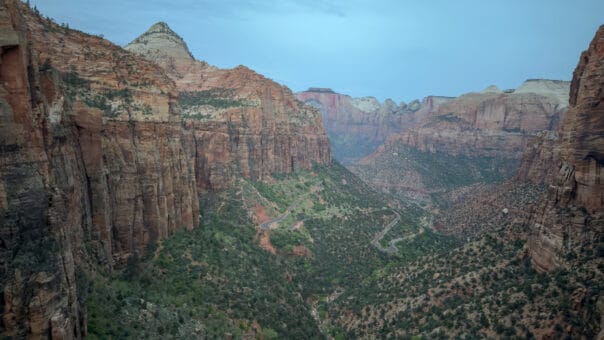
View of Kolob Canyon, a section of Zion National Park. Photo ©Bylandersea

Entering Zion Canyon

Zion’s popularity has made transportation planning an essential part of any visit. During shuttle season, private vehicles are not permitted on the Zion Canyon Scenic Drive. Instead, a free park shuttle carries visitors from the entrance and visitor center to Zion Lodge, major trailheads, and the Temple of Sinawava at the end of the canyon. The system is easy to navigate, although waits can exceed an hour during the busiest periods.

The dramatic scenic view as I was driving toward Zion Lodge on arrival. Viedo ©Bylandersea


Guests staying at Zion Lodge enjoy one significant advantage, and in my opinion, it justifies the added expense. Overnight guests receive a permit allowing them to drive as far as the lodge and park in designated guest spaces. From there, they can board the shuttle or walk to many of the park’s most popular trails.

Zion Lodge, dwarfed by the towering cliffs, and the main shuttle stop.


I stayed two nights in one of the lodge’s cozy cabins tucked beneath the soaring cliffs, just a short walk from the main lodge and its restaurants. Every time I stepped outside, I felt dwarfed by the immense canyon walls towering overhead. The setting made Zion feel less like a park I was visiting and more like a landscape I was temporarily living within. Best of all, once the day-trippers depart, the canyon becomes noticeably quieter, a privilege lodge guests come to appreciate.

The Lodge’s Cabin are the place to stay. Reserve in advance. Photo ©Bylandersea


Reservations for Zion Lodge should be made well in advance, especially during spring, summer, and fall.

Lower Emerald Pool Trail

One of Zion’s most accessible hikes begins across from the lodge. The Lower Emerald Pool Trail follows a mostly paved path beneath cottonwood trees toward a shaded alcove where water spills over the sandstone ledge above.

Into the Heart of Zion follows the gentle course of the Virgin River as it winds beneath the soaring sandstone cliffs of Zion National Park.. Photographed in Zion National Park, Utah ©Bylandersea

The waterfall varies dramatically with the season. At times it is little more than a delicate curtain of droplets; after rain or snowmelt, it becomes far more impressive. Even when the flow is modest, the walk offers a pleasant introduction to the canyon’s changing vegetation and geology.

Riverside Walk and The Narrows

At the final shuttle stop, the Riverside Walk follows the Virgin River beneath increasingly narrow canyon walls. The mostly paved trail provides shade, river views and a chance to experience Zion’s scale without tackling a strenuous climb.

Cliffs at the end of the shuttle trail before entering the Narrows. Photo Bylandersea

Where the maintained trail ends, The Narrows begins. Here, the Virgin River becomes the trail itself. Hikers wade upstream through cool water while sheer canyon walls rise on both sides. Springdale outfitters rent specialized shoes, neoprene socks and walking sticks, all of which make navigating the uneven riverbed safer and more comfortable.

Water depth, temperature and the danger of flash flooding can change quickly, so conditions should always be checked before entering.

Angels Landing

Many visitors arrive determined to hike Angels Landing, Zion’s most famous—and most intimidating trail.

The final section follows a narrow sandstone ridge with steep drop-offs on either side. Chains bolted into the rock help hikers negotiate the most exposed areas. Permits (issued through a lottery) are required for the chained section, and the hike is best suited to experienced hikers who are comfortable with heights. Don’t underestimate this one.

I was content to admire Angels Landing from below.

That may be one difference between Zion and Bryce for me. Bryce invited me to wander among its hoodoos. Zion often made me stop, look upward and wonder how anyone managed to climb those walls.

Canyon Overlook at Sunrise

The hike I most anticipated was the Canyon Overlook Trail near the east entrance.

I began before sunrise, following the beam of my headlamp along the rocky, uneven path. In darkness, every exposed edge felt more dramatic, and I questioned my decision more than once. The one-mile round-trip trail includes long drop-offs, though most are protected by railings. Parking near the trailhead is extremely limited; go early.

The Overlook trail can be intimidating, especially in the dark. Photo ©Bylander taken on my return in the daylight!


When I finally reached the overlook area, the sunrise proved less spectacular than I had hoped. The sky never erupted into color. Instead, pale morning light slowly entered the canyon, revealing layer after layer of stone. But, the return hike in daylight seemed far less frightening.

Not the sunrise I had hoped for, but the view is unforgettable and worth the effort. Photo ©Bylandersea
My last photo before returning back down the trail. Photo ©Bylandersea

The photographs may not show the sunrise I imagined, but the experience remains one of my strongest memories of Zion. Sometimes the story behind a photo matters more than the image itself.

Experiencing Zion Beyond the Trails

Not every memorable experience at Zion requires a strenuous hike. Visitors can rent e-bikes, take horseback rides, attend ranger programs, watch climbers inch their way up seemingly impossible rock faces or simply sit beside the Virgin River beneath the cottonwood trees.

Zion is not known for wildlife, but I did see a wild turkey. Photo ©Bylandersea

On a misty day, I joined an open-air tram tour that provided historical and geological background while allowing me to keep enjoying the scenery. With clouds drifting between the cliffs, Zion took on a softer and more mysterious appearance.

After dark, the park reveals another side. Zion’s protected night skies make stargazing especially rewarding once the canyon walls disappear into shadow and thousands of stars emerge overhead. 

Crowds disappear in the evening and the lodge (above) is a perfect spot for dinner. Photo ©Bylandersea

Springdale offers numerous hotels, restaurants and outfitters just outside the park entrance, making it a convenient base for those not staying inside the park. Visitors should still prepare for crowds, limited parking and unreliable cell service. Shuttle lines form early, especially during holidays and peak seasons. 

This sticker made me laugh as getting on WiFi at Zion is darn near impossible. Photo ©Bylandersea

Zion did not charm me in quite the same way as Bryce Canyon. Bryce felt whimsical and otherworldly; Zion felt immense, powerful and occasionally intimidating.

Perhaps that is Zion’s appeal.

Some travelers come to conquer Angels Landing or wade deep into The Narrows. Others choose gentler trails, photograph reflected cliffs or sit quietly beside the Virgin River. Zion accommodates them all, but it asks each visitor to look upward, and to feel very small beneath the stone.

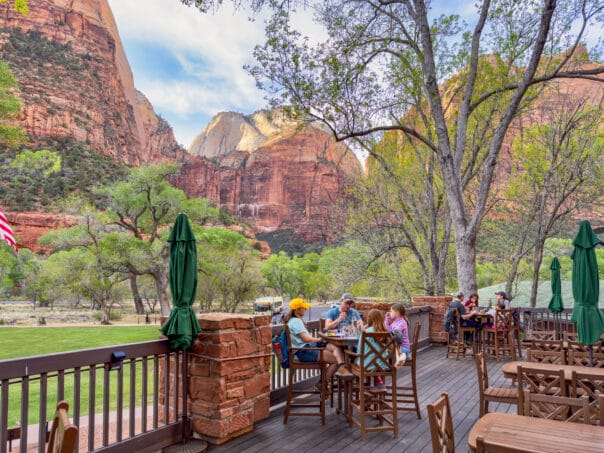
The outdoor terrace at the Zion Lodge is ideal for breakfast, lunch or dinner. Photo ©Bylandersea

Enjoyed this story? My fine art photograph, Into the Heart of Zion, is available as a print and other wall art on Fine Art America. Link here: https://pixels.com/featured/in-the-heart-of-zion-national-park-utah-debi-lander.html

Into the Heart of Zion Photo ©Bylandersea

Yorktown: The Victory That Secured American Independence

In the summer of 1781, the Revolutionary War had dragged on for more than six years.

The British still held New York City. Their army remained one of the most powerful fighting forces in the world. Yet events set in motion during the Southern Campaign were about to converge on a small Virginia tobacco port called Yorktown.

As discussed in my previous article, British General Charles Cornwallis entered Virginia after a frustrating campaign in the Carolinas. Although he had won several tactical victories, British defeats at Kings Mountain and Cowpens, combined with General Nathanael Greene’s relentless strategy of attrition, steadily weakened Britain’s hold on the South.

Cornwallis hoped Virginia would provide a secure base for future operations. Instead, Yorktown became a trap.

A French Fleet Changes Everything

One of the greatest “what if” moments in American history occurred at sea.

In August 1781, a French fleet commanded by Admiral François Joseph Paul de Grasse sailed into the Chesapeake Bay. His arrival transformed the strategic situation.

The British navy, long considered invincible, attempted to regain control of the bay. The resulting Battle of the Chesapeake proved decisive. The French prevented British ships from reaching Yorktown and cut off Cornwallis’s most reliable escape route.

For the first time during the war, British forces found themselves vulnerable and isolated.

Seige of Yorktown Map, from Mount Vernon website.

Washington Sees His Opportunity

General George Washington had spent years watching British forces occupy New York City. Although he had hoped to recapture the location, circumstances rarely favored such an attack.

When news arrived that de Grasse would support operations in Virginia, Washington quickly changed plans.

Together with French General Jean-Baptiste Donatien de Vimeur, Comte de Rochambeau, Washington secretly moved thousands of American and French troops south. The march covered more than 400 miles and remains one of the most impressive military maneuvers of the war.

The British commander in New York did not fully realize Washington’s intentions until it was too late.

By late September, allied forces were converging on Yorktown.

The Siege Begins

Unlike many famous Revolutionary War battles, Yorktown was NOT decided in a single dramatic afternoon.

Instead, it became a carefully executed siege.

American and French troops surrounded the town while the French fleet blocked escape by sea. Cornwallis’s army found itself trapped between land and water.

Engineers dug trenches closer and closer to British defenses. Artillery batteries bombarded the town day and night. The thunder of cannon fire echoed across the Virginia countryside.

Yorktown Redoubt 10

As the siege tightened, British options dwindled.

Two key British defensive positions, Redoubts 9 and 10, became critical obstacles. In one of the most celebrated actions of the war, American troops led by Alexander Hamilton stormed Redoubt 10 with fixed bayonets during a nighttime assault. French forces simultaneously captured Redoubt 9.

The fall of the redoubts brought allied artillery within range of the British interior defenses and accelerated the collapse of Cornwallis’s position.

Canon at Yorktown Battlefield today. Photo ©Bylandersea

The Surrender

On October 19, 1781, Cornwallis surrendered.

Nearly 8,000 British soldiers laid down their arms.

The Surrender of Lord Cornwallis
The Surrender of Lord Cornwallis (at Yorktown, Virginia, on October 19, 1781), oil on canvas by John Trumbull, completed in 1820; in the U.S. Capitol Rotunda, Washington, D.C. The painting captures the moment when major fighting during the American Revolution ended and the colonies achieved independence.

Legend holds that Cornwallis claimed illness and sent a subordinate to represent him at the surrender ceremony. Whether motivated by pride or genuine sickness, the gesture reflected the magnitude of Britain’s defeat.

The war did not officially end until the Treaty of Paris was signed in 1783, but Yorktown effectively ended major combat operations in North America.

Parliament soon recognized that continuing the war would be costly and increasingly unpopular. The American Revolution had been won.

Why Yorktown Matters

As America commemorates its 250th anniversary, Yorktown offers more than a history lesson. It is a place to reflect on the perseverance, sacrifice, and international cooperation that made independence possible. The victory achieved here on October 19, 1781, did not end the Revolutionary War overnight, but it marked the decisive turning point that led to the birth of the United States.

After following the Road to Revolution from Lexington and Concord through the battles of New England, the Middle Colonies, and the Carolinas, there is no more fitting place to conclude the journey than Yorktown—where the dream of independence became a reality.

Yorktown Travel Guide

Start your visit at the multi-media American Revolution Museum of Yorktown. Photo ©Bylandersea

Few places bring the story of American independence to life more vividly than Yorktown.

The battlefield, riverfront village, and museums bring the final chapter of the Revolution vividly to life, while the quiet landscape encourages reflection on the extraordinary events that unfolded here in October 1781.

Although I first visited the former Yorktown Victory Center years ago, the experience today is dramatically different. The American Revolution Museum at Yorktown, which opened in 2017, brings the story of the Revolution to life through immersive exhibits, films, and engaging living- history experiences. It is wonderful for children, as well.

An interactive exhibit called The Liberty Tree in the American Revolution Museum at Yorktown. Photo ©Bylandersea

Stepping into history at the American Revolution Museum at Yorktown’s living-history area. Trying on the uniform of an eighteenth-century soldier offered a small glimpse into the lives of those who fought for independence in 1781.
Activities at the Encampment at the American Revolution Museum at Yorktown Photos ©Bylandersea

Afterward, continue to the  Colonial National Historical Park for the Yorktown Battlefield Visitor Center and follow the self-guided battlefield driving tour. Stop at the siege lines, Surrender Field, the Moore House where the surrender terms were negotiated, and the monuments commemorating the American and French victory. The visitor center and interpretive exhibits provide additional context for one of the most significant military campaigns in American history.

The Yorktown Victory Monument commemorates the decisive Allied victory that secured American independence. Authorized by the Continental Congress in 1781, the monument was not completed until 1884 and today stands overlooking the York River where history changed forever.

Allow time to stroll Historic Yorktown’s charming waterfront, browse its small museums and shops, and enjoy views of the York River that remind visitors why this peninsula became the setting for a world-changing victory. While you are in this area, known as the Virginia Historic Triangle, be sure to visit Colonial Williamsburg (my favorite) and Jamestown.  

Yorktown’s Waterfront offers shops and restaurants. Photo ©Bylandersea

Did You Know?

Legend says the British army that surrendered at Yorktown marched out to the tune of “The World Turned Upside Down.” While historians still debate whether that tune was actually played, the phrase has become a lasting symbol of how the Revolutionary War transformed the world.

The stories of the Treaty of Paris and Washington’s resignation will follow soon.