Tag Archives: National Park Service

Cowpens: The Battle That Turned the Tide in the South

Bylandersea America 250: Exploring the Road to Revolution

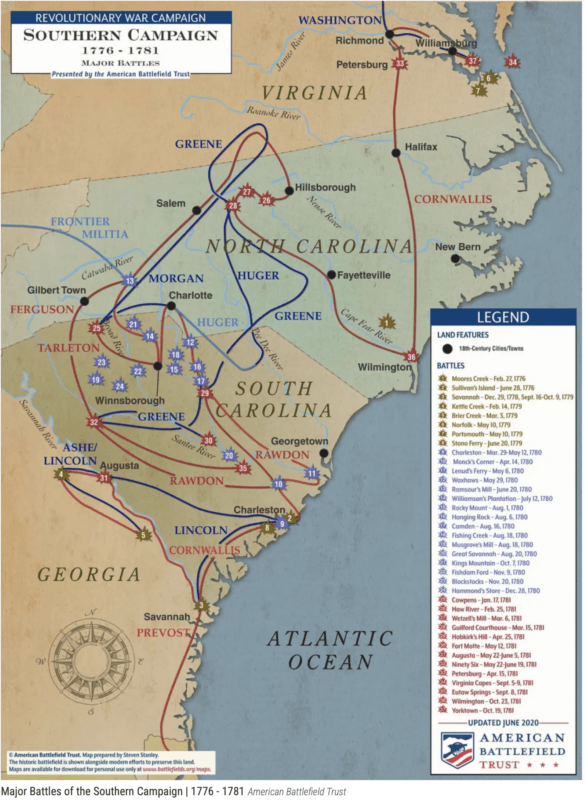
In the wake of the stunning Patriot victory at Battle of Kings Mountain, the momentum in the Southern Campaign began to shift. But it was at a quiet pastureland in South Carolina—an unassuming place called Cowpens, where that shift became undeniable.

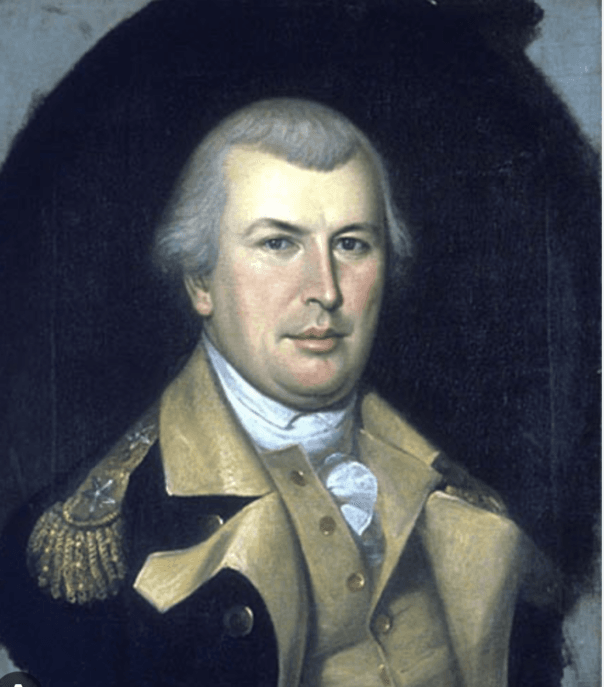
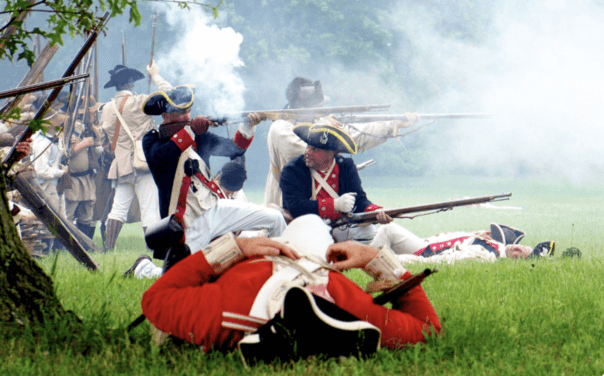
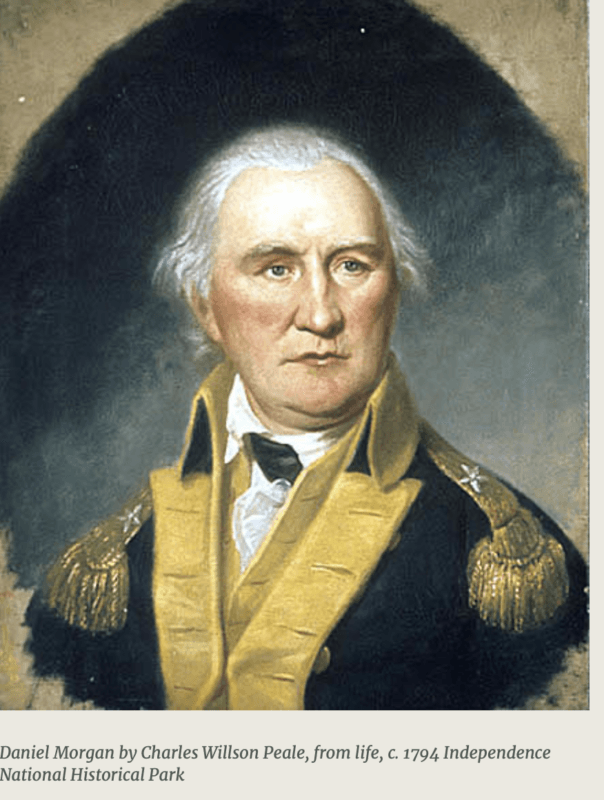
On January 17, 1781, American forces under Daniel Morgan faced the aggressive British commander Banastre Tarleton. What followed was one of the most brilliantly executed tactical victories of the entire Revolutionary War.

Morgan knew his opponent well. Tarleton was bold, fast, and often reckless. Instead of meeting force with force, Morgan designed a clever plan that used terrain, timing, and psychology to outmaneuver the British.

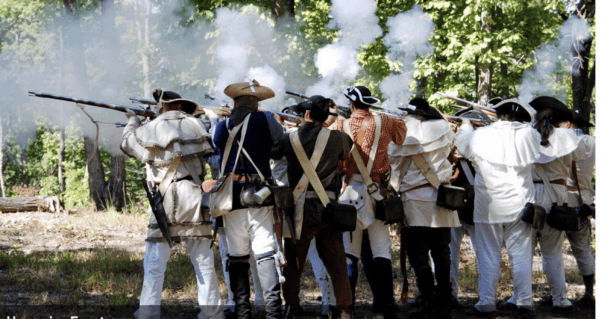
He arranged his troops in three lines. First, sharpshooters. Then militia. Finally, his most reliable Continental soldiers. Each group had a role—and an escape plan. The militia were instructed to fire a few volleys and then retreat, creating the illusion of collapse.

It worked.

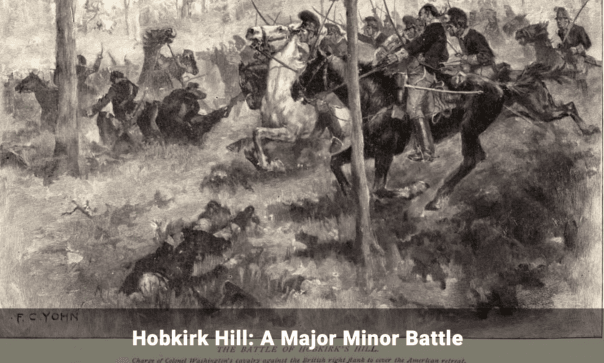
Tarleton, believing the Americans were fleeing, charged headlong into the trap. As British troops surged forward, they met disciplined resistance from the Continentals. At the same time, Patriot cavalry under William Washington swept around the flank.

Within an hour, the battle was over.

The result was staggering. The British suffered heavy losses, and Tarleton’s feared legion was effectively destroyed. Even more importantly, Cowpens weakened British control in the South and set the stage for the campaign that would lead to Yorktown.


Visiting Cowpens Today

Today, the Cowpens National Battlefield preserves this pivotal site with a sense of quiet reverence. Unlike larger, more crowded historic parks, Cowpens feels open and contemplative—much like it must have in 1781.

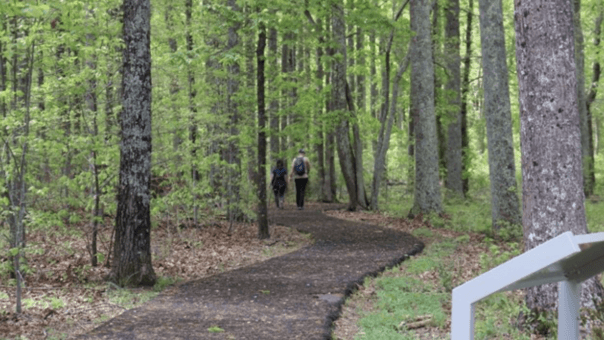
A walking trail loops through the battlefield, marked with interpretive signs that help you follow the action step by step. As you stand in the fields, it’s easy to imagine the unfolding strategy—militia falling back, British advancing, and the sudden turning of the tide.

The visitor center offers exhibits that explain the battle in detail, along with artifacts and a short film that brings the story to life.

For photographers, the soft light of morning or late afternoon adds depth and mood to the rolling landscape. It’s a place where history and atmosphere meet.


Why Cowpens Matters

Cowpens wasn’t just a victory—it was a masterclass in leadership and strategy. Morgan’s tactics are still studied in military academies today.

More importantly, the battle restored confidence to the Patriot cause in the South. Following defeats and uncertainty, Cowpens proved that the Continental Army could outthink and outfight the British.

Together with Kings Mountain, it marked the beginning of the end for British dominance in the region.


A Note for Outlander Fans

Fans of Outlander may find this chapter of the Southern Campaign especially compelling. The series touches on the complexities of loyalty, militia warfare, and frontier battles much like those fought here.

Cowpens offers a real-world glimpse into that turbulent time—where neighbors took sides, and the fate of a nation hung in the balance.


Planning Your Visit

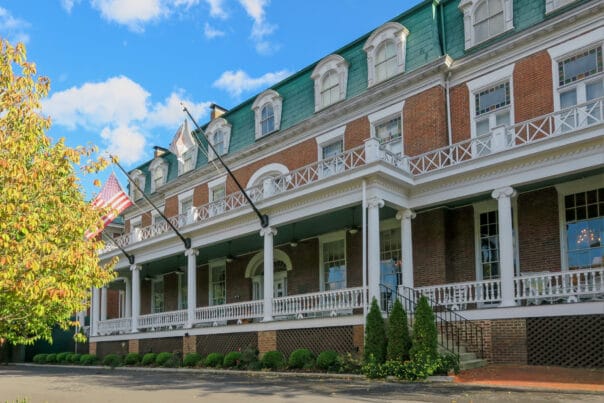
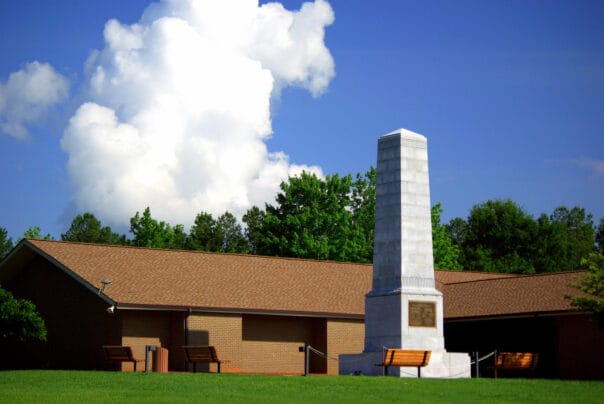
US Monument and Visitor Center at Cowpens.

Cowpens National Battlefield

  • Location: Near Chesnee, South Carolina
  • Managed by the National Park Service
  • Allow 1–2 hours to explore
  • Combine with nearby Revolutionary War sites for a full day of history travel

Part of the Series

This article is part of my ongoing series:
Bylandersea America 250: Exploring the Road to Revolution

Bounding Through Bandelier National Monument, New Mexico

Bandalier National Monument in New Mexico

Bandalier National Monument in Los Alamos, New Mexico isn’t officially a National Park, but the National Park Service manages it. The area features 33,750 acres of dramatic cliffs and walled canyons, and is the home of ancestral Pueblo people. A visitor’s center has recently been rehabilitated and updated with a high definition new movie: This Place Knows Us.

Start with the movie, then proceed through the interpretive exhibits of the ancient Pueblo culture. Of course, there’s a gift shop, too.

Tyuonyi Ruins

Leave plenty of time to get out on the 70 miles of trails. The closest archeological site is just 400 yards from the center and can be reached by the paved 1.2 mile Main Loop trail.  The ruins of the Tyuonyi, a circular village of about 600 rooms, and the nearby cliff dwellings make an hour round trip. These are communities dating back over 900 years.

Not having traveled much in the Southwest, I was thrilled with the opportunity to climb the ladders into hollowed out cave dwellings. The views of sharp terra-cotta colored ledges glow majestically and the whole area pervades a spiritual sense. Look for a series of cave rooms called the long house, a reconstructed talus house, an adobe construction built on the slopes or talus, and some petroglyths.

Climbing into a cave dwelling

Believe it or not, only one other person from my group wanted to venture another mile further off trail to Alcove House.  That’s likely because we’d need to push ourselves to make it there and back on time. But, it just so happened that the other person was famous travel photographer, Peter Guttman. If for no other reason that to watch Peter at work, I was going, huffing and puffing aside!

So Peter and I hiked as fast as we could and then climbed 140 feet straight up a series of ladders to reach the Ceremonial Cave or Alcove House. I found it exhilarating since I didn’t have time to worry over the scary drop below.  Warning:  these ladders are very steep and would not be safe for younger children. And this park has an elevation around 7,000 feet which makes breathing somewhat difficult for a sea level Floridian.

The climb to Alcove House

Ah…the reward. At the top Peter and I found a round reconstructed kiva (underground pueblo dwelling for ceremonies) overlooking a view that stretched seemingly forever. I didn’t descend down the kiva rather choosing to sit and meditate, soaking up the sacred vibes. (That and catch my breath.)  Up there my imagination could easily hear the beat of a drum and envision ancients performing a ritual to the gods. If you go to Bandelier, by all means, make the effort to climb to Alcove House.

Peter descend into the Kiva

Hustling back down, Peter and I ran into Tom Wilmer, who was interviewing a Park Ranger along a trail for his NPR radio show. We also ran into a tarantula, although I was hoping for an American pika, a small rodent related to a rabbit. No luck.

Bandalier National Monument stays open year round but offers no lodging within the park. Reservations are required for the limited campgrounds. The National Park Service Junior Ranger Program awards patches to children completing a booklets about the site.

May I also recommend photographer Peter Guttman’s collection of images spanning three decades, all seven continents and 160 countries. These amazing photos are available on Beautiful Planet —  a groundbreaking app that captures the beauty of our world and its cultures. If I had a Mac or i-Pos I’d own it.

Check it out at:  Beautiful Planet

Walking with the Park Ranger

Independence Hall: Deal or No Deal?

Meet the History Makers at Visitor Center

The US National Park Service protects and promotes nearly 400 sites.  At most locations visitors pay an admission fee. However, entrance to Independence Historic Park in Philadelphia, Pennsylvania remains free. That’s a good deal because the Park includes numerous attractions like Carpenter’s Hall, Franklin Court, Federal Reserve Bank, the Liberty Bell and the famed Independence Hall.  Who can complain?

But, then again, shouldn’t tourists pay at least a nominal fee?

Recently I visited with my two grandchildren, ages 6 and 8, and their parents. We started at the Visitors Center where we obtained complimentary timed tickets for a tour inside the legendary center. These vouchers are available on a daily basis and prevent time wasted queuing in line.

Prior to our scheduled entry, we cleared security and entered a holding room. Now trust me, I’m a big fan of the National Park System and have never been disappointed with the value of a visit anywhere.  However, on this particular occasion, the Park Ranger acting as our guide was either having a very bad day or felt the need to control others.  Her opening 10-minute history lesson fell flat (as did her jokes) and many of the tourists became restless and fidgety. She would periodically stop her oratory and scold the “rude” guests, threatening to expel them.  I personally felt uneasy and not particularly proud of this introduction, especially to foreign travelers.

The presence of a screen at the front of the room begged for a slide show, power point presentation or a short video. I’m sure one of these would have captivated  the audience’s attention far better.

Once we entered the former Pennsylvania State House, we received another disjointed speech concerning the historical events that took place in the area. Unfortunately a group of East Indian tourists continued to talk amongst themselves- likely trying to interpret the saga. Our Ranger walked back to them and actually forced the group to leave the building. She returned and we scurried across the hall.

We arrived at  the signers room, the meeting spot where the Declaration of Independence was adopted and eventually signed. Sadly, our guide’s presentation  just wasn’t captivating or compelling . The grandkids weren’t able to grasp the explanation and most of the visitors seemed disconcerted. Sorry NPS– No deal. My overall impression was disappointment; surely passion can be portrayed at to the birthplace of the United States.  I regrettably discourage an inside visit  for children younger than 8 or 10 years.

Eventually the tour moved to the second floor and only then did  I feel I was actually exploring the structure.  The ascent and descent of the magnificent, wide staircase gave me the sense of traveling back in time.  My footsteps were pounding the floorboards traversed by our Founding Fathers.  This interaction was what I came for, to feel the history within the walls, not just stare at a roped-off  room full of chairs.

Further Exploration Around the Park

Happily, our adventure through the Liberty Bell exhibition hall proved far superior. The kids loved seeing the crack in the bell and being close to the real thing, the symbol of freedom.  Although the glass building is very modern, the Liberty Bell rests in a spot where visitors can look outside and see the steeple where it originally hung.

We also meandered through a portrait gallery in the Second National Bank. To my delight, this exhibit offered an opportunity to come face to face with priceless works of art. No barriers here; numerous paintings of our nation’s forefathers, dignitaries and other illustrious 18th century characters cram the space.

Afterward, we stopped for lunch at the Food Court (just what you’d expect) and walked a block to Franklin Court. Here we descended into an underground museum and watched the movie Ben and Me.  The 1955 film remains as much a hit with today’s high-tech kids as it did years ago when my own youngsters first enjoyed it.  I highly encourage viewing this 20-minute animated presentation.

We also stopped into Franklin’s printing office. And… guess who demonstrated the press? None other than our original Ranger guide from Independence Hall!!  I was flabbergasted, but must admit she improved her act in the print shop. Here she gave a lively hands-on demonstration. Perhaps ink is her calling.

Lastly, we returned to the Visitors Center so Kyra and RJ could get their Junior Ranger badges.  The Park employees reviewed the question and answer booklets and the children took a oath.  Upon completion, they were also handed a set of Historical Park trading cards.  As far as the kids were concerned, these tokens were the best deal of the day. Anyone want to trade a John Hancock for a Tom Jefferson??

Demonstration of Franklin’s Printing Press

According to the UNESCO World Heritage Statement of Significance: Independence Hall was declared a World Heritage Site in 1979 as the location where The Declaration of Independence was adopted and the U.S. Constitution framed in the 18th-century. It is listed for association with the universal principles of freedom and democracy set forth in these documents, which have had a profound impact on lawmakers and political thinkers around the world. They became the models for similar charters of other nations, and may be considered to have heralded the modern era of  government.