As a child growing up in Arlington, Virginia, Mount Vernon was where my parents took out-of-town visitors. Family and friends wanted to see George Washington’s home, and we happily made the short drive along the Potomac River. I toured the mansion, wandered through the gardens and admired the sweeping river view many times over the years. I always loved the canopy beds and begged my parents for one at home. Later, I continued the tradition by bringing my own children to Mount Vernon.
Only much later did I realize how extraordinary the place really was.
As the United States marks 250 years since the adoption of the Declaration of Independence, Mount Vernon offers far more than a glimpse into the life of the nation’s first president. It reveals Washington as a farmer, businessman, husband, military leader and statesman whose decisions helped shape the young republic. It is difficult to imagine the birth and survival of the United States without him.
A Family Inheritance
The story of Mount Vernon began before George Washington was born.
The property had been in the Washington family since the 17th century, but George’s father, Augustine Washington, established a household at what was then called Little Hunting Creek Plantation and built the core of the present mansion in the 1730s. In 1738, the family moved to Ferry Farm, across the Rappahannock River from Fredericksburg, Virginia. (To read about Washington’s early years, click here.)
was just eleven when Augustine died in 1743. Little Hunting Creek passed to George’s older half-brother, Lawrence Washington, who renamed it Mount Vernon in honor of Admiral Edward Vernon. Lawrence had served under Vernon as an officer with Virginia’s provincial forces during the War of Jenkins’ Ear. The oddly named conflict was fought between Britain and Spain over trade and colonial power in the Americas.
When Lawrence died in 1752, George was twenty years old. Lawrence initially left Mount Vernon to his young daughter, Sarah, with his widow, Ann Fairfax Washington, holding a life interest in the property. After Sarah died, George leased Mount Vernon from Ann beginning in 1754. He did not become its outright owner until Ann’s death in 1761. During these years, he pursued careers as a soldier and planter while gradually assuming responsibility for the estate that would define the rest of his life.
In 1759, Washington married Martha Dandridge Custis, a wealthy widow with two surviving children. Their marriage became a warm and enduring partnership, while Martha’s considerable wealth strengthened Washington’s financial and social position. Her dower estate included land, investments and the labor of enslaved people, providing resources that helped Washington expand Mount Vernon into one of Virginia’s most prominent plantations.
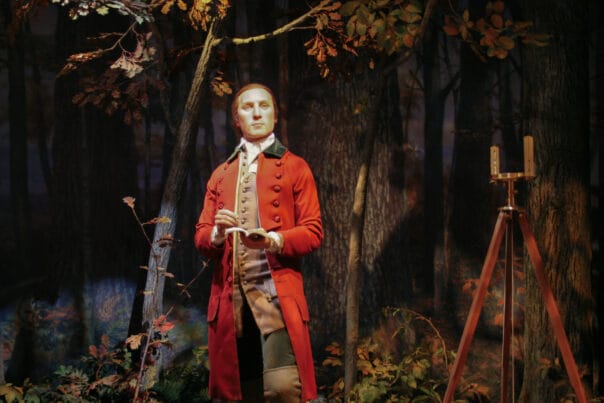
Building a Plantation
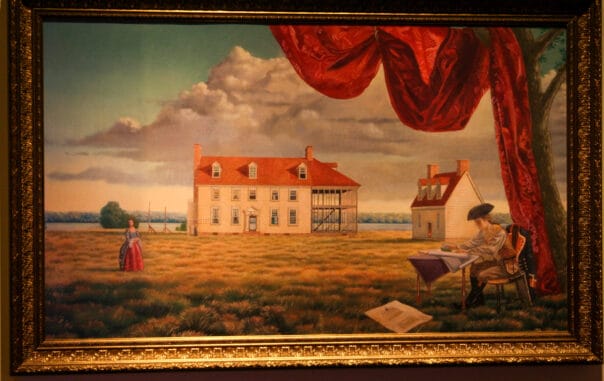
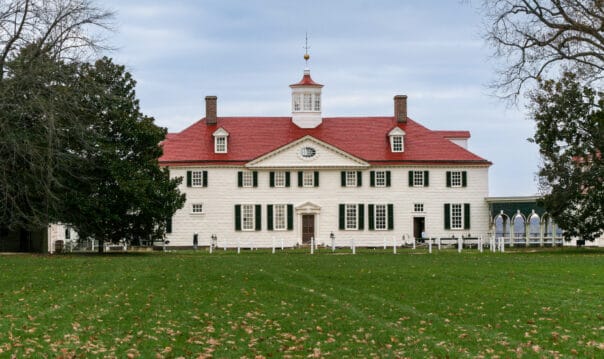
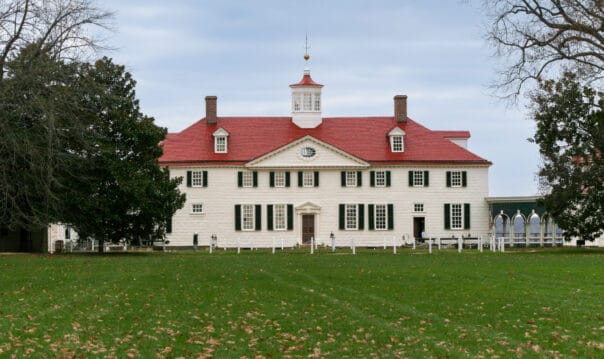
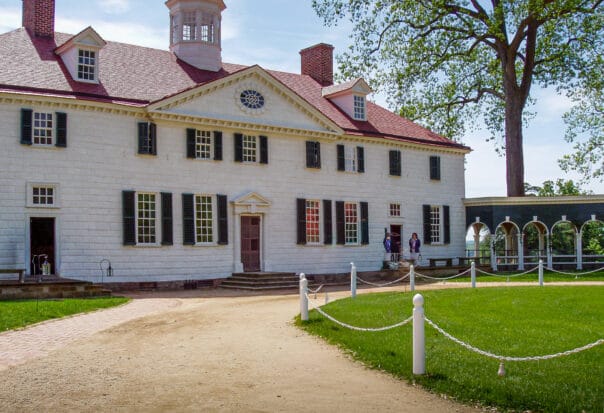
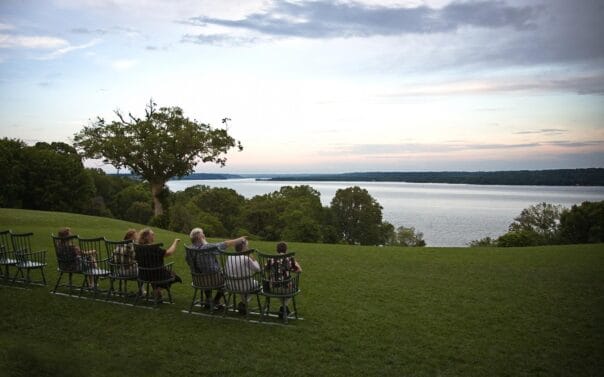
Washington expanded the house several times, transforming what began as a modest farmhouse into the elegant mansion visitors see today. Its distinctive piazza overlooking the Potomac remains one of the most recognizable views in America, and one of my favorites. (In my next story, I will explain how Mount Vernon was rescued from decline and specifically how that view was preserved for future generations.)
By the time of the Revolution, the estate had grown into a complex operation of five farms covering thousands of acres. Like many Virginia planters, Washington initially relied heavily on tobacco.
Mount Vernon depended upon the labor of enslaved men, women and children. In 1799, 317 enslaved people lived on Washington’s five farms. They cultivated crops, cared for livestock, prepared meals, maintained the mansion, practiced skilled trades and worked at the gristmill and distillery. Today, Mount Vernon interprets many of their individual stories throughout the estate, giving visitors a fuller understanding of plantation life and the profound contradictions of the founding era.
Washington’s views on slavery changed during his lifetime, but he did not free the people he owned while he was alive. In his will, he directed that the 123 enslaved people he owned be emancipated after Martha’s death. Martha freed them early, on January 1, 1801. Neither George nor Martha could legally free the 153 people held by the Custis estate, many of whom remained enslaved and were later separated from family members.
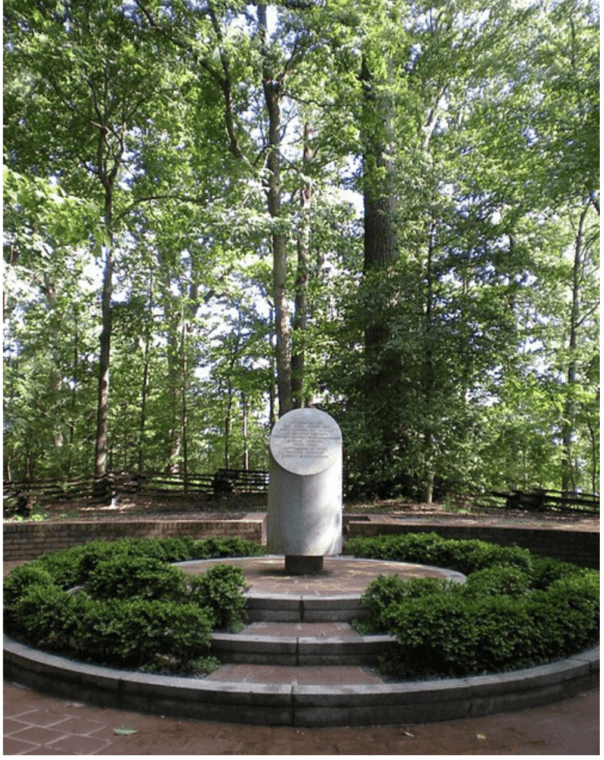
Over time, Washington recognized tobacco’s limitations and shifted toward diversified agriculture. He experimented with wheat, corn and other grains, and practiced crop rotation and soil conservation techniques that were advanced for his era. His experiments transformed Mount Vernon into one of Virginia’s most varied and closely managed agricultural operations. Visitors often remember Washington as a military hero, but he considered himself a farmer first.

George and Martha
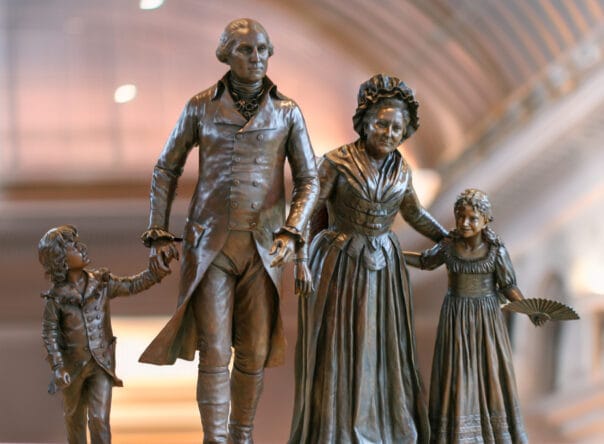
Although George and Martha never had children together, they raised Martha’s two surviving children and later helped care for several grandchildren. Mount Vernon remained their emotional center whenever public duty called Washington elsewhere.
During the Revolutionary War, Washington spent more than eight years away from Mount Vernon while commanding the Continental Army. Throughout the conflict, he wrote frequently to his managers, requesting detailed reports about crops, livestock and improvements to the estate.
Even while fighting for independence, his thoughts often returned home.
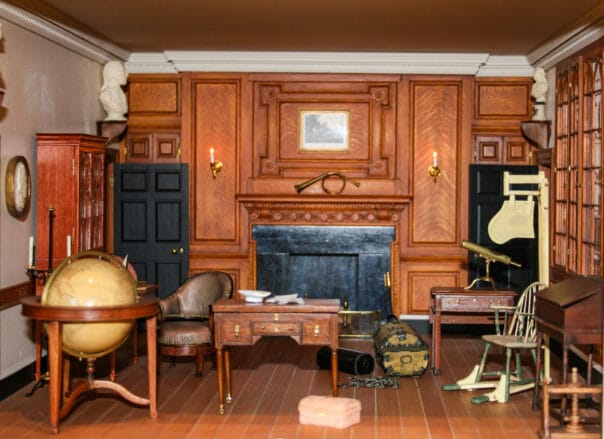
One of America’s Largest Whiskey Distilleries
One of Mount Vernon’s lesser-known stories involves whiskey.
After two terms as president, Washington eagerly returned to Mount Vernon in 1797. At the suggestion of his Scottish farm manager, James Anderson, he invested in whiskey production and built a commercial distillery near his gristmill. Enslaved men, including Hanson, Peter, Nat, Daniel, James and Timothy, performed much of the hot, demanding work of producing the whiskey.
Washington’s standard whiskey used approximately 60 percent rye, 35 percent corn and 5 percent malted barley. It was distilled at least twice and generally sold unaged, which was customary at the time.
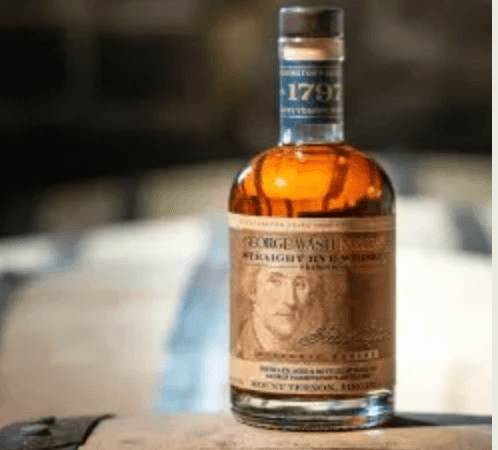
In 1799, the distillery produced nearly 11,000 gallons of whiskey valued at approximately $7,500, making it one of the largest commercial distilleries in the United States and one of Mount Vernon’s most profitable enterprises.
What Visitors See Today
The original distillery operated for several years after Washington’s death, but eventually fell out of use and disappeared during the 19th century. The present building is a faithful reconstruction, completed on the original archaeological site and opened to visitors in 2007.
Inside, visitors see a working interpretation of the 18th-century operation, including copper pot stills, wooden mash tubs, a boiler, wood-fired furnaces and the distiller’s work area. Mount Vernon still produces limited batches of spirits there using historical methods. Grain is ground at the adjoining reconstructed, water-powered gristmill, fermented in wooden tubs and distilled in copper stills heated by wood fires.
The Distillery and Gristmill stand 2.7 miles from the main estate entrance. They operate seasonally, generally on weekends from April through October, so visitors should check the current schedule. Admission is included with a Mount Vernon grounds pass, and visitors can drive or, when available, take the seasonal shuttle.
Retirement at Last
Washington established two important precedents by voluntarily resigning his military commission in 1783 and stepping down after two presidential terms in 1797. He returned eagerly to Mount Vernon, although retirement did not mean idleness. Washington continued managing the estate, corresponding with political leaders, hosting a steady stream of visitors and overseeing ongoing improvements.
Visiting Mount Vernon Today
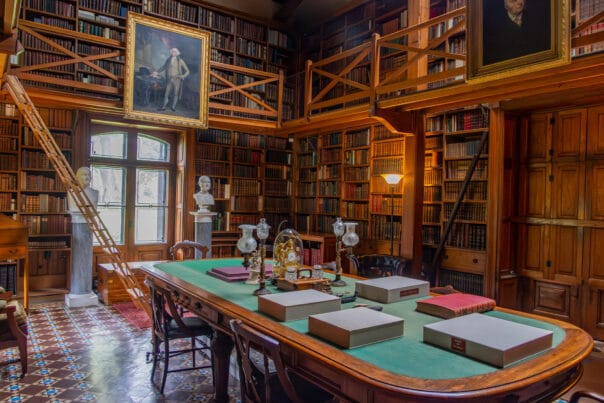
A visit to George and Martha Washington’s home is much more than a tour of a colonial mansion. Visitors begin in the Ford Orientation Center, where an introductory film provides context before they enter the historic estate.
The Donald W. Reynolds Museum and Education Center, originally opened in 2006, was extensively redesigned (at $20 million) for America’s 250th anniversary and reopened in June 2026. Its nine galleries combine original documents, rare artifacts, interactive exhibits and six immersive media experiences. The Revolutionary War Theater presents a 22-minute 4-D film, while the Hands-on-History Center offers replica objects and activities designed for children and their families.
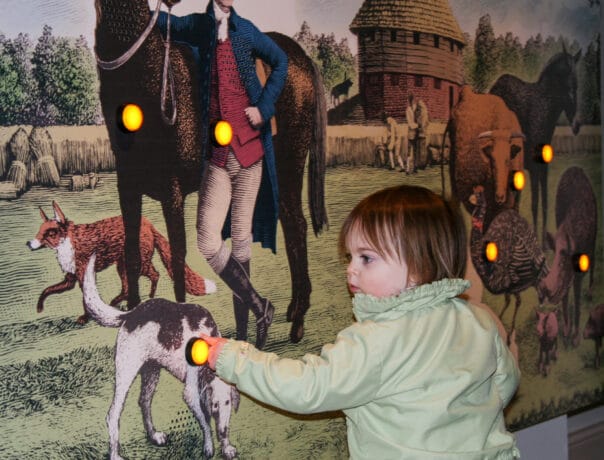
Much of the museum complex was built into the landscape, preserving the historic appearance of the estate rather than imposing a large modern building upon it.
Plan ahead because Mount Vernon can easily fill an entire day, although many visitors allow approximately three to four hours. In addition to touring the mansion, visitors can explore the gardens and outbuildings, visit Washington’s tomb and the Slave Memorial, walk through the working farm, and spend time in the Museum and Education Center. The reconstructed Distillery and Gristmill require a short drive or seasonal shuttle ride from the main estate. Mount Vernon also includes a restaurant, food court and extensive gift shop.
Washington’s Final Days
On December 14, 1799, George Washington died at Mount Vernon following a severe throat infection. The nation mourned the loss of its most revered leader.
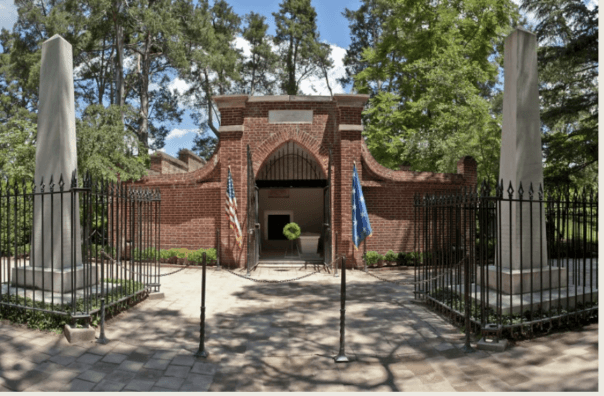
Washington was buried on the estate he loved. Today, visitors can pay their respects at the tomb where George and Martha Washington rest.
We all know the familiar claim that “George Washington slept here.” As a child standing beside his tomb, I remember thinking, “George Washington really sleeps here.”
For me, Mount Vernon remains far more than a historic attraction. It is woven into my childhood memories and is likely where I first developed my love of colonial-era furnishings. It is also a place that grows richer and more complicated with every visit. Few destinations reveal George Washington more completely, both his remarkable accomplishments and the contradictions of the world in which he lived, than the home he cherished above all others.
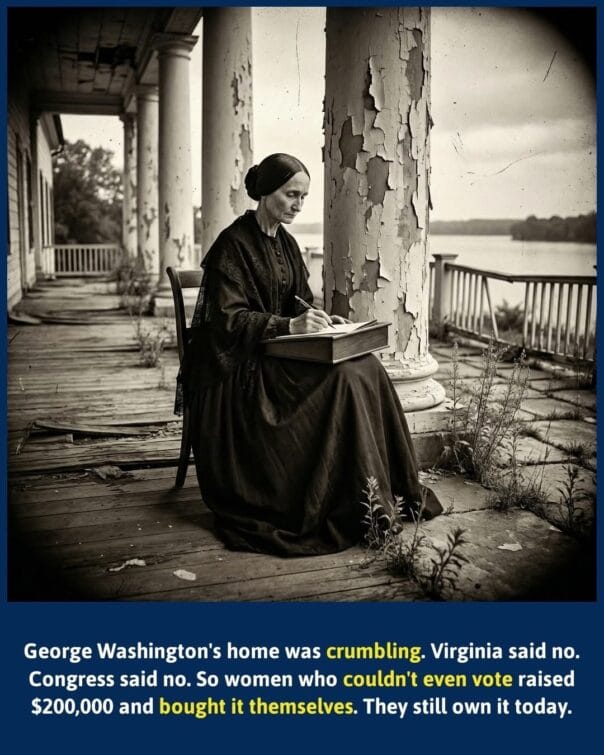
Coming next: Mount Vernon might not be standing today without the determination of the Mount Vernon Ladies’ Association. In my next article, I’ll share how a group of visionary women rescued the neglected estate in the 1850s, raised the money to purchase it, and began the painstaking work of preservation and restoration. Their remarkable effort became one of America’s earliest and most successful historic preservation stories.