Tag Archives: UNESCO World Heritage site

Saving Monticello — The Levy Family and the Preservation of an American Icon

When Thomas Jefferson died on July 4, 1826, exactly fifty years after the signing of the United States Declaration of Independence, he left behind one of the most celebrated homes in America. Perched atop a small mountain outside Charlottesville, Monticello stood as a physical expression of Jefferson’s intellect and imagination. Inspired by classical architecture and the ideals of the Enlightenment, the house represented his lifelong interests in design, agriculture, science, and innovation.

Yet Jefferson also died deeply in debt.

Years of lavish building projects, extensive book purchases, and declining agricultural profits left his estate financially burdened. His beloved Monticello, which he had spent more than forty years designing and redesigning, could not remain in family hands. Jefferson’s daughter Martha and other heirs faced an agonizing reality: they lacked the resources to preserve the estate that symbolized their father’s life and accomplishments.
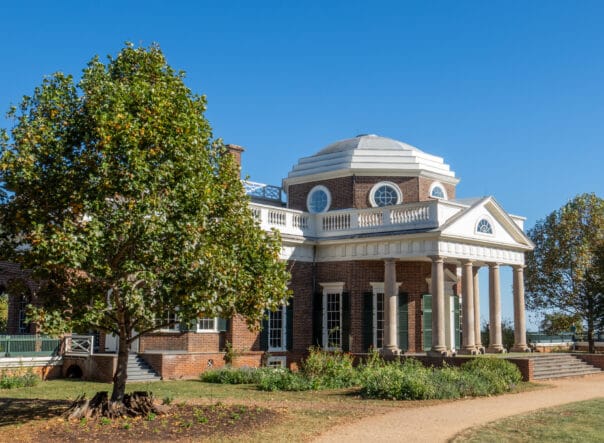
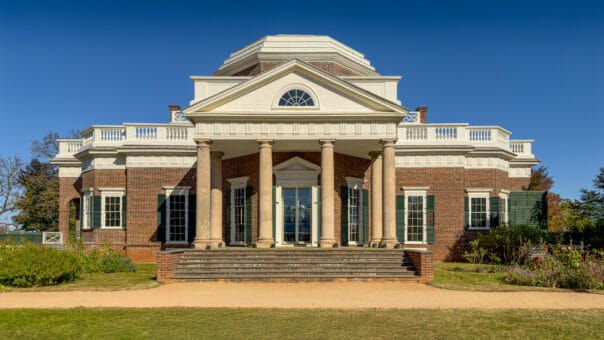
Beautiful Monticello as seen today. Photo ©Bylandersea

From Dream Home to Auction Block

In 1827, Monticello and much of its contents and more than 100 enslaved men and women were sold at public auction. Furniture, books, scientific instruments, and household objects were scattered. (Can you imagine being at that auction?) Jefferson’s vast library had already been sold to Congress years earlier after the Burning of Washington, but now many of the remaining possessions were dispersed as well.

The house itself passed through several owners and gradually deteriorated. Roof leaks, neglect, and financial uncertainty threatened the survival of one of the nation’s most important landmarks. By the early 1830s, the future of Monticello looked bleak.

Its rescue came from an unexpected and deeply devoted admirer.

Uriah P. Levy and Jefferson’s Ideals

In 1834, Uriah P. Levy purchased Monticello for $2,700.
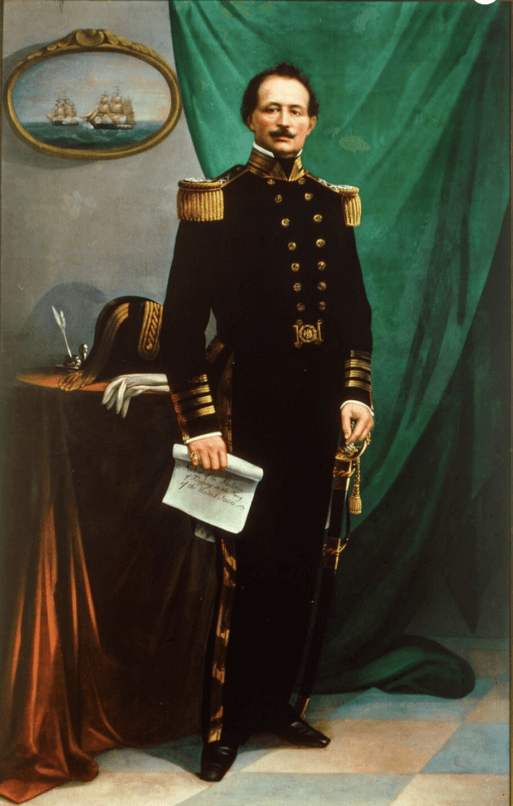
Uriah Levy, painting in the U.S. Naval Academy Museum, in the public domain

Levy was a remarkable, yet mostly unknown, figure in American history. Born in 1792 to a Jewish family in Philadelphia, he became the first Jewish commodore in the United States Navy. Throughout his career, he faced discrimination because of his faith, yet rose through perseverance and talent.

Levy admired Jefferson above all other American statesmen, not primarily for his presidency, but for his authorship of the Virginia Statute for Religious Freedom. The statute established the principle that government should neither impose religion nor discriminate based on religious belief. To Levy, living in an era when antisemitism remained common, Jefferson’s defense of religious liberty held profound personal significance.

Purchasing Monticello was an act of patriotism and gratitude.

Levy described the estate as “a shrine” to Jefferson’s ideals and undertook substantial repairs. He stabilized the structure, furnished rooms, and went to great lengths to restore the house to its former glory. He put in working order the seven-day clock that had been made to Jefferson’s specifications in 1793, and also restored the body of a two-wheel carriage that tradition, if not fact, claims to be the one Jefferson rode to Philadelphia in 1775 for the Continental Congress. He protected the property from further decline. At a time when historic preservation was almost unknown in the United States, Levy recognized that Monticello deserved to be saved for future generations.

Civil War and Family Disputes

When Uriah Levy died in 1862, Monticello became entangled in a lengthy legal dispute among his heirs. The conflict lasted for years and coincided with the turmoil of the American Civil War.

During this period, maintenance suffered and the house again declined. Paint peeled, structural problems worsened, and the estate’s future once more became uncertain.

Fortunately, another member of the Levy family stepped forward.
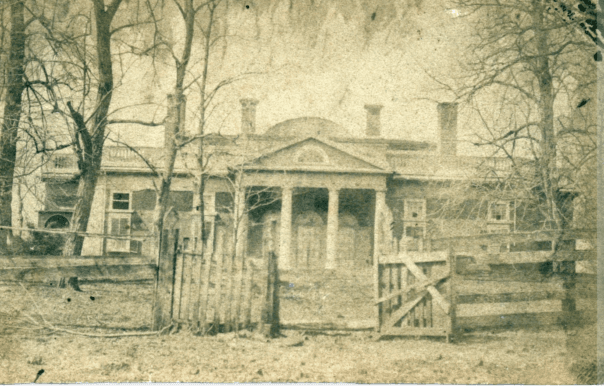
One of the earliest photographs of the East Front of Monticello, taken in the late 1860s by William Roads, which documents the house and landscape during the post-American Civil War period. From Peggy Cornett’s post, Monticello Farm and Garden

Jefferson Monroe Levy Restores Monticello

Jefferson Monroe Levy, Uriah Levy’s nephew (No, I did not make up that name), acquired sole ownership in 1879. His very name reflected the family’s reverence for Jefferson.

Jefferson Monroe Levy was a successful businessman, attorney, and later a congressman from New York. Recognizing Monticello’s historic importance, he invested a substantial portion of his personal fortune to restore and maintain the property.
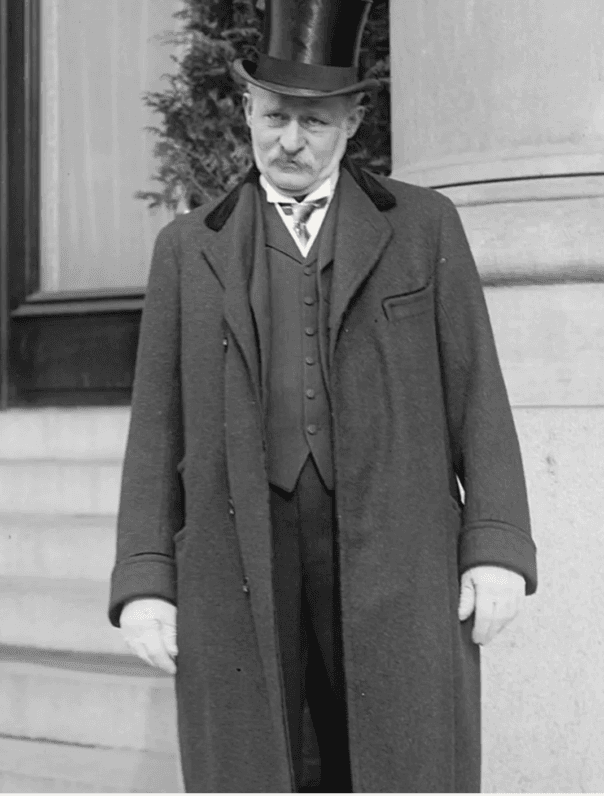
Jefferson Monroe Levy

He repaired roofs and foundations, restored interiors, landscaped the grounds, and purchased adjoining acreage to protect the mountain setting. He also welcomed visitors, allowing Americans to experience Jefferson’s home decades before it became a formal museum.

Although some critics argued that the federal government should own Monticello, Jefferson Monroe Levy resisted repeated efforts to force a sale. Without his financial commitment and determination, the house might not have survived intact into the twentieth century.
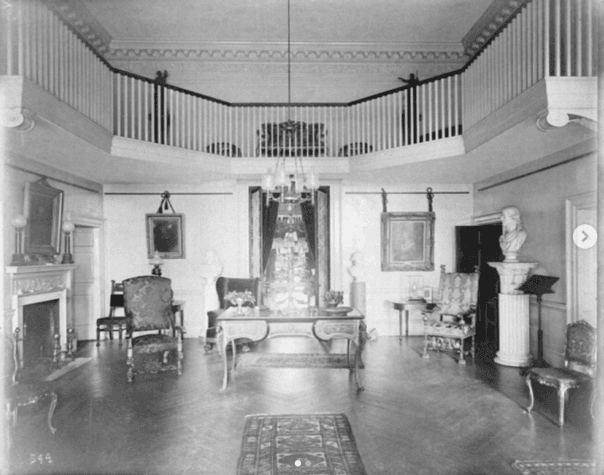
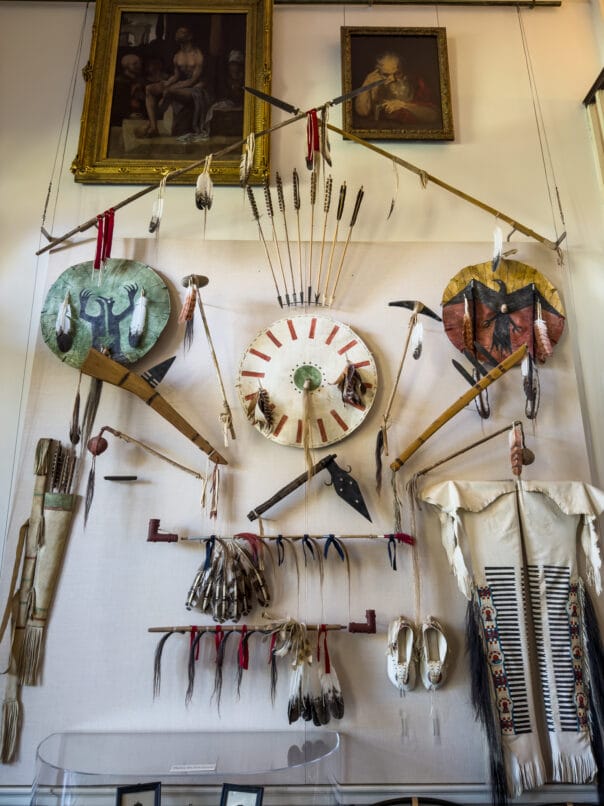
This photo, from the Levy-era of Monticello, shows a different arrangement of the space. Today, using documentary evidence, we display objects and furniture just as Jefferson would have arranged them, highlighting artifacts from American natural history, Western civilization, and American Indian cultures. 
Native American artifacts currently displayed in Monticello.

The Thomas Jefferson Foundation

In 1923, the Thomas Jefferson Foundation purchased Monticello from Jefferson Monroe Levy for $500,000.

The newly formed nonprofit transformed the estate into a museum and educational institution dedicated to preserving Jefferson’s home and legacy. Since then, the foundation has conducted extensive architectural research, archaeological excavations, and conservation work to restore the house as accurately as possible.

Today, Monticello is recognized as one of America’s most significant historic sites and a popular tourist attraction. In 1987, it was designated a UNESCO World Heritage Site, an honor shared by only a handful of places in the United States.
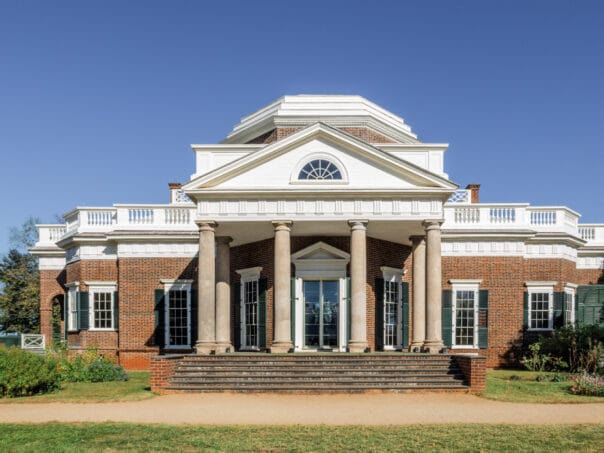
Monticello as I saw it in 2025. Photo ©Bylandersea

Telling the Full Story

Modern interpretation at Monticello continues to evolve. In addition to highlighting Jefferson’s achievements as author of the Declaration of Independence and founder of the University of Virginia, the site now places strong emphasis on the lives of the more than 600 enslaved men, women, and children who lived and worked there over Jefferson’s lifetime.

Restored spaces such as Mulberry Row, reconstructed workshops, and ongoing archaeological discoveries provide visitors with a broader and more honest understanding of the plantation and the people who sustained it.
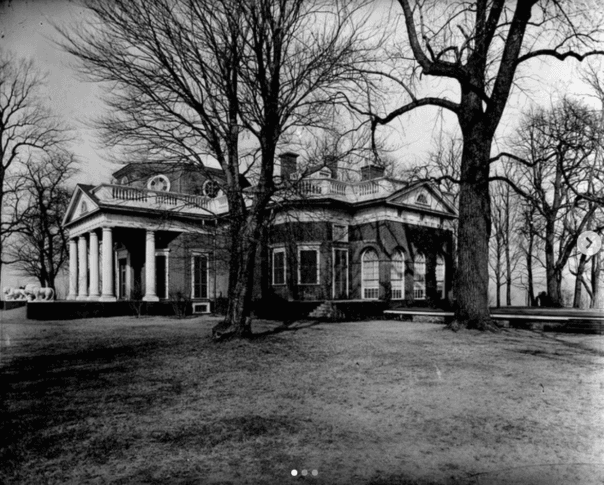
This is what the mountaintop looked like in the late 19th to early 20th centuries. From TJMonticello

A Legacy Preserved

Monticello survives today because of extraordinary devotion across generations. Jefferson created the house, but the Levy family ensured that it endured.

Uriah P. Levy saw in Jefferson a champion of religious freedom and acted to save his home when few others cared. Jefferson Monroe Levy devoted decades and significant personal resources to restoring and protecting the estate. The Thomas Jefferson Foundation then carried that mission into the modern era.

Thanks to all their efforts, Monticello remains far more than a beautiful mansion. It is a place where visitors can explore the achievements, contradictions, ideals, and complexities that shaped the American story.
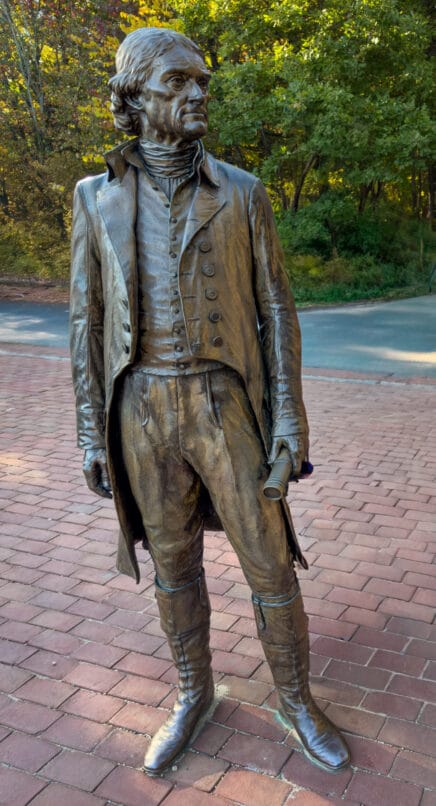
Jefferson statue on display at Monticello Visitor Center Photo ©Bylandersea

Monticello: Beauty, Brilliance, and the Complicated Legacy of Thomas Jefferson

Bylandersea America 250: Exploring the Road to Revolution

Standing on the mountaintop at Monticello, I understood immediately why Thomas Jefferson chose this spot. The rolling Virginia countryside stretches endlessly in every direction, a patchwork of greens and soft blue ridgelines fading into the distance. It is peaceful, almost dreamlike. And yet, like so much of early American history, the story behind this place is far more complex than the view suggests.

The stately home of Thomas Jefferson, Monticello, is a UNESCO World Heritage Site. Photo©Bylandersea Photo available at: https://pixels.com/featured/monticello-jeffersons-vision-of-virginia-debi-lander.html

Jefferson called his home Monticello, meaning “little mountain,” and he spent more than forty years designing, redesigning, and perfecting it. He worked to make the house feel like a reflection of his mind, elegant, inventive, and filled with ideas drawn from the Enlightenment and his time in Europe. Nothing here is accidental. Hidden alcoves, revolving doors, skylights, and clever mechanical devices reveal a man fascinated with innovation and order.

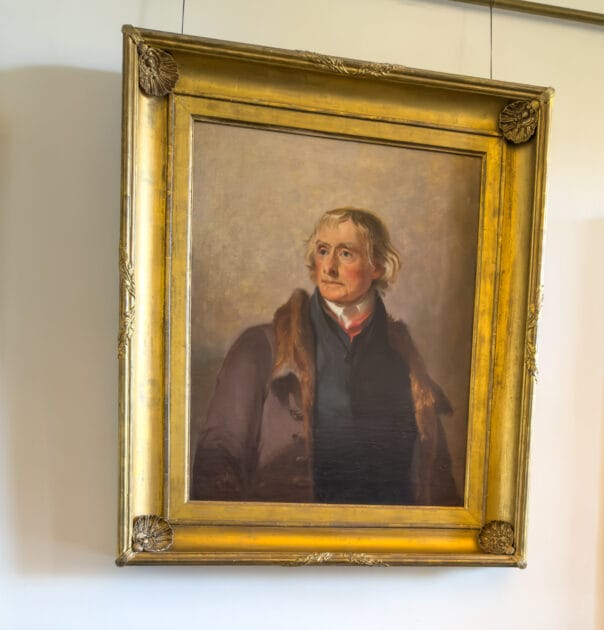
This image of Jefferson hangs in Monticello, it is believed to be a Thomas Sully portrait showing him in his later years. Photo©Bylander

Walking through the rooms, I was struck by how personal it all feels. This is not a grand palace built to impress. It is a working home, filled with books, maps, scientific instruments, and artifacts that speak to Jefferson’s curiosity about the world. He was a statesman, author of the Declaration of Independence, and a champion of liberty. He also served as the third President of the United States from 1801 to 1809, guiding the young nation through the Louisiana Purchase and an era of expansion that would shape America’s future.

Jefferson’s display of Native American artifacts in the front lobby. Photo ©Bylandersea.

But Jefferson was also a farmer, architect, inventor, and lifelong student, but a man who did not live on par with his ideals.

He was born into privilege. He inherited land and enslaved people from his father, and from the beginning of his life, he was surrounded by the system that would sustain his lifestyle. That reality shaped Monticello in ways that cannot be ignored.

As the main house rose slowly on the mountaintop, Jefferson and his young wife, Martha, spent their early married life in a smaller structure on the property. The couple honeymooned there, in what is known as the South Pavilion, living for nearly a year in that modest space while the grand vision for Monticello was still taking shape. It is a quieter, more intimate chapter of the story, one that contrasts sharply with the scale and ambition of the finished estate.

Because Monticello was not just a home. It was also a working plantation.

More than 400 enslaved men, women, and children lived and worked here during Jefferson’s lifetime. Their labor made Monticello possible, from the construction of the house to the cultivation of the land. Today, the site does not shy away from that truth. In fact, it confronts it directly.

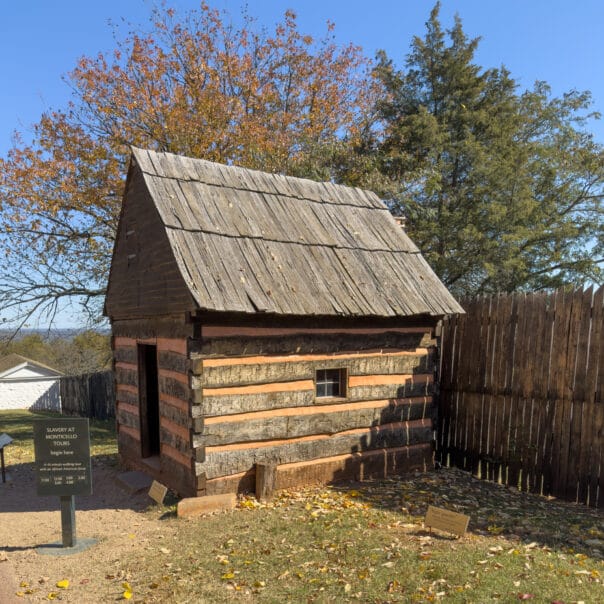
One of the slave cabins along Mulberry Row. Photo ©Bylandersea

As I walked along Mulberry Row, once the center of plantation life, I tried to imagine the lives that unfolded here. Workshops, kitchens, and living quarters lined this stretch, where enslaved artisans, blacksmiths, and laborers carried out the daily work that sustained Jefferson’s world. It is a sobering contrast to the beauty of the mountaintop and the elegance of the house above.

One name, in particular, lingers in the story of Monticello: Sally Hemings.

Hemings was an enslaved woman who lived here and is now widely understood, through both historical documentation and DNA evidence, to have had a long relationship with Jefferson. She was the mother of several of his children. This reality adds another layer of complexity to Jefferson’s legacy, one that challenges the ideals he so eloquently expressed about freedom and equality.

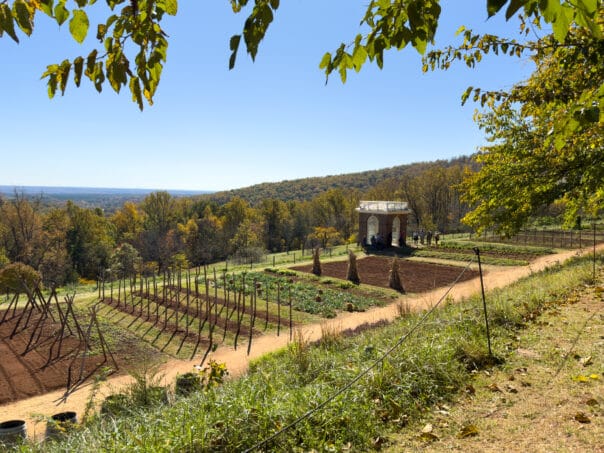
The gardens below Mulberry Row. Photo ©Bylaandersea.

Today, Monticello continues to expand the story beyond Jefferson himself. Descendants of both Thomas Jefferson and Sally Hemings are now recognized, and through efforts such as the Getting Word project, many have traced their family histories back to this place. From time to time, descendants gather at Monticello, a powerful reminder that this is not only a historic site, but a living story still unfolding across generations.

It is impossible to stand at Monticello and not wrestle with these contradictions.

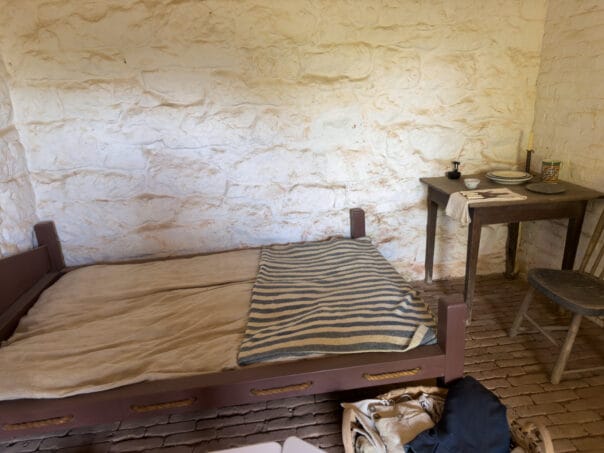
Interior of one of the cabins used by the enslaved workers.

Jefferson wrote that “all men are created equal,” yet he owned human beings. He envisioned a nation founded on liberty, yet lived a life dependent on slavery. These are not easy truths, but they are essential ones. Monticello invites visitors not just to admire Jefferson, but to examine him and, by extension, the nation he helped create.

And then, in a moment I did not expect, history felt less distant.

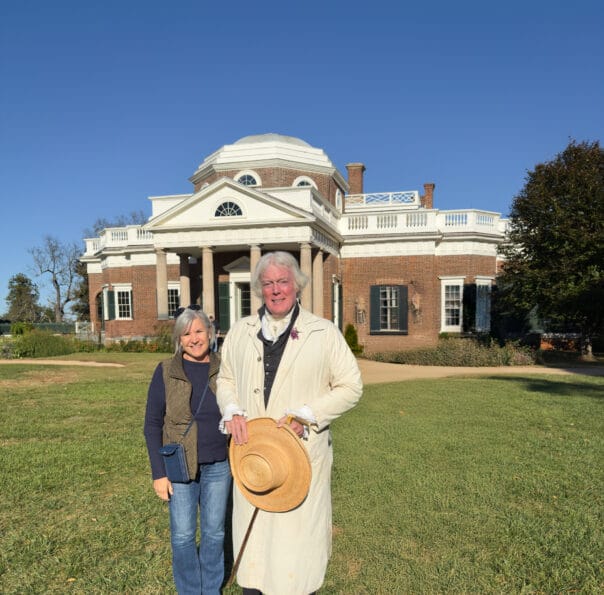
Years ago in Colonial Williamsburg, I had encountered Thomas Jefferson through the remarkable portrayal of Bill Barker, one of the most respected historical interpreters in the country. But here at Monticello, Jefferson’s own home, I had the chance to meet and speak with him again. Barker does not simply wear the costume. He answers questions in Jefferson’s voice, drawing from letters, writings, and recorded thoughts.

Thomas Jefferson and I, aka Bill Barker, at Monticello.

Standing beside him for a photograph, I found myself momentarily suspended between centuries. Behind us was Monticello, the house Jefferson designed with such care. In front of me stood a man who brought Jefferson’s words and ideas back to life. It was not just a performance. It was a conversation with history, one that made the contradictions of Jefferson’s life feel even more real and immediate.

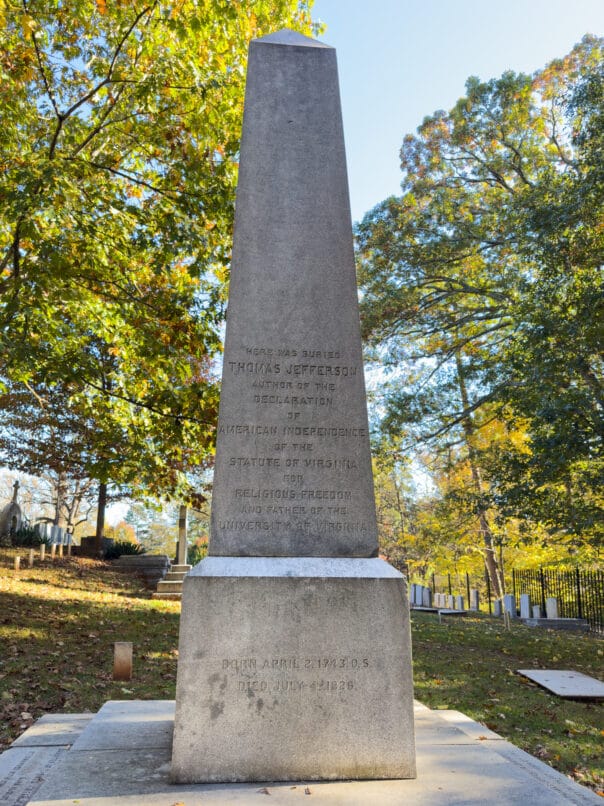
Beyond the house, I wandered to the Monticello graveyard, a quiet and shaded place where Jefferson is buried. His grave marker is simple, inscribed with the achievements he chose to be remembered for: author of the Declaration of Independence, author of the Virginia Statute for Religious Freedom, and father of the University of Virginia. Notably absent is any mention of his presidency.

It was a revealing choice.

Jefferson died on July 4, 1826, exactly fifty years after the adoption of the Declaration of Independence. In a remarkable twist of history, his friend and sometimes rival John Adams died on that very same day. Their lives, so intertwined in shaping a new nation, came to a close within hours of one another, as if marking the end of an era.

Yet for all his accomplishments, Jefferson’s final years were marked by financial hardship. Despite his status and influence, he died deeply in debt. Monticello itself was eventually sold, a reminder that even the architects of a nation were not immune to personal struggle.

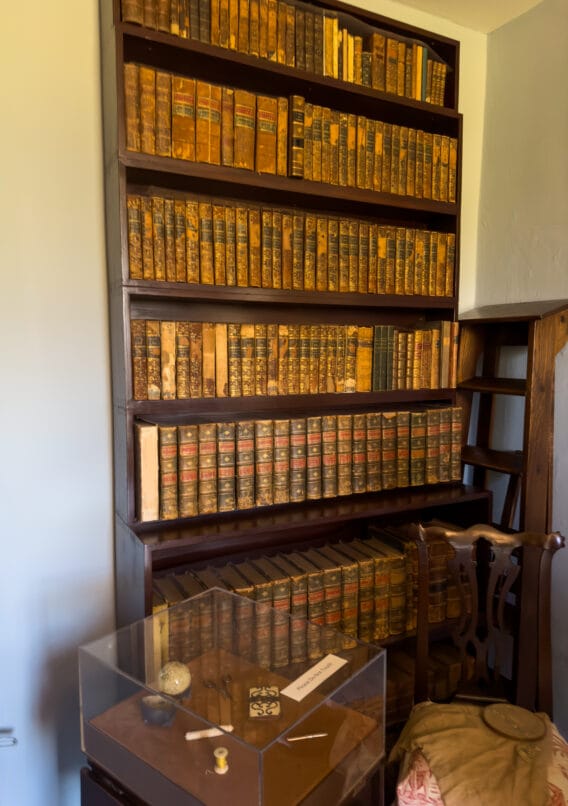
Jefferson loved books. He sold his collection to the Library of Congress to raise much-needed funds, but then repurchased many copies from England to replace them.

Nearby, generations of his family are also laid to rest, their lives intertwined with the land and with the complicated legacy that Monticello represents.

As I left Monticello, I found myself thinking about how we remember the past. It is tempting to simplify history, to cast figures like Jefferson as either heroes or villains, to idolize or demonize. But Monticello resists that kind of easy storytelling. Instead, it offers something more honest.

It tells a story of brilliance and contradiction. Of vision and hypocrisy. Of a nation and a man striving toward ideals it did not yet fully live up to.

A statue of Jefferson near the Monticello Visitor center. Photo ©Bylandersea

And for me, it also became something more personal. Not just a place to observe history, but a place where, for a brief moment, I felt I had stepped inside it.

And perhaps that is why visiting Monticello feels so important, especially as we approach America’s 250th anniversary.

This is not just a place to admire architecture or enjoy a scenic view. It is a place to listen, to question, and to learn. It reminds us that history is not fixed or distant. It is layered, evolving, and still shaping who we are today.

Monticello, like the man who built it, is beautiful, complicated, contradictory, and unforgettable.

My next post will focus on the history of the house, as it was sold by Jefferson’s dependents to pay his debts. It’s a fascinating story of rescue and restoration. Stayed tuned.

To learn more about Thomas Jefferson, I recommend the documentary from the History Channel: https://www.history.com/shows/thomas-jefferson.

To visit Monticello: https://www.monticello.org/visit/tickets-tours.

Two Nights in Timeless Toledo: A Hilltop Journey Through History

Just 30 minutes from Madrid, historic Toledo feels like stepping back into medieval Spain. With two nights to explore the tiny town, my travel buddy and I discovered soaring cathedrals, stone bridges, ancient streets, and unforgettable scenic hilltop views. This city makes a photographer’s paradise at any time of the day. (So, yes. I probably added too many photos to this blog post.)

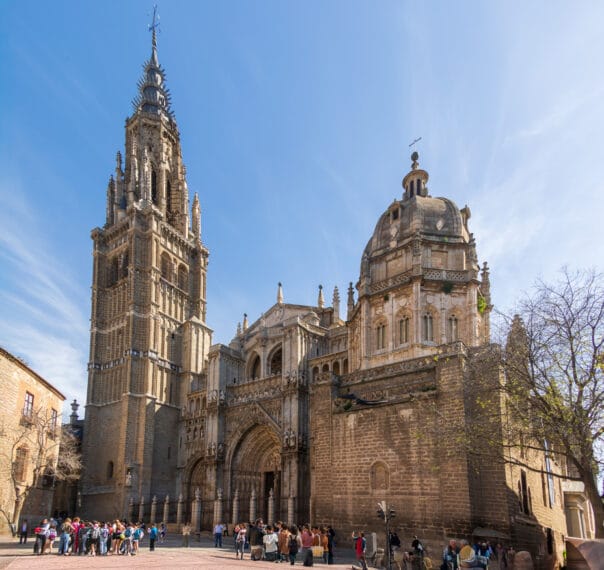
The plaza in front of the Toledo is typically full of tourists.

Arrival by Train: A Grand Entrance

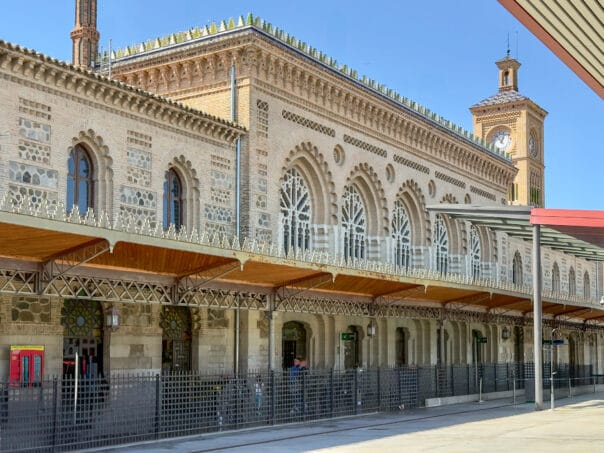
Our journey began aboard the AVE high-speed train from Madrid (just 30 minutes). We arrived at Toledo’s gorgeous Mudéjar-style station, a blend of Islamic (Moorish) artistic traditions with Christian Gothic, Romanesque, and later Renaissance elements. From the moment you step off the train you are greeted by arched windows, decorative tiles, and a high clock tower. I immediately fell under the spell of medieval Toledo. 

The Mudéjar-style train station greets travelers in Toledo.
The train station in Toledo is anything but ordinary.

📍 Getting there tip: Book AVE tickets early for the best prices.

First impressions

A short taxi ride brought us into Toledo’s old town, a tangled web of very narrow cobbled lanes perched above the Tagus River. The streets are so tight that many cars must pull in their side-view mirrors. 

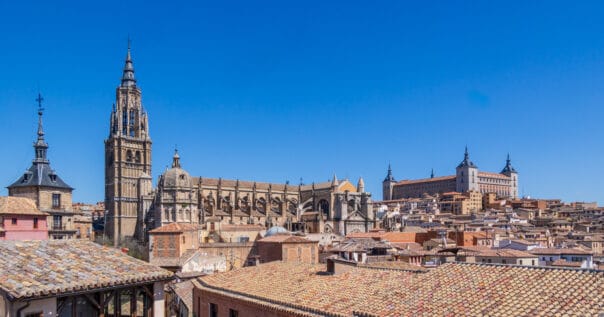
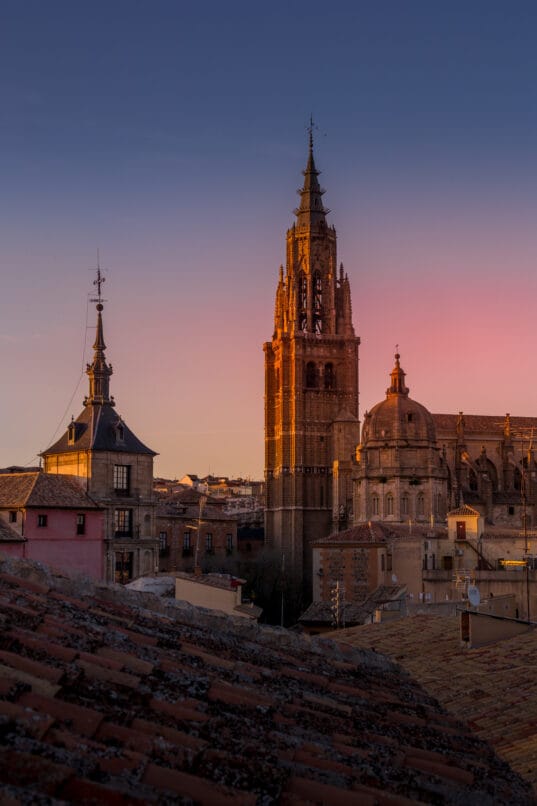
We checked into Hotel Santa Isabel, housed in a 15th-century nobleman’s home featuring preserved architecture, exposed wooden ceilings, balconies, and a panoramic rooftop terrace with views of the cathedral- but very affordable. No sooner did we drop our bags, then we went  to check out the terrace views. They are incredibly wonderful, and the terrace makes an ideal spot for an afternoon drink.  

Hotel Santa Iabel offers a terrace with wonderful city views.
Terrace view from Hotel Santa Isabel. ©Bylandersea

The hotel lies just steps from the cathedral in Plaza del Ayuntamiento, a stately square framed by City Hall and the Archbishop’s Palace. We wandered through the medieval streets, stumbling upon religious statuary, quiet courtyards, and artisan shops. What we didn’t find as easily as expected, was the entrance to the cathedral 

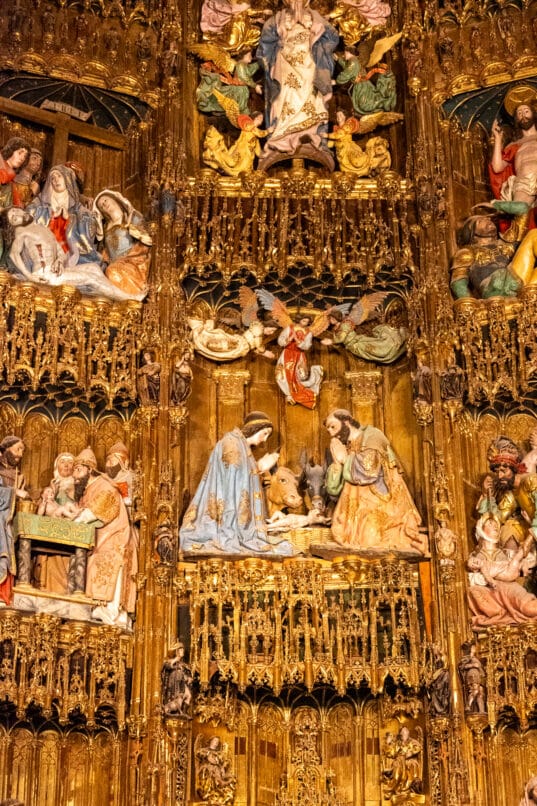
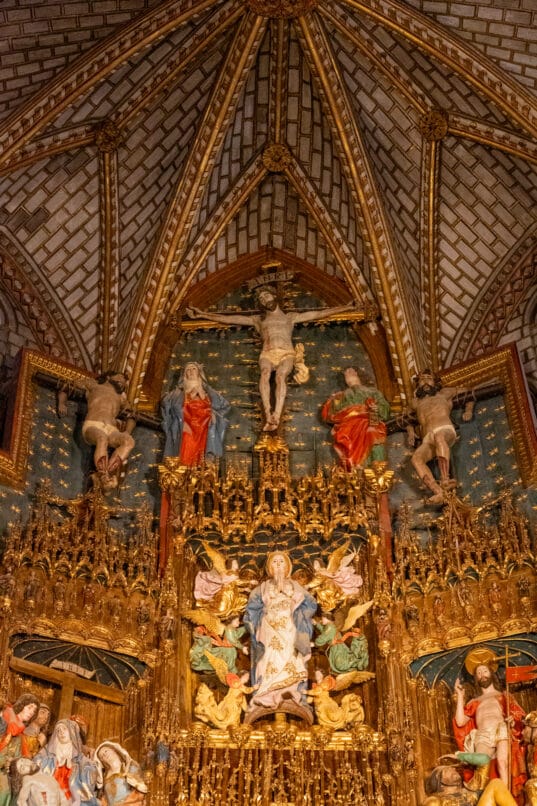
We finally managed to secure tickets and the audio guide, though both were a challenge, but worth it.  Officially the Primate Cathedral of Saint Mary of Toledo is one of Spain’s most magnificent and second largest churches. It opens with a soaring Gothic nave. The main altar, made from wood and covered in gold leaf, is an explosion of symbolism. We listened for maybe ten minutes to the audio guide reveal the story behind the tiered details.

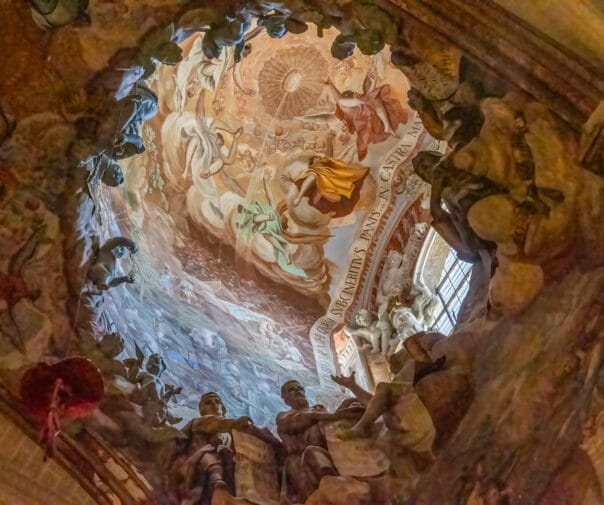
We moved on to the overwhelming white marble baroque style altar with an amazing oculus that was cut into the ceiling to allow natural sunlight in. To my surprise this addition was created between 1729-1732 by Narciso Tomé and his four sons (two architects, one painter, and one sculptor). As you can see in the photo, the oculus includes sculpture and paintings. 

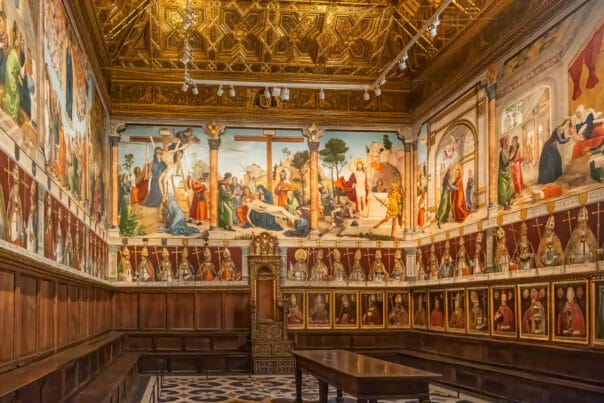
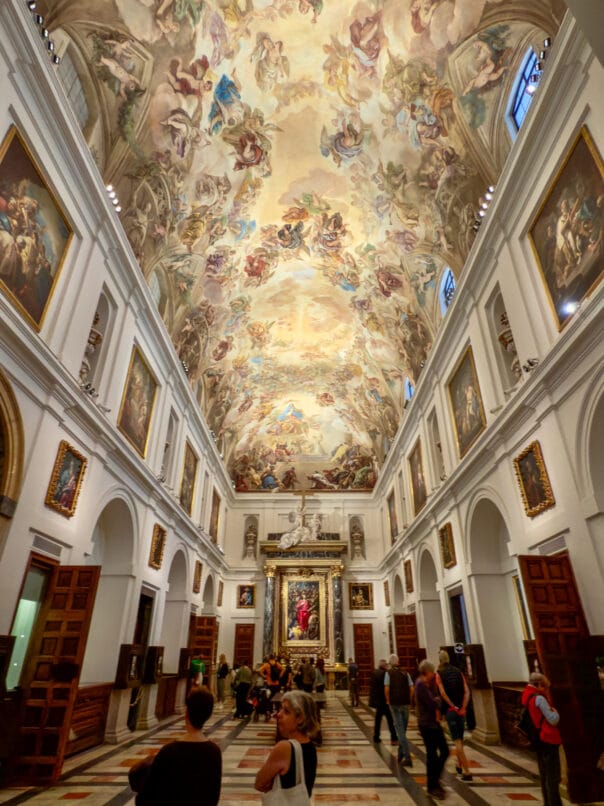
We meandered into a vibrant chapter room and then a grand hall full of El Greco masterpieces. El Greco (1541–1614), was a master painter, sculptor, and architect known for his dramatic, elongated figures and expressive use of color. He lived much of his life in Toledo. 

Stunning artwork in the Chapter Room,
The colorful paintings in the chapter room of the Toledo Cathedral. ©Bylandersea
The gallery in the Toledo Cathedral contains many El Greco’s among others. ©Bylandersea

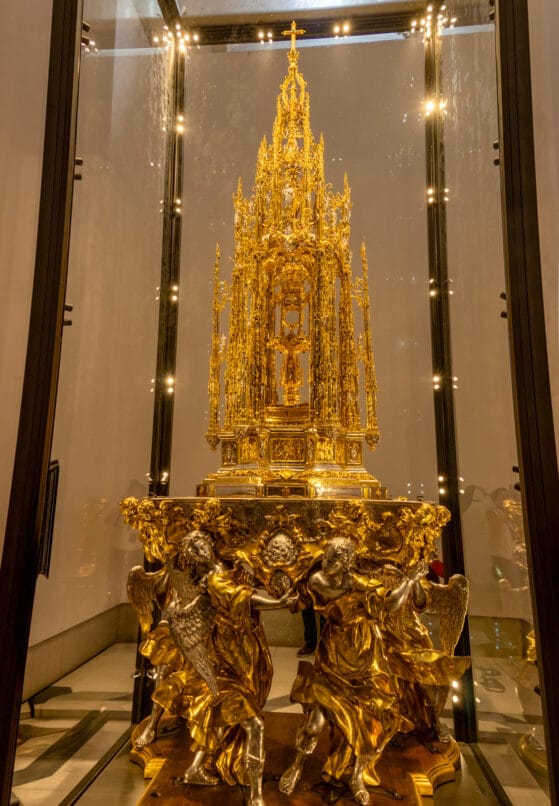
We spent about two and a half hours inside also seeing the intricate choir stalls and the shimmering gold Monstrance of Arfe, created from 1515-1523. The towering gem stands over 10 feet tall and is crafted from over 77 pounds of silver and gold, much of it believed to come from the first shipment of precious metals brought from the New World.

The work is a two-tiered Gothic temple, richly decorated with spires, pinnacles, columns, and intricate figures of saints and angels. The entire structure holds the consecrated Host during the feast of Corpus Christi, when it is carried through the streets of Toledo in a grand procession. A tradition that continues today. It remains one of the finest examples of Spanish ecclesiastical goldsmithing and a symbol of the city’s religious and artistic heritage.

The golden Monstrance of Arfe in the Toledo Cathedral ©Bylandersea

Overwhelmed by all we this art and architecture in the cathedral, we stopped for a drink and then returned to our room for a short rest. Dinner in Spain is always late (compared to American meal times), however we enjoyed some early dining at La Taberna Asturiana Zapico.  Afterward, I managed to capture photos of the late sunset from the hotel terrace. 

Tapas dinner in Toledo. ©Bylandersea
Sunset on the Terrace. ©Bylandersea

Toledo’s Crown Jewels

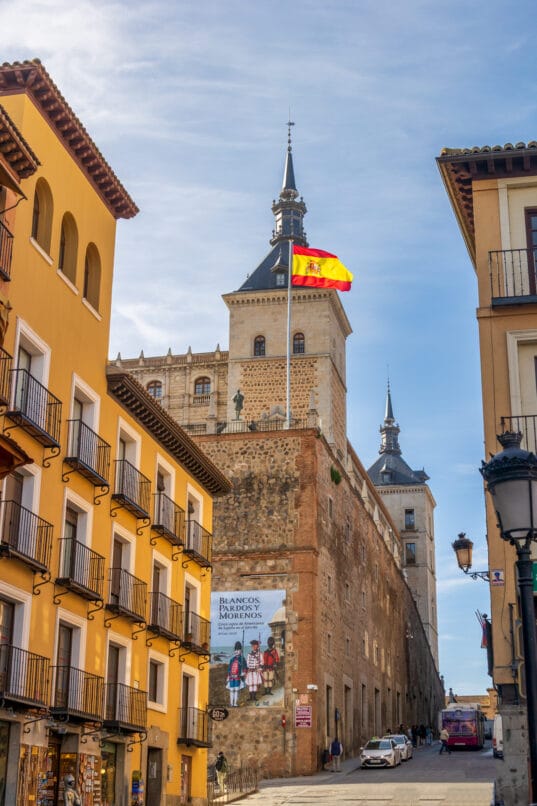
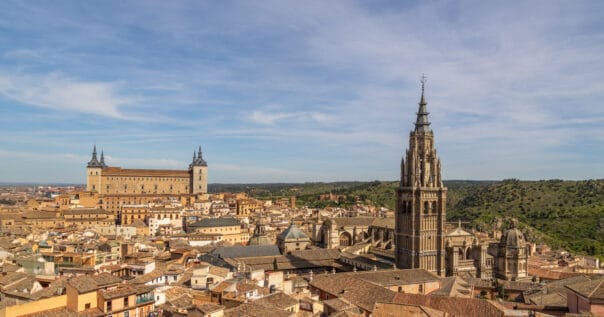
The next day we signed up for a guided tour that included a bracelet for entry to seven sites. We met our guide at Zocodover Square, the lively central business plaza that once served as a bustling market. Here we saw the exterior of the Alcázar, a fortress that has seen Roman, Moorish, and Spanish military history. Now it’s home to the Army Museum, but we chose to skip the military fortress. 

Toledo Alcazar
The Alcazar in Toledo sits high above the town. ©Bylandersea

Our guide began by explaining why this city was known as the “City of Three Cultures,” a place where Christian, Muslim, and Jewish influences interwove to create something uniquely Spanish. In 1986, Toledo was declared a UNESCO World Heritage site. The UNESCO World Heritage website states, “Toledo is the repository of more than 2,000 years of history.” This stems from the fact that it was an important city first to the Romans, then to the Visigoths, then the Emirate of Cordoba, then the Christian kingdoms who opposed the Moors and made it an imperial city for a time.

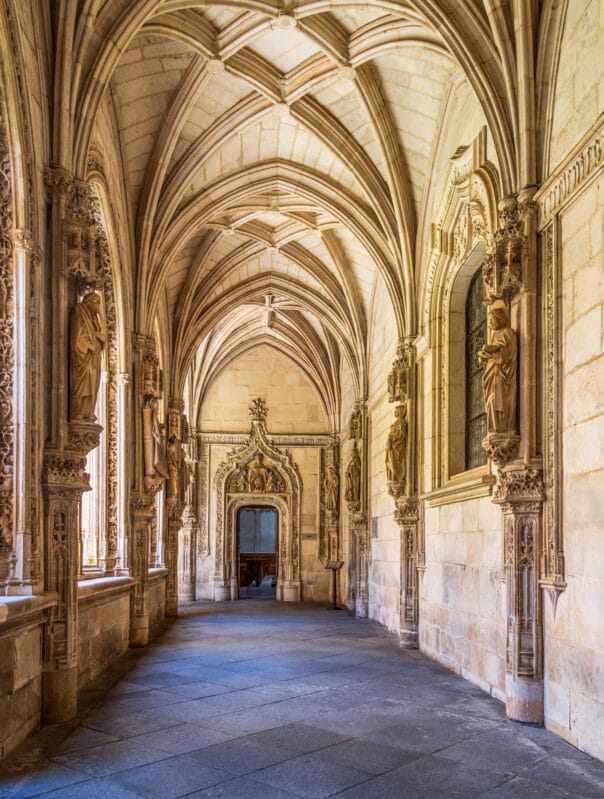
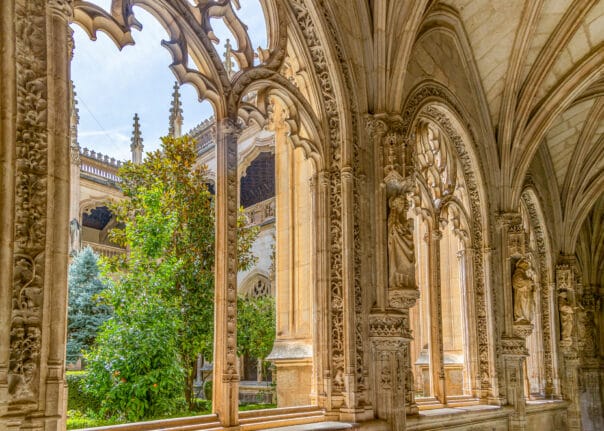
Monastery of San Juan de los Reyes.

We then walked across the historic district, past the cathedral, several alleyways, and up to an overlook area in the former Jewish Quarter. We went on into the Monastery of San Juan de los Reyes.

This beautiful church was begun in 1477 by the Catholic Monarchs Ferdinand and Isabella to be their final resting place. However, they later chose to be buried in Granada, after the Reconquista. The monastery’s design is considered to be a masterpiece of Spanish Gothic architecture and I loved the delicate stone detail and the two-storied cloister. I found this site a peaceful place. 

Synagogue of Santa María la Blanca

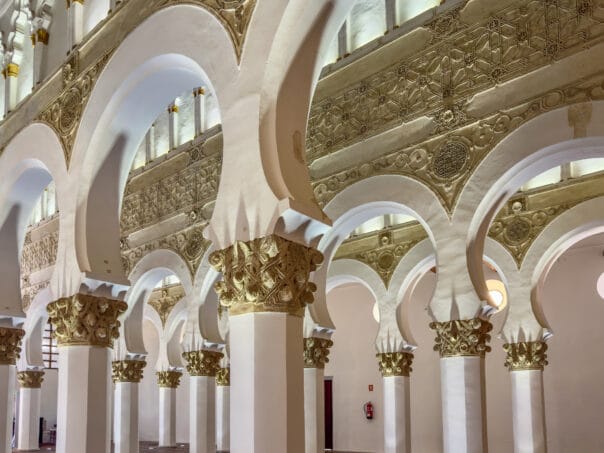
Next we stopped in at the Synagogue of Santa María la Blanca, a building with an unusual history. The Synagogue tells a complex story of faith and cultural exchange. Built in 1180, it is considered one of the oldest surviving synagogues in Europe, yet its architecture is distinctly Mudejar, crafted by Muslim artisans under Christian rule for the Jewish community—another example of  the city’s coexistence of three faiths. 

Inside, rows of graceful white stone horseshoe arches supported by octagonal pillars create a mesmerizing effect. The interior appears more of a mosque than a typical synagogue. But in the 15th century, the building was converted into a church, renamed in honor of the Virgin Mary, reflecting the religious upheaval and eventual expulsion of Jews from Spain in 1492. Today, Santa María la Blanca highlights the shifting story of Spanish history.

Synagogue of Santa Maria la Blanca
Horseshoe Arches in the Synagogue of Santa Maria la Blanca. ©Bylandersea

Church of Santo Tomé

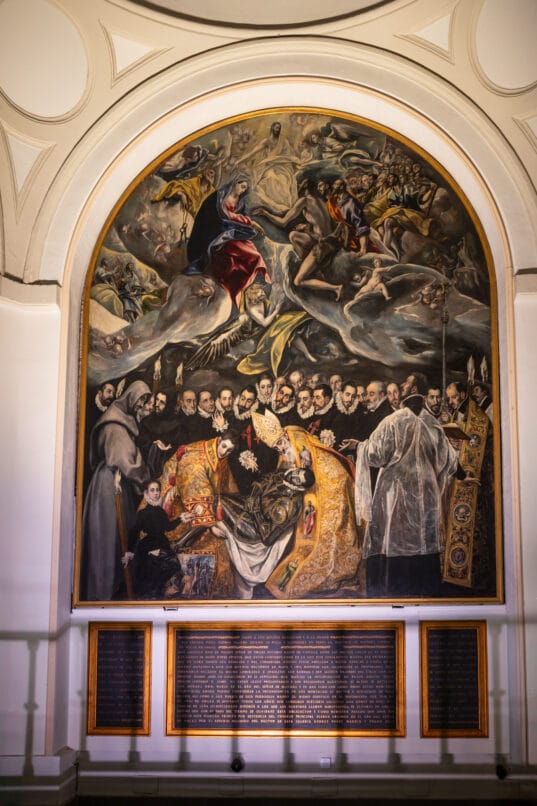
Our guide next led us into the modest Church of Santo Tomé, where one of Spain’s greatest artistic treasures awaits—El Greco’s masterpiece, The Burial of the Count of Orgaz. Tucked into a side chapel of this 14th-century church, the immense canvas captures a legendary miracle said to have occurred in 1323, when Saints Stephen and Augustine descended from heaven to bury the devout nobleman Don Gonzalo Ruiz de Toledo. El Greco’s vivid, swirling composition masterfully blends a heavenly vision with earthly realism. It contains portraits of Toledo’s elite—possibly including the artist himself—painted alongside angels and saints. 

I’d heard about the painting in art history class, but seeing it in person makes a huge difference. It’s a stunning beauty with vivid colors and fine brush strokes with intricate details. This is a piece of art that could be studied for hours. Do not miss it if you get to Toledo. 

Our tour ended there, so Judy and I stopped for lunch. On the way back to our hotel,  we decided to go into Church of El Salvador, more an archeological site with pillars and Roman mosaics

Church of the Jesuits

We then went on to the Church of the Jesuits to climb its twin towers for city views,  as recommended by our guide. 

Rising proudly above Toledo’s skyline, the twin towers of the Iglesia de San Ildefonso, also known as the Jesuit Church, offer one of the most spectacular panoramic views of the city. Built between the 17th and 18th centuries in honor of San Ildefonso, Toledo’s patron saint. This grand Baroque-style church is often overlooked by tourists rushing to the cathedral. (This is why you need two days.)

Inside, visitors are treated to elegant chapels, richly adorned altarpieces, and soaring vaulted ceilings.The real highlight, however, is the climb to the top. A series of winding stairs leads to an enclosed view. Then step onto the open-air terrace between the towers, where you’re rewarded with a sweeping panorama of Toledo’s tiled rooftops, the majestic Alcázar, the Cathedral spire, and the winding Tagus River. 

We ran out of time and did not visit Mosque of Cristo de la Luz or the Royal College of Noble Maidens. More sadly, we missed the small, but I understand impressive, El Greco Museum. As a avid photographer, I needed more time to get down and photograph the stone bridges and city gates.

🧭 Tips for Using the Bracelet:

  • Where to buy: Any of the 7 included sites
  • How to use: Wear the bracelet for entry—no need to carry tickets
  • Time needed: One full day to leisurely visit all sites, though many split it into two days
  • Best order: Start with Santo Tomé and San Juan de los Reyes 

Parador de Toledo: A Farewell Dinner with a View

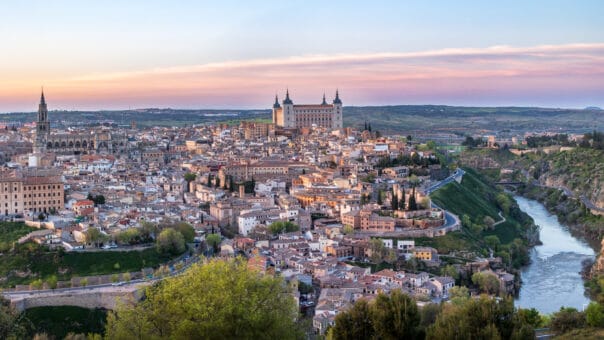
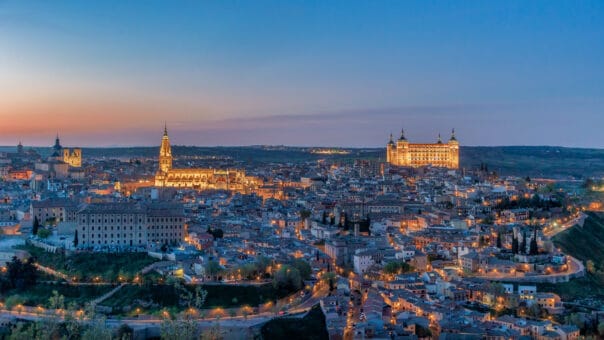
For a special treat,  we hired a taxi to take us up  the Parador de Toledo on the “Hill of the Emperor.” The hotel terrace overlooks the entire city—cathedral, river, and rooftops glowing at golden hour. It’s the perfect WOW vantage point to appreciate the city’s layered history and to pause for a photo high above the medieval maze.

View of Toledo from the Paradoe.
I waited a long time for this view. It could never disappoint. ©Bylandersea
Toledo at twilight
Twilight view of Toledo from the Parador on the hill. ©Bylandersea

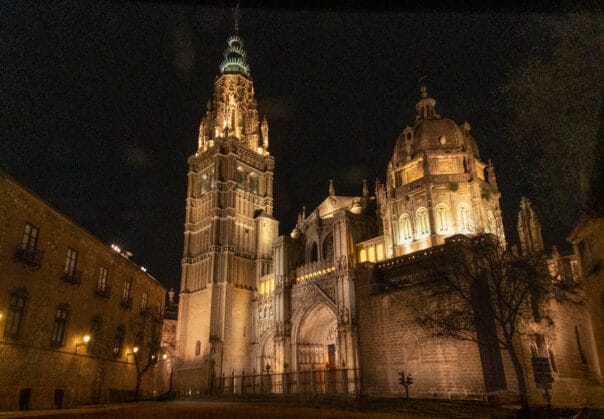
Regional cuisine—grilled fish, venison in red wine sauce, and a bold Tempranillo wine—made the perfect finale to our hilltop escape. We skipped the local dessert specialty, almondy marzipan, as neither of us are fans. We asked our return taxi driver to drop us at the Cathedral Plaza, so we could capture nighttime views and reflections. One of the best reasons to spend a night in Toledo is the absence of crowds.  When all the day-trippers leave, the city becomes even more magical.  

🍷 Tip: Make dinner reservations in advance. 

Cathedral Square in Toledo is quiet at night. ©Bylandersea

Final Thoughts

Although, we spent two nights in Toledo, we really had only a day and a half to tour as we arrived on a one o’clock train. The hours wizzed by  too fast. The city offers a feast for the curious soul. I left longing to return—with even more time to wander its winding lanes.

I’d recommend three nights for photographers, if possible. That would allow for a leisurely exploration of the town and some time to shoot the amazing skyline from different locations. 

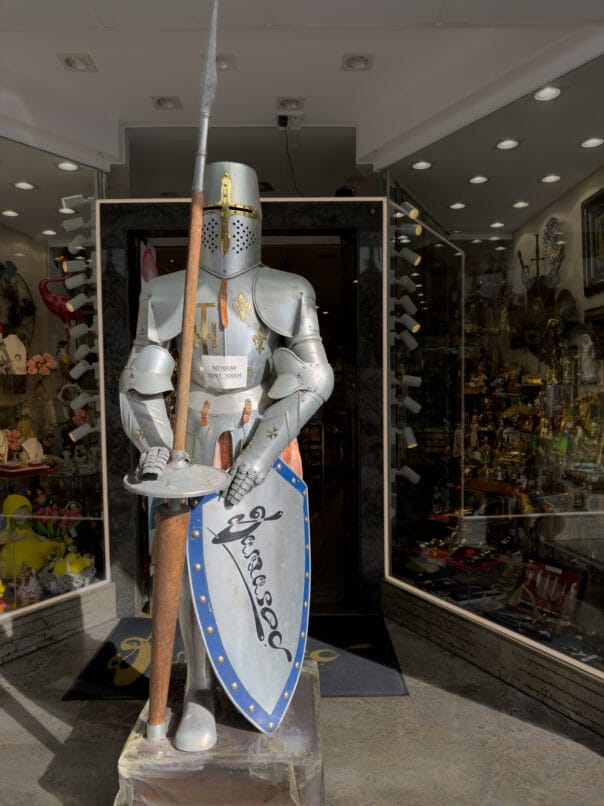
Tips for Shoppers: Toledo is world-famous for damascene metalwork (gold inlay into steel) and sword making. Many shops offer affordable damascene jewelry and miniature swords, perfect souvenirs.

Damascene metalwork and steel products are popular with tourists.