Category Archives: Adventures

Monticello: Beauty, Brilliance, and the Complicated Legacy of Thomas Jefferson

Bylandersea America 250: Exploring the Road to Revolution

Standing on the mountaintop at Monticello, I understood immediately why Thomas Jefferson chose this spot. The rolling Virginia countryside stretches endlessly in every direction, a patchwork of greens and soft blue ridgelines fading into the distance. It is peaceful, almost dreamlike. And yet, like so much of early American history, the story behind this place is far more complex than the view suggests.

The stately home of Thomas Jefferson, Monticello, is a UNESCO World Heritage Site. Photo©Bylandersea Photo available at: https://pixels.com/featured/monticello-jeffersons-vision-of-virginia-debi-lander.html

Jefferson called his home Monticello, meaning “little mountain,” and he spent more than forty years designing, redesigning, and perfecting it. He worked to make the house feel like a reflection of his mind, elegant, inventive, and filled with ideas drawn from the Enlightenment and his time in Europe. Nothing here is accidental. Hidden alcoves, revolving doors, skylights, and clever mechanical devices reveal a man fascinated with innovation and order.

This image of Jefferson hangs in Monticello, it is believed to be a Thomas Sully portrait showing him in his later years. Photo©Bylander

Walking through the rooms, I was struck by how personal it all feels. This is not a grand palace built to impress. It is a working home, filled with books, maps, scientific instruments, and artifacts that speak to Jefferson’s curiosity about the world. He was a statesman, author of the Declaration of Independence, and a champion of liberty. He also served as the third President of the United States from 1801 to 1809, guiding the young nation through the Louisiana Purchase and an era of expansion that would shape America’s future.

Jefferson’s display of Native American artifacts in the front lobby. Photo ©Bylandersea.

But Jefferson was also a farmer, architect, inventor, and lifelong student, but a man who did not live on par with his ideals.

He was born into privilege. He inherited land and enslaved people from his father, and from the beginning of his life, he was surrounded by the system that would sustain his lifestyle. That reality shaped Monticello in ways that cannot be ignored.

As the main house rose slowly on the mountaintop, Jefferson and his young wife, Martha, spent their early married life in a smaller structure on the property. The couple honeymooned there, in what is known as the South Pavilion, living for nearly a year in that modest space while the grand vision for Monticello was still taking shape. It is a quieter, more intimate chapter of the story, one that contrasts sharply with the scale and ambition of the finished estate.

Because Monticello was not just a home. It was also a working plantation.

More than 400 enslaved men, women, and children lived and worked here during Jefferson’s lifetime. Their labor made Monticello possible, from the construction of the house to the cultivation of the land. Today, the site does not shy away from that truth. In fact, it confronts it directly.

One of the slave cabins along Mulberry Row. Photo ©Bylandersea

As I walked along Mulberry Row, once the center of plantation life, I tried to imagine the lives that unfolded here. Workshops, kitchens, and living quarters lined this stretch, where enslaved artisans, blacksmiths, and laborers carried out the daily work that sustained Jefferson’s world. It is a sobering contrast to the beauty of the mountaintop and the elegance of the house above.

One name, in particular, lingers in the story of Monticello: Sally Hemings.

Hemings was an enslaved woman who lived here and is now widely understood, through both historical documentation and DNA evidence, to have had a long relationship with Jefferson. She was the mother of several of his children. This reality adds another layer of complexity to Jefferson’s legacy, one that challenges the ideals he so eloquently expressed about freedom and equality.

The gardens below Mulberry Row. Photo ©Bylaandersea.

Today, Monticello continues to expand the story beyond Jefferson himself. Descendants of both Thomas Jefferson and Sally Hemings are now recognized, and through efforts such as the Getting Word project, many have traced their family histories back to this place. From time to time, descendants gather at Monticello, a powerful reminder that this is not only a historic site, but a living story still unfolding across generations.

It is impossible to stand at Monticello and not wrestle with these contradictions.

Interior of one of the cabins used by the enslaved workers.

Jefferson wrote that “all men are created equal,” yet he owned human beings. He envisioned a nation founded on liberty, yet lived a life dependent on slavery. These are not easy truths, but they are essential ones. Monticello invites visitors not just to admire Jefferson, but to examine him and, by extension, the nation he helped create.

And then, in a moment I did not expect, history felt less distant.

Years ago in Colonial Williamsburg, I had encountered Thomas Jefferson through the remarkable portrayal of Bill Barker, one of the most respected historical interpreters in the country. But here at Monticello, Jefferson’s own home, I had the chance to meet and speak with him again. Barker does not simply wear the costume. He answers questions in Jefferson’s voice, drawing from letters, writings, and recorded thoughts.

Thomas Jefferson and I, aka Bill Barker, at Monticello.

Standing beside him for a photograph, I found myself momentarily suspended between centuries. Behind us was Monticello, the house Jefferson designed with such care. In front of me stood a man who brought Jefferson’s words and ideas back to life. It was not just a performance. It was a conversation with history, one that made the contradictions of Jefferson’s life feel even more real and immediate.

Beyond the house, I wandered to the Monticello graveyard, a quiet and shaded place where Jefferson is buried. His grave marker is simple, inscribed with the achievements he chose to be remembered for: author of the Declaration of Independence, author of the Virginia Statute for Religious Freedom, and father of the University of Virginia. Notably absent is any mention of his presidency.

It was a revealing choice.

Jefferson died on July 4, 1826, exactly fifty years after the adoption of the Declaration of Independence. In a remarkable twist of history, his friend and sometimes rival John Adams died on that very same day. Their lives, so intertwined in shaping a new nation, came to a close within hours of one another, as if marking the end of an era.

Yet for all his accomplishments, Jefferson’s final years were marked by financial hardship. Despite his status and influence, he died deeply in debt. Monticello itself was eventually sold, a reminder that even the architects of a nation were not immune to personal struggle.

Jefferson loved books. He sold his collection to the Library of Congress to raise much-needed funds, but then repurchased many copies from England to replace them.

Nearby, generations of his family are also laid to rest, their lives intertwined with the land and with the complicated legacy that Monticello represents.

As I left Monticello, I found myself thinking about how we remember the past. It is tempting to simplify history, to cast figures like Jefferson as either heroes or villains, to idolize or demonize. But Monticello resists that kind of easy storytelling. Instead, it offers something more honest.

It tells a story of brilliance and contradiction. Of vision and hypocrisy. Of a nation and a man striving toward ideals it did not yet fully live up to.

A statue of Jefferson near the Monticello Visitor center. Photo ©Bylandersea

And for me, it also became something more personal. Not just a place to observe history, but a place where, for a brief moment, I felt I had stepped inside it.

And perhaps that is why visiting Monticello feels so important, especially as we approach America’s 250th anniversary.

This is not just a place to admire architecture or enjoy a scenic view. It is a place to listen, to question, and to learn. It reminds us that history is not fixed or distant. It is layered, evolving, and still shaping who we are today.

Monticello, like the man who built it, is beautiful, complicated, contradictory, and unforgettable.

My next post will focus on the history of the house, as it was sold by Jefferson’s dependents to pay his debts. It’s a fascinating story of rescue and restoration. Stayed tuned.

To learn more about Thomas Jefferson, I recommend the documentary from the History Channel: https://www.history.com/shows/thomas-jefferson.

To visit Monticello: https://www.monticello.org/visit/tickets-tours.

Cowpens: The Battle That Turned the Tide in the South

Bylandersea America 250: Exploring the Road to Revolution

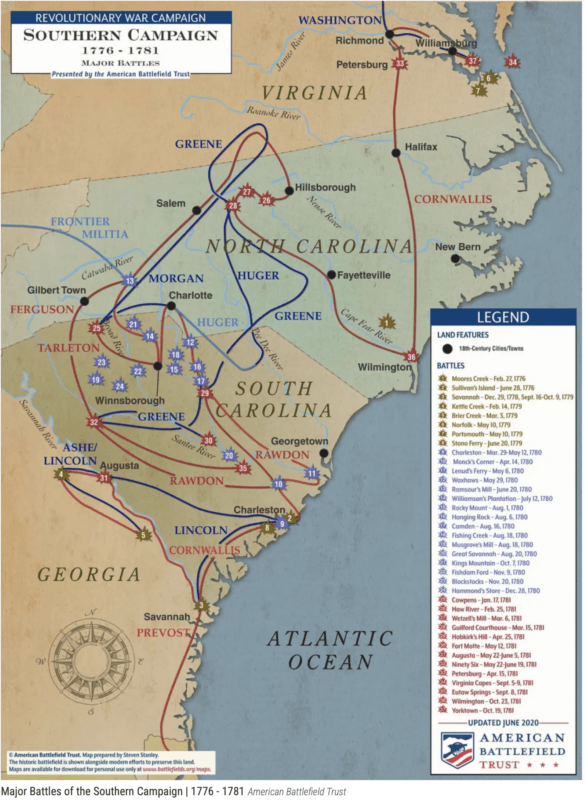
In the wake of the stunning Patriot victory at Battle of Kings Mountain, the momentum in the Southern Campaign began to shift. But it was at a quiet pastureland in South Carolina—an unassuming place called Cowpens, where that shift became undeniable.

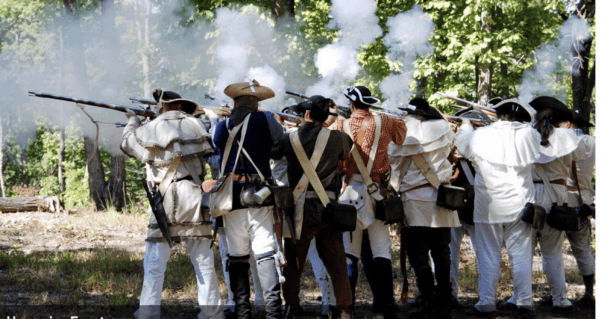
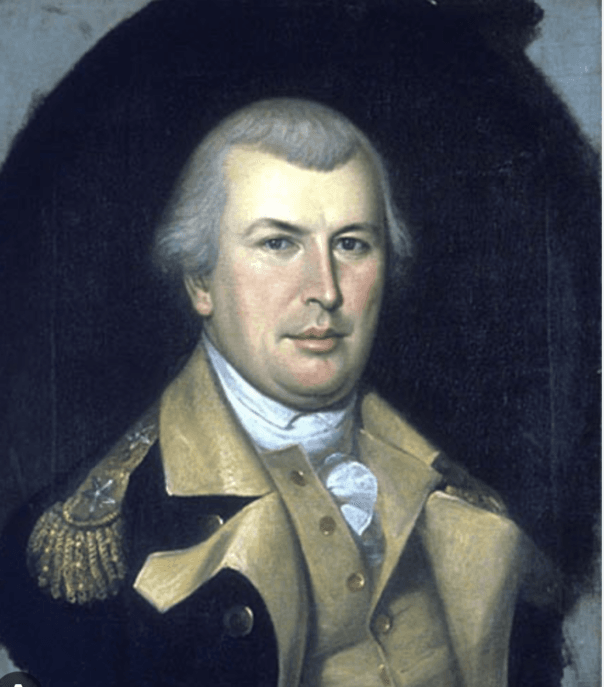
On January 17, 1781, American forces under Daniel Morgan faced the aggressive British commander Banastre Tarleton. What followed was one of the most brilliantly executed tactical victories of the entire Revolutionary War.

Morgan knew his opponent well. Tarleton was bold, fast, and often reckless. Instead of meeting force with force, Morgan designed a clever plan that used terrain, timing, and psychology to outmaneuver the British.

He arranged his troops in three lines. First, sharpshooters. Then militia. Finally, his most reliable Continental soldiers. Each group had a role—and an escape plan. The militia were instructed to fire a few volleys and then retreat, creating the illusion of collapse.

It worked.

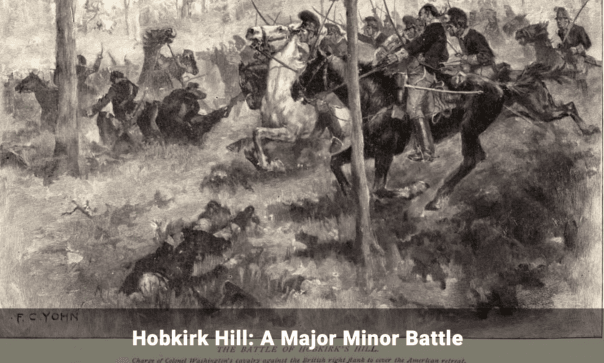
Tarleton, believing the Americans were fleeing, charged headlong into the trap. As British troops surged forward, they met disciplined resistance from the Continentals. At the same time, Patriot cavalry under William Washington swept around the flank.

Within an hour, the battle was over.

The result was staggering. The British suffered heavy losses, and Tarleton’s feared legion was effectively destroyed. Even more importantly, Cowpens weakened British control in the South and set the stage for the campaign that would lead to Yorktown.


Visiting Cowpens Today

Today, the Cowpens National Battlefield preserves this pivotal site with a sense of quiet reverence. Unlike larger, more crowded historic parks, Cowpens feels open and contemplative—much like it must have in 1781.

A walking trail loops through the battlefield, marked with interpretive signs that help you follow the action step by step. As you stand in the fields, it’s easy to imagine the unfolding strategy—militia falling back, British advancing, and the sudden turning of the tide.

The visitor center offers exhibits that explain the battle in detail, along with artifacts and a short film that brings the story to life.

For photographers, the soft light of morning or late afternoon adds depth and mood to the rolling landscape. It’s a place where history and atmosphere meet.


Why Cowpens Matters

Cowpens wasn’t just a victory—it was a masterclass in leadership and strategy. Morgan’s tactics are still studied in military academies today.

More importantly, the battle restored confidence to the Patriot cause in the South. Following defeats and uncertainty, Cowpens proved that the Continental Army could outthink and outfight the British.

Together with Kings Mountain, it marked the beginning of the end for British dominance in the region.


A Note for Outlander Fans

Fans of Outlander may find this chapter of the Southern Campaign especially compelling. The series touches on the complexities of loyalty, militia warfare, and frontier battles much like those fought here.

Cowpens offers a real-world glimpse into that turbulent time—where neighbors took sides, and the fate of a nation hung in the balance.


Planning Your Visit

US Monument and Visitor Center at Cowpens.

Cowpens National Battlefield

  • Location: Near Chesnee, South Carolina
  • Managed by the National Park Service
  • Allow 1–2 hours to explore
  • Combine with nearby Revolutionary War sites for a full day of history travel

Part of the Series

This article is part of my ongoing series:
Bylandersea America 250: Exploring the Road to Revolution

Seville During Holy Week: Tradition, Devotion, and Unforgettable Pageantry

By Debi Lander

During my visit to southern Spain last spring, I arrived just as Seville was entering one of its most powerful and emotional traditions, Semana Santa. For seven days leading up to Easter, the historic streets transform into a stage for deeply rooted religious rituals that date back centuries. What unfolds is not simply a celebration but a profound cultural expression where faith, art, and community come together.


A Tradition Centuries in the Making

The roots of Seville’s Holy Week stretch back to the 16th century, when the Catholic Church encouraged public displays of devotion during the Counter-Reformation. Religious brotherhoods known as hermandades began organizing solemn processions through the city. Today, more than sixty of these brotherhoods participate, each maintaining traditions passed down through generations.

Their processions begin at neighborhood churches and wind through Seville’s labyrinth of streets toward the magnificent cathedral before returning home, often in the early hours of the morning.


The Processions: Art in Motion

Each procession centers around massive religious floats called pasos. These elaborate and very heavy platforms (some weigh up to 10,000 pounds) carry life-sized sculptures depicting scenes from the Passion of Christ or images of the Virgin Mary. Many date back hundreds of years and are revered as priceless works of sacred art.

This photo of La Macarena gives you an idea about the size of the pasos (float). The elaborate gold and silver adornments add to the weight. Photo ©Bylandersea

During the day, I joined locals visiting several churches to see the pasos up close. The sculptures are emotionally charged, and the most famous , La Macarena, is sorrowfully beautiful. She is deeply adored and the churched was crowded with admirers wanting a look. It is not uncommon to see grown men moved to tears as they stand in awe.

My biggest surprise came when I learned that dozens of men, known as costaleros, carry the floats hidden beneath the structure, moving slowly and rhythmically through the streets. They can’t see where they are going and rely on the direction of someone to the side. Their dedication, strength and endurance are remarkable. Some processions last as long as twelve hours.

I snapped this photo just before the velvet curtain was lowered to cover the men’s legs. Photo ©Bylandersea

Leading the way are rows of penitents called nazarenos. Wearing long robes and tall pointed hoods to hide their identity, they carry candles or wooden crosses while walking in silence. Their appearance can surprise first-time visitors. While some Americans may initially associate the pointed hoods with imagery from our own racial history, these garments have a very different origin and meaning in Spain. They symbolize anonymity, humility, and penance before God. Some penitents even walk barefoot for miles.


Music, Silence, and Emotion

One of the most powerful elements of Semana Santa is the contrast between sound and silence. At times, the only noise comes from the soft shuffle of feet and flickering candles. Suddenly, a brass band begins a mournful march that echoes through the narrow streets.

Occasionally, a voice rises from a balcony in a spontaneous saeta, a haunting flamenco-style prayer sung directly to the passing Virgin or Christ figure. The crowd falls completely silent to listen.

These moments create an atmosphere that feels both sacred and deeply human. Though the streets are packed, the crowd remains respectful.

While watching on Palm Sunday, one of the pasos stopped directly in front of me. I watched as the costaleros crawled out from beneath the float while a fresh group moved in, lowering themselves on hands and knees into position. With a sharp command and the pounding of a drum, the structure rose as if lifted by magic, and the procession continued forward. It is a moment I will never forget. I captured part of it in this 30-second video below:


The Most Famous Night: La Madrugá

The peak of Seville’s Holy Week occurs late Thursday night into Good Friday during La Madrugá, meaning “the dawn.” Some of the city’s most revered brotherhoods process through the streets, including the beloved images from the Basílica de la Macarena. (I had left the city by the time, unfortunately.)

Photo of La Macarena taken in the Basilica de la Macarena. Photo ©Bylandersea

Hundreds of thousands of spectators line the streets throughout the night. Candles glow against the dark sky while church bells toll in the distance. For locals, this night represents the spiritual heart of the entire week.

Palm Sunday crowd at the bar between processions. Photo ©Bylandersea.

A Living Cultural Experience

What struck me most was how deeply this tradition remains woven into everyday life in Seville. Families arrive early to claim viewing spots. Children sit on their parents’ shoulders to watch the floats pass. Cafés remain open late as neighbors gather and talk quietly while waiting for the next procession.

Children are included in the festivities. Photo ©Bylandersea

Even visitors who are not religious cannot help but be moved by the dedication, artistry, and emotion on display.

Experiencing Semana Santa in Seville is not simply watching an event. It is stepping into a centuries-old story that continues to unfold each spring.

Long after I left Seville, the sound of distant drums and swaying floats stayed with me.


Don’t Miss Seville’s Treasures

If you visit Seville, be sure to tour the immense Seville Cathedral and admire its golden altarpiece, then climb the Giralda tower for panoramic views across the city. Just steps away, the Royal Alcázar invites you into a world of intricate Moorish design and tranquil gardens. Leave time to wander the narrow lanes of the Santa Cruz quarter, where Seville’s history and charm come alive around every corner.

If you’d like to bring a touch of Seville home, this image of La Giralda is available as a fine art print in
my online gallery. https://pixels.com/featured/sevilles-golden-tower-la-giralda-debi-lander.html
The golden Retablo Mayor of Seville Cathedral, or Altar of Gold, viewed in intricate detail.

If You Go During Holy Week

  • Best viewing areas: Around the cathedral and along the official procession route, the Carrera Oficial
  • Arrive early: Popular processions draw enormous crowds
  • Expect late nights: Some processions begin in the afternoon and end after sunrise
  • Respect the atmosphere: Many moments are solemn and quiet
The art work on the float is extraordinary. Such passion. Photo ©Bylandersea