Bylandersea America 250: Exploring the Road to Revolution
Standing on the mountaintop at Monticello, I understood immediately why Thomas Jefferson chose this spot. The rolling Virginia countryside stretches endlessly in every direction, a patchwork of greens and soft blue ridgelines fading into the distance. It is peaceful, almost dreamlike. And yet, like so much of early American history, the story behind this place is far more complex than the view suggests.
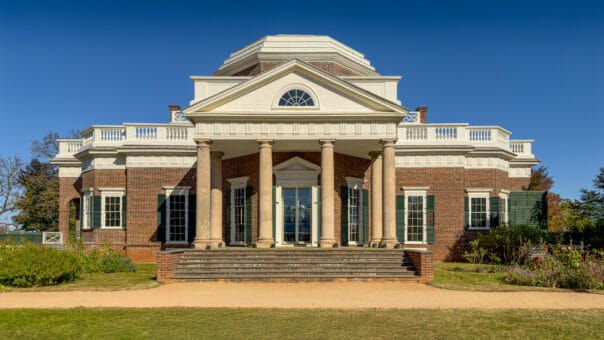
Jefferson called his home Monticello, meaning “little mountain,” and he spent more than forty years designing, redesigning, and perfecting it. He worked to make the house feel like a reflection of his mind, elegant, inventive, and filled with ideas drawn from the Enlightenment and his time in Europe. Nothing here is accidental. Hidden alcoves, revolving doors, skylights, and clever mechanical devices reveal a man fascinated with innovation and order.
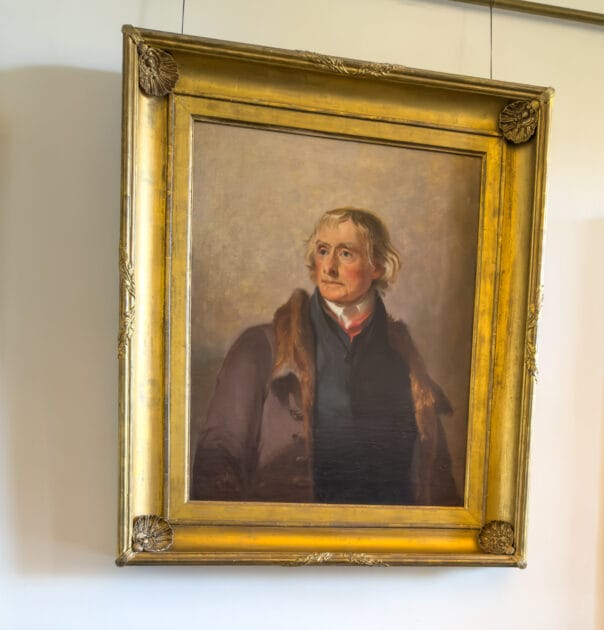
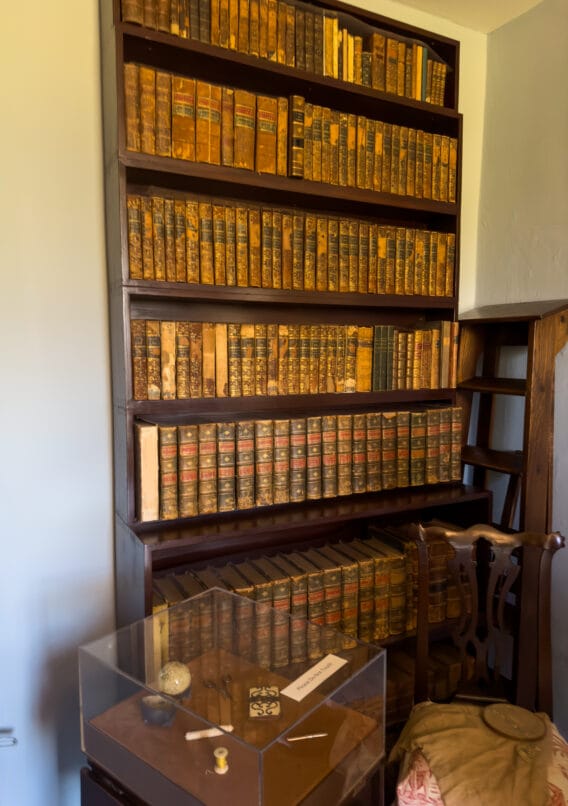
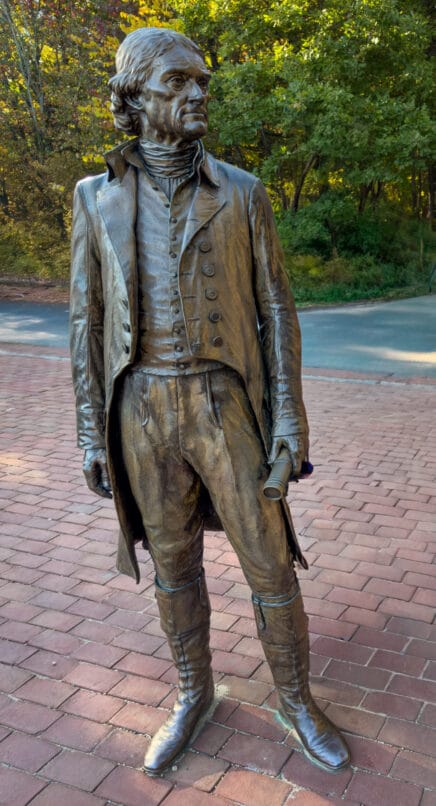
Walking through the rooms, I was struck by how personal it all feels. This is not a grand palace built to impress. It is a working home, filled with books, maps, scientific instruments, and artifacts that speak to Jefferson’s curiosity about the world. He was a statesman, author of the Declaration of Independence, and a champion of liberty. He also served as the third President of the United States from 1801 to 1809, guiding the young nation through the Louisiana Purchase and an era of expansion that would shape America’s future.
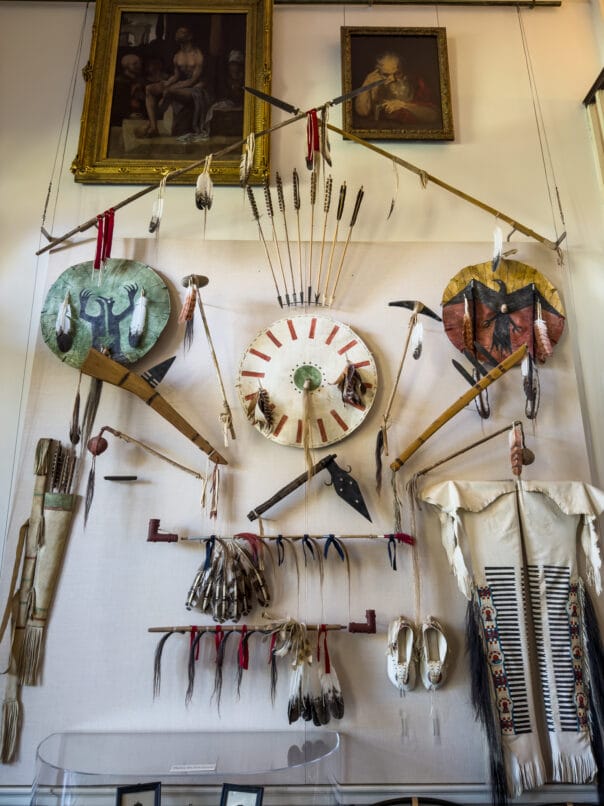
But Jefferson was also a farmer, architect, inventor, and lifelong student, but a man who did not live on par with his ideals.
He was born into privilege. He inherited land and enslaved people from his father, and from the beginning of his life, he was surrounded by the system that would sustain his lifestyle. That reality shaped Monticello in ways that cannot be ignored.
As the main house rose slowly on the mountaintop, Jefferson and his young wife, Martha, spent their early married life in a smaller structure on the property. The couple honeymooned there, in what is known as the South Pavilion, living for nearly a year in that modest space while the grand vision for Monticello was still taking shape. It is a quieter, more intimate chapter of the story, one that contrasts sharply with the scale and ambition of the finished estate.
Because Monticello was not just a home. It was also a working plantation.
More than 400 enslaved men, women, and children lived and worked here during Jefferson’s lifetime. Their labor made Monticello possible, from the construction of the house to the cultivation of the land. Today, the site does not shy away from that truth. In fact, it confronts it directly.
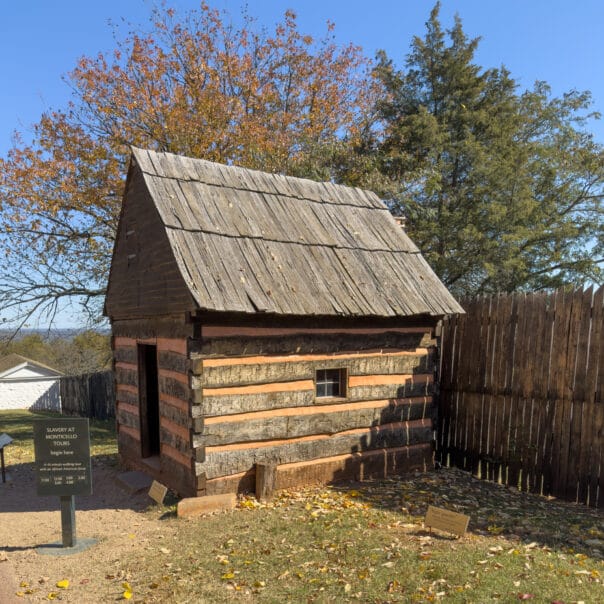
As I walked along Mulberry Row, once the center of plantation life, I tried to imagine the lives that unfolded here. Workshops, kitchens, and living quarters lined this stretch, where enslaved artisans, blacksmiths, and laborers carried out the daily work that sustained Jefferson’s world. It is a sobering contrast to the beauty of the mountaintop and the elegance of the house above.
One name, in particular, lingers in the story of Monticello: Sally Hemings.
Hemings was an enslaved woman who lived here and is now widely understood, through both historical documentation and DNA evidence, to have had a long relationship with Jefferson. She was the mother of several of his children. This reality adds another layer of complexity to Jefferson’s legacy, one that challenges the ideals he so eloquently expressed about freedom and equality.
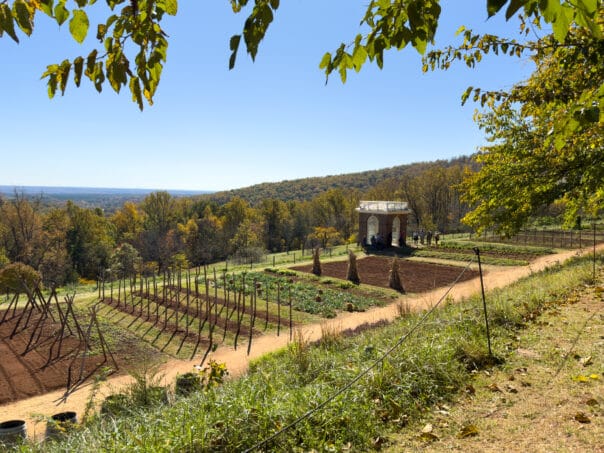
Today, Monticello continues to expand the story beyond Jefferson himself. Descendants of both Thomas Jefferson and Sally Hemings are now recognized, and through efforts such as the Getting Word project, many have traced their family histories back to this place. From time to time, descendants gather at Monticello, a powerful reminder that this is not only a historic site, but a living story still unfolding across generations.
It is impossible to stand at Monticello and not wrestle with these contradictions.
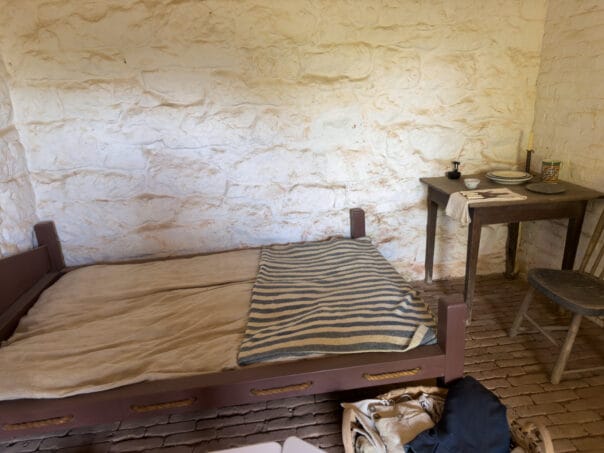
Jefferson wrote that “all men are created equal,” yet he owned human beings. He envisioned a nation founded on liberty, yet lived a life dependent on slavery. These are not easy truths, but they are essential ones. Monticello invites visitors not just to admire Jefferson, but to examine him and, by extension, the nation he helped create.
And then, in a moment I did not expect, history felt less distant.
Years ago in Colonial Williamsburg, I had encountered Thomas Jefferson through the remarkable portrayal of Bill Barker, one of the most respected historical interpreters in the country. But here at Monticello, Jefferson’s own home, I had the chance to meet and speak with him again. Barker does not simply wear the costume. He answers questions in Jefferson’s voice, drawing from letters, writings, and recorded thoughts.
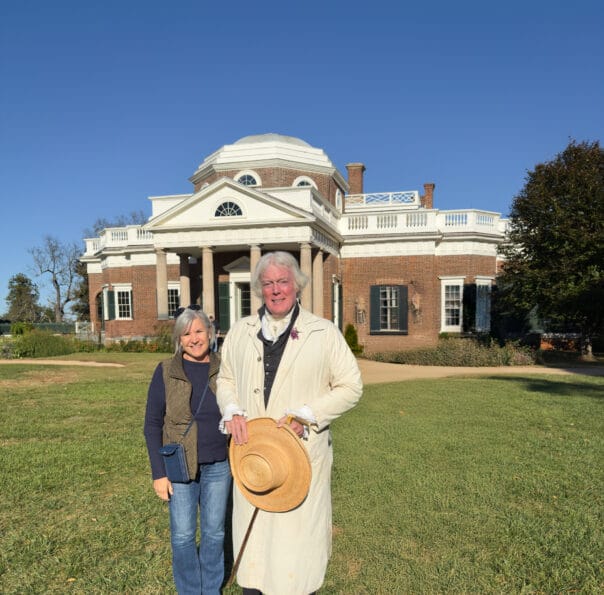
Standing beside him for a photograph, I found myself momentarily suspended between centuries. Behind us was Monticello, the house Jefferson designed with such care. In front of me stood a man who brought Jefferson’s words and ideas back to life. It was not just a performance. It was a conversation with history, one that made the contradictions of Jefferson’s life feel even more real and immediate.
Beyond the house, I wandered to the Monticello graveyard, a quiet and shaded place where Jefferson is buried. His grave marker is simple, inscribed with the achievements he chose to be remembered for: author of the Declaration of Independence, author of the Virginia Statute for Religious Freedom, and father of the University of Virginia. Notably absent is any mention of his presidency.
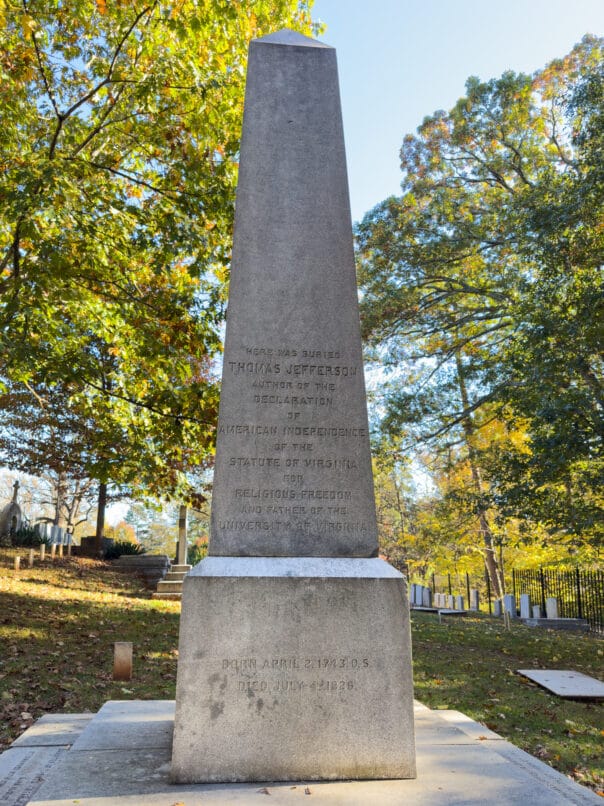
It was a revealing choice.
Jefferson died on July 4, 1826, exactly fifty years after the adoption of the Declaration of Independence. In a remarkable twist of history, his friend and sometimes rival John Adams died on that very same day. Their lives, so intertwined in shaping a new nation, came to a close within hours of one another, as if marking the end of an era.
Yet for all his accomplishments, Jefferson’s final years were marked by financial hardship. Despite his status and influence, he died deeply in debt. Monticello itself was eventually sold, a reminder that even the architects of a nation were not immune to personal struggle.
Nearby, generations of his family are also laid to rest, their lives intertwined with the land and with the complicated legacy that Monticello represents.
As I left Monticello, I found myself thinking about how we remember the past. It is tempting to simplify history, to cast figures like Jefferson as either heroes or villains, to idolize or demonize. But Monticello resists that kind of easy storytelling. Instead, it offers something more honest.
It tells a story of brilliance and contradiction. Of vision and hypocrisy. Of a nation and a man striving toward ideals it did not yet fully live up to.
And for me, it also became something more personal. Not just a place to observe history, but a place where, for a brief moment, I felt I had stepped inside it.
And perhaps that is why visiting Monticello feels so important, especially as we approach America’s 250th anniversary.
This is not just a place to admire architecture or enjoy a scenic view. It is a place to listen, to question, and to learn. It reminds us that history is not fixed or distant. It is layered, evolving, and still shaping who we are today.
Monticello, like the man who built it, is beautiful, complicated, contradictory, and unforgettable.

My next post will focus on the history of the house, as it was sold by Jefferson’s dependents to pay his debts. It’s a fascinating story of rescue and restoration. Stayed tuned.
To learn more about Thomas Jefferson, I recommend the documentary from the History Channel: https://www.history.com/shows/thomas-jefferson.
To visit Monticello: https://www.monticello.org/visit/tickets-tours.