By Debi Lander
During my visit to southern Spain last spring, I arrived just as Seville was entering one of its most powerful and emotional traditions, Semana Santa. For seven days leading up to Easter, the historic streets transform into a stage for deeply rooted religious rituals that date back centuries. What unfolds is not simply a celebration but a profound cultural expression where faith, art, and community come together.
A Tradition Centuries in the Making
The roots of Seville’s Holy Week stretch back to the 16th century, when the Catholic Church encouraged public displays of devotion during the Counter-Reformation. Religious brotherhoods known as hermandades began organizing solemn processions through the city. Today, more than sixty of these brotherhoods participate, each maintaining traditions passed down through generations.
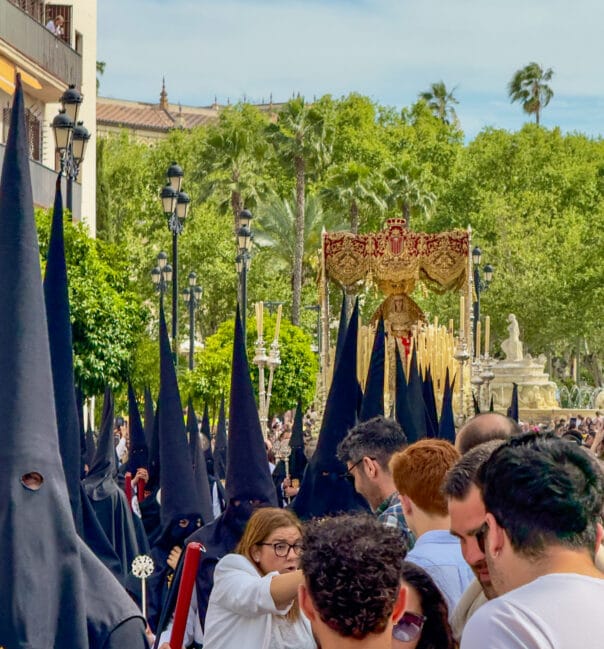
Their processions begin at neighborhood churches and wind through Seville’s labyrinth of streets toward the magnificent cathedral before returning home, often in the early hours of the morning.
The Processions: Art in Motion
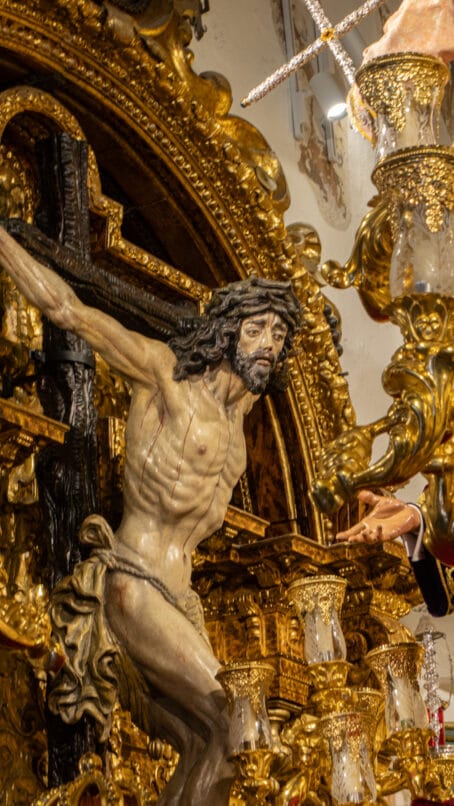
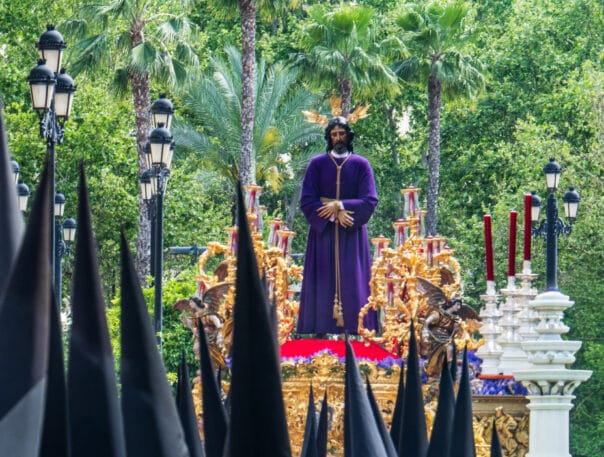
Each procession centers around massive religious floats called pasos. These elaborate and very heavy platforms (some weigh up to 10,000 pounds) carry life-sized sculptures depicting scenes from the Passion of Christ or images of the Virgin Mary. Many date back hundreds of years and are revered as priceless works of sacred art.
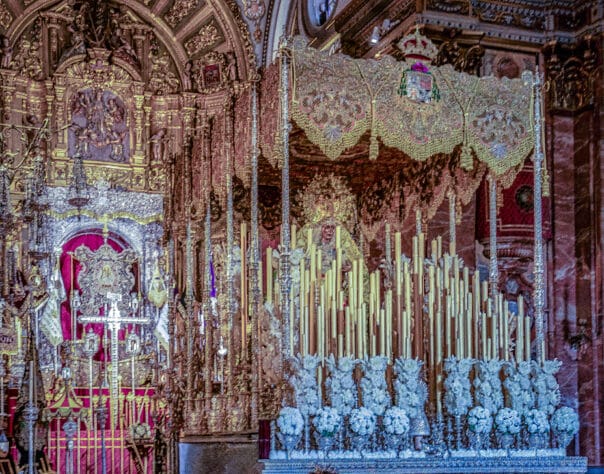
During the day, I joined locals visiting several churches to see the pasos up close. The sculptures are emotionally charged, and the most famous , La Macarena, is sorrowfully beautiful. She is deeply adored and the churched was crowded with admirers wanting a look. It is not uncommon to see grown men moved to tears as they stand in awe.
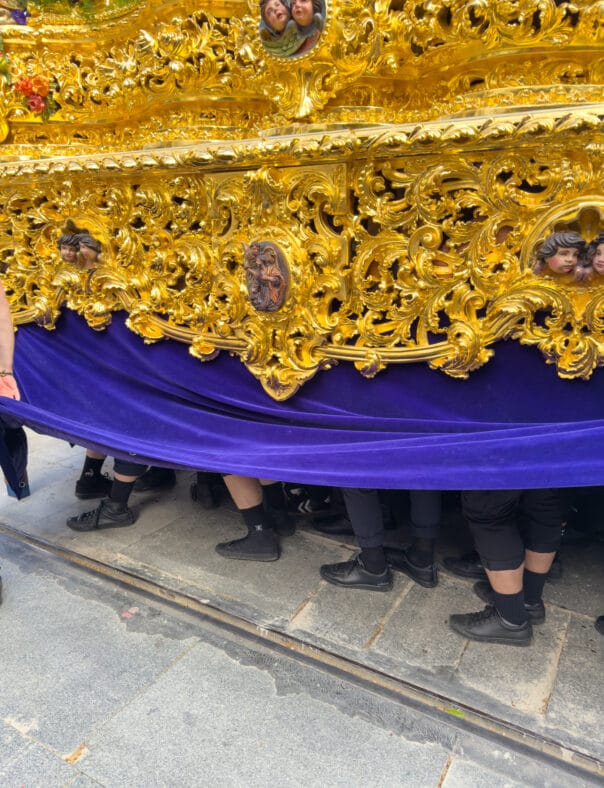
My biggest surprise came when I learned that dozens of men, known as costaleros, carry the floats hidden beneath the structure, moving slowly and rhythmically through the streets. They can’t see where they are going and rely on the direction of someone to the side. Their dedication, strength and endurance are remarkable. Some processions last as long as twelve hours.
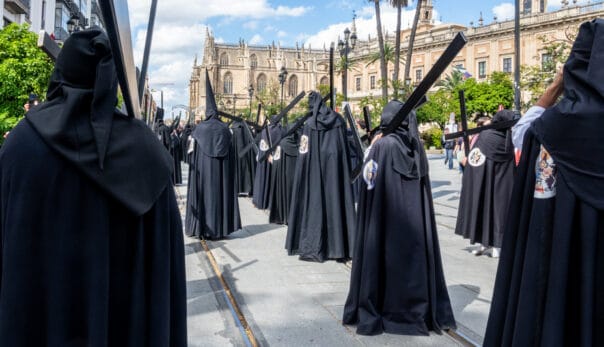
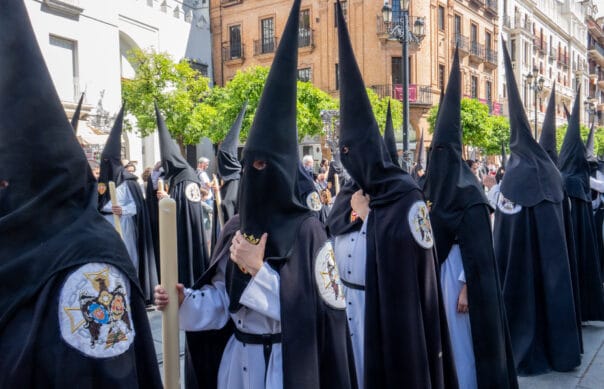
Leading the way are rows of penitents called nazarenos. Wearing long robes and tall pointed hoods to hide their identity, they carry candles or wooden crosses while walking in silence. Their appearance can surprise first-time visitors. While some Americans may initially associate the pointed hoods with imagery from our own racial history, these garments have a very different origin and meaning in Spain. They symbolize anonymity, humility, and penance before God. Some penitents even walk barefoot for miles.
Music, Silence, and Emotion
One of the most powerful elements of Semana Santa is the contrast between sound and silence. At times, the only noise comes from the soft shuffle of feet and flickering candles. Suddenly, a brass band begins a mournful march that echoes through the narrow streets.
Occasionally, a voice rises from a balcony in a spontaneous saeta, a haunting flamenco-style prayer sung directly to the passing Virgin or Christ figure. The crowd falls completely silent to listen.
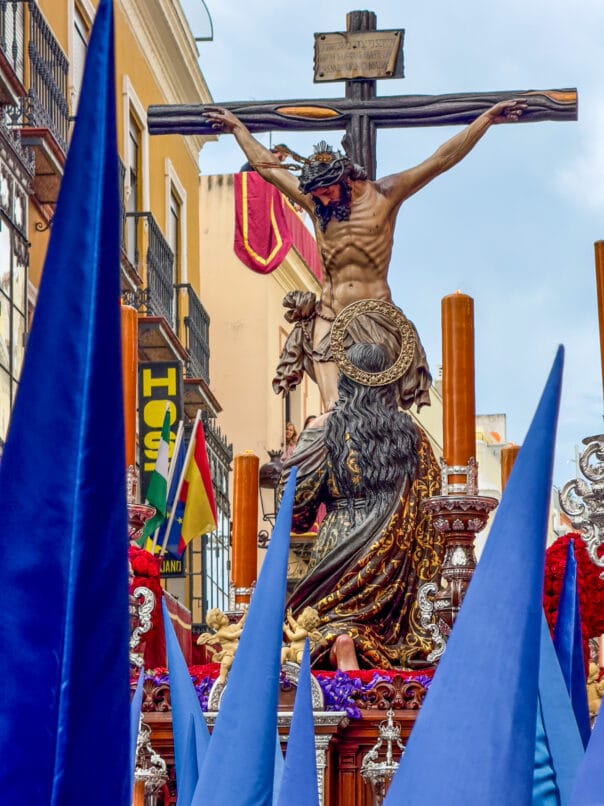
These moments create an atmosphere that feels both sacred and deeply human. Though the streets are packed, the crowd remains respectful.
While watching on Palm Sunday, one of the pasos stopped directly in front of me. I watched as the costaleros crawled out from beneath the float while a fresh group moved in, lowering themselves on hands and knees into position. With a sharp command and the pounding of a drum, the structure rose as if lifted by magic, and the procession continued forward. It is a moment I will never forget. I captured part of it in this 30-second video below:
The Most Famous Night: La Madrugá
The peak of Seville’s Holy Week occurs late Thursday night into Good Friday during La Madrugá, meaning “the dawn.” Some of the city’s most revered brotherhoods process through the streets, including the beloved images from the Basílica de la Macarena. (I had left the city by the time, unfortunately.)
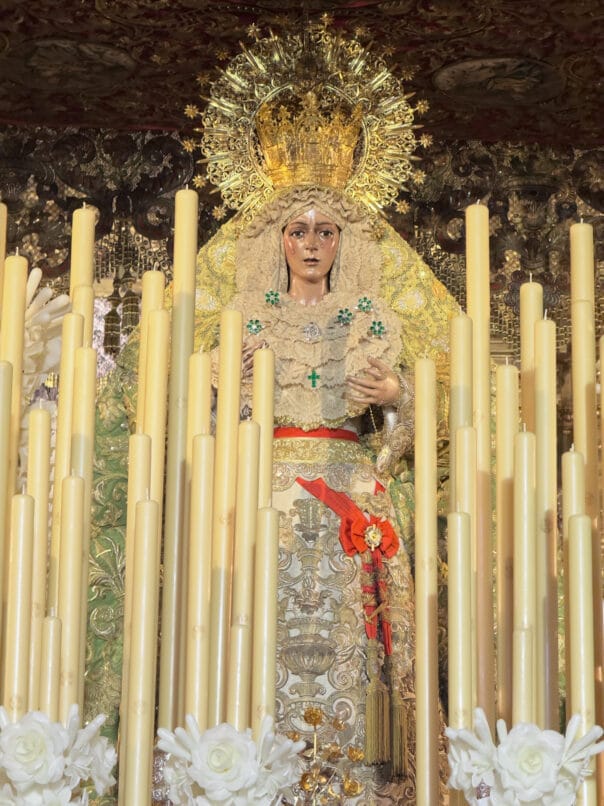
Hundreds of thousands of spectators line the streets throughout the night. Candles glow against the dark sky while church bells toll in the distance. For locals, this night represents the spiritual heart of the entire week.
A Living Cultural Experience
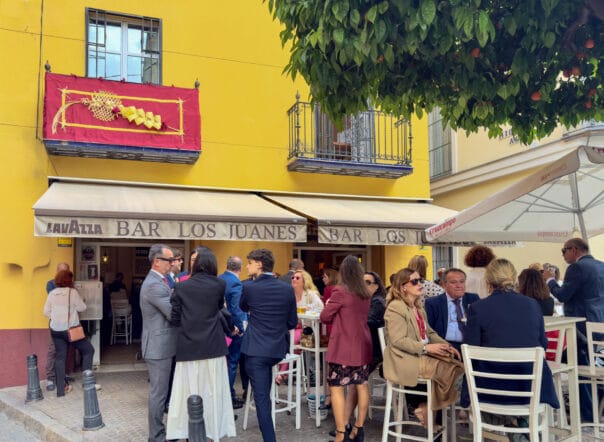
What struck me most was how deeply this tradition remains woven into everyday life in Seville. Families arrive early to claim viewing spots. Children sit on their parents’ shoulders to watch the floats pass. Cafés remain open late as neighbors gather and talk quietly while waiting for the next procession.
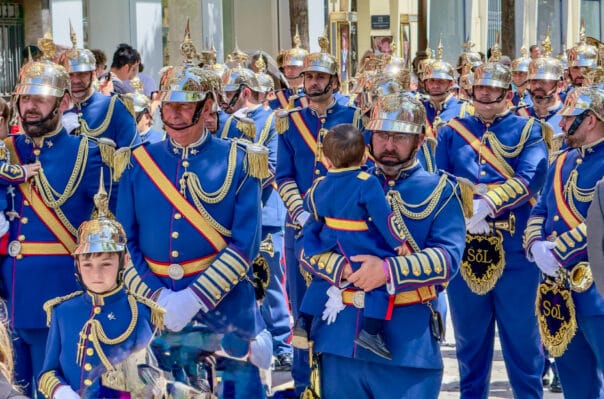
Even visitors who are not religious cannot help but be moved by the dedication, artistry, and emotion on display.
Experiencing Semana Santa in Seville is not simply watching an event. It is stepping into a centuries-old story that continues to unfold each spring.
Long after I left Seville, the sound of distant drums and swaying floats stayed with me.
Don’t Miss Seville’s Treasures
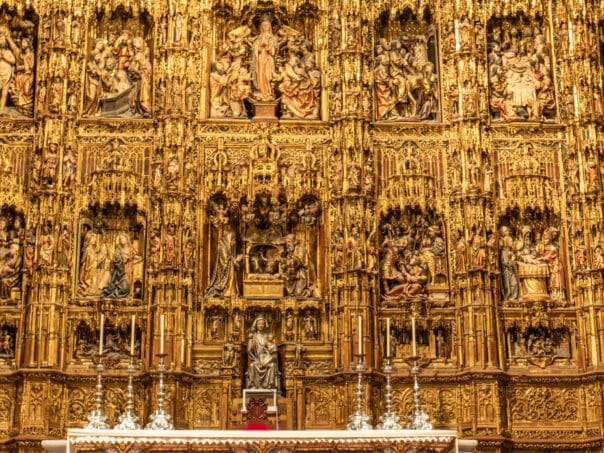
If you visit Seville, be sure to tour the immense Seville Cathedral and admire its golden altarpiece, then climb the Giralda tower for panoramic views across the city. Just steps away, the Royal Alcázar invites you into a world of intricate Moorish design and tranquil gardens. Leave time to wander the narrow lanes of the Santa Cruz quarter, where Seville’s history and charm come alive around every corner.
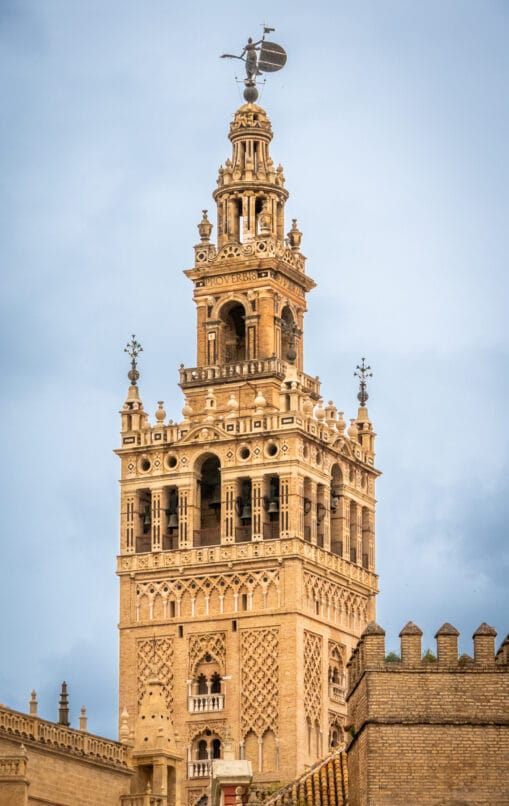
my online gallery. https://pixels.com/featured/sevilles-golden-tower-la-giralda-debi-lander.html
If You Go During Holy Week
- Best viewing areas: Around the cathedral and along the official procession route, the Carrera Oficial
- Arrive early: Popular processions draw enormous crowds
- Expect late nights: Some processions begin in the afternoon and end after sunrise
- Respect the atmosphere: Many moments are solemn and quiet