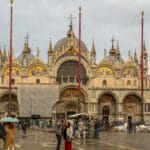
While in glorious Venice, Italy, I made a day trip to Padua by train. The ride takes just half an hour. So, what makes Padua remarkable enough to tempt travelers to leave Venice, even if only for a day?
Padua’s compelling answer: two main draws—the Scrovegni Chapel and the Basilica of Saint Anthony, both part of “Padua’s fourteenth-century fresco cycles” UNESCO World Heritage Site.
I first learned about the chapel after visiting Assisi in 2013. I was captivated by Giotto’s life-like frescoes in the Basilica of Saint Francis, painted in the late 13th century. (That’s really early art.) I tucked away the idea of seeing his masterworks in Padua, and finally, my 2025 trip to Venice presented the chance.
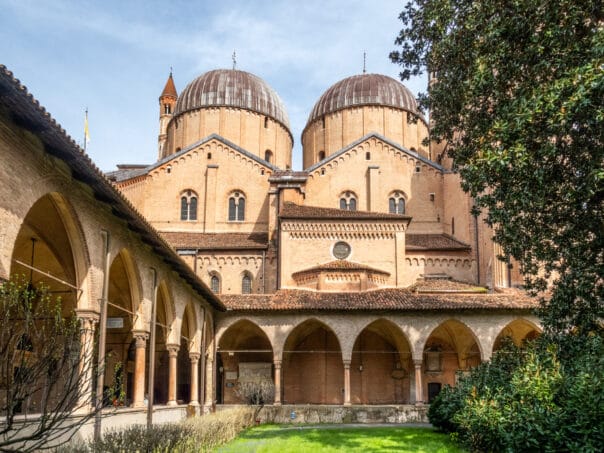
I have so much to say about this experience that I’ll cover the chapel and its museum in this post, and save the story of Saint Anthony’s Basilica for later.
Finding the Scrovegni Chapel

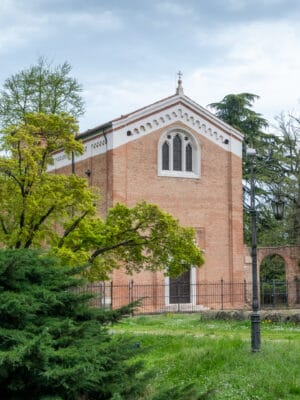
Start at the train station in Venice, (an easy walk for most), then hop on one of the frequent trains to Padua. Upon arrival, my travel buddy Judy and I followed Rick Steves Guidebook advice. We bought day-long tram tickets from a booth just outside the station. We rode the tram to the correct stop, but the Scrovegni Chapel is tucked within a quiet garden, and we walked right past it the first time. The chapel is not a grand cathedral or massive basilica—rather, it’s a modest building with a profound interior, considered one of the most important landmarks in Western art.
Inside, visitors experience the vivid, emotionally charged frescoes of Giotto di Bondone, painted over 700 years ago, yet still full of life and meaning. Since it’s a UNESCO World Heritage site, you know you won’t be disappointed.
A Merchant’s Act of Redemption

History of the Chapel
The chapel’s story began with money and guilt. Enrico Scrovegni, the son of a wealthy banker, commissioned the chapel around 1300. His father, Reginaldo, was infamous enough for Dante name him among the usurers (those who lend money at unreasonably high interest) in The Divine Comedy. Enrico, perhaps hoping to redeem the family name and secure his own legacy, built a private chapel on the grounds of the family palace. He hired Giotto, a rising star of the art world, to decorate it.
Completed around 1305, the Scrovegni Chapel is also known as the Arena Chapel due to its location near the ruins of a Roman arena (which we stumbled upon). It was intended as a family chapel and Enrico’s burial site. He even had himself painted into one of the frescoes, presenting a model of the chapel to the Virgin Mary.
Giotto’s Revolutionary Vision

Giotto’s fresco cycle covers the walls and ceiling with scenes from the life of the Virgin Mary and the life and Passion of Christ. His storytelling is clear, marking a turning point in Western art.

Giotto broke from the stiff, symbolic style of medieval painting. His figures are grounded in space, their bodies have weight and are believable. They weep, embrace, recoil, and kneel with genuine feeling. He introduced naturalism and drama—like the moment in The Lamentation, where angels swoop down as Christ’s followers mourn his lifeless body. The grief is raw and unmistakable.

Above the frescoes, he studded a beautiful blue barrel-vaulted ceiling with golden stars. I loved how it created the illusion of the heavens within the intimate space.
A Masterwork of Narrative Art
The frescoes unfold in a carefully planned sequence. Giotto painted 38 scenes in three tiers along the walls. I might compare reading the panels to reading a comic book. Each one has action and emotional excitement and moves the story along.

One of the most powerful aspects of the chapel is its storytelling. Even without words (remember, few could read in those days), the cycle acts like an illustrated manuscript. The stories are clear, and the figures feel real—far from the flat icons of earlier eras.
On the north and south walls, you see scenes from the lives of Joachim and Anna (Mary’s parents—stories that were new to me), the Virgin, and Christ. The west wall features the monumental Last Judgment, with Enrico Scrovegni kneeling humbly on the side of the saved.

The Last Judgment covers the entire rear wall, and I was particularly drawn to the character-like devil feasting on the inhabitants of hell. I suspect Michelangelo visited the chapel before he painted his own Last Judgment in the Sistine Chapel—the two are strikingly similar.

Preservation and Access
Naturally, over the centuries, the frescoes have endured weather, war, and pollution. Today, access is tightly controlled to preserve the delicate paintings. Timed-ticket reservations are mandatory and always sell out. Check the official website and book as early as possible.
Visitors enter a climate-controlled waiting room for about 15 minutes before stepping inside the chapel. During this time, a video helps prepare you for what you will see.
The visit itself is brief—15 to 20 minutes—but unforgettable. I had read that photos weren’t allowed inside, but to my surprise, mobile phone photography was permitted. I was overjoyed. While nothing compares to being there in person, surrounded by Giotto’s blues, ochres, and tender images, my iPhone photos captured treasured memories.
The day I visited, most of the group was a senior high school class of Italians. They didn’t seem very interested, which made me rather sad, but they left quickly when time was up. Therefore, I got to turn around and take one last shot of the entire space with no people. Thanks, kids.

Why It Matters
The Scrovegni Chapel is more than a historic monument. It represents a watershed moment in art—the birth of Renaissance humanism. Giotto’s style paved the way for artists like Masaccio, Michelangelo, and Raphael. His influence rippled across Europe, reshaping how people saw not just art, but humanity itself.
Visiting the chapel isn’t just about admiring beautiful paintings. In the quiet of that modest building (no tour guides speak inside), Giotto gave art a new voice—one packed with emotion, realism, and faith.
Tips for Visitors:
• Advance Reservations Required: Book your timed ticket online well in advance (they always sell out). Link: https://www.cappelladegliscrovegni.it
• Arrive Early: You must be in the waiting room 15 minutes before your slot to begin the air-purification process.
• Location: The chapel is part of the Eremitani Civic Museums complex, near the center of Padua.
• Allow Time for the Civic Museums: Your ticket includes access to the adjacent museums, which house ancient Roman artifacts and Renaissance art.
• I highly recommend using Rick Steves’ Venice guidebook, which includes a helpful day trip itinerary to Padua.
The Musei Civici Eremitani
The Civic Museums, located just steps from the Scrovegni Chapel, were a delightful surprise with a much larger, richer, and more varied collection of art and artifacts than I expected. While Giotto’s frescoes steal the spotlight, the museum itself offers a fantastic look at Padua’s artistic and historical heritage. Here are the key highlights for art lovers:
The Art Gallery features works from the 13th to the 18th century, with a strong emphasis on regional artists and those influenced by Giotto. It provides context for Giotto’s innovations by showcasing the work of painters who came before and after him.
Renaissance Treasures
The museum holds important Renaissance works, including entire altarpieces and devotional paintings from Paduan churches and convents. Noteworthy artists include Giovanni Bellini, Giorgione, della Robia, Titian, and Mantegna. You can also see the surviving fresco fragments from Mantegna’s Ovetari Chapel, which were damaged in WWII.

Romanesque and Gothic Sculpture
A fascinating collection of religious sculptures offers a look into earlier medieval art. Carvings, capitals, and tomb sculptures reflect the stylistic evolution of the Gothic period in northern Italy.
The museum also contains finely illuminated manuscripts, textiles, and ceramics, providing a look at Padua’s cultural life beyond painting and sculpture.

The Archaeological Museum
The museum’s complex includes an archaeological wing that is well worth a short visit. It includes Greek and Roman artifacts—statues, sarcophagi, and mosaics.

Why Visit?
The Musei Civici Eremitani enriches a visit to the Scrovegni Chapel by putting Giotto’s work in historical and artistic context. You see what came before him, how radically he changed art, and what followed in his wake.
The visit to the Scrovegni takes only about 45 minutes total, but allow at least another hour for the Civic Museums. There is also a coffee shop/cafe at the site.