
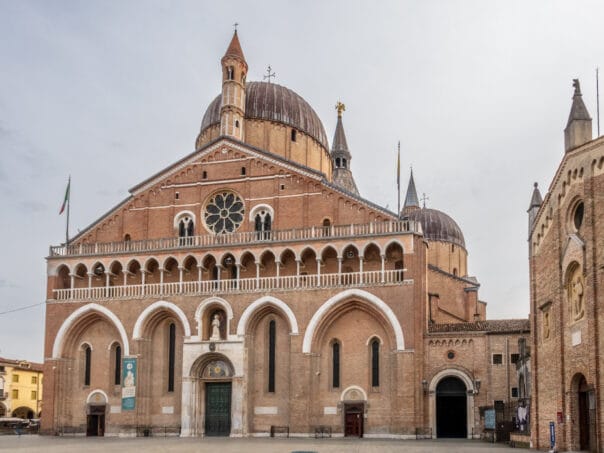
In the heart of Padua, a city celebrated for its university and Renaissance masterpieces, I found a sanctuary of immense spiritual and artistic significance: the Basilica of Saint Anthony (Basilica di Sant’Antonio di Padova). Pilgrims and art lovers alike journey here, drawn not only by the stunning blend of Romanesque, Gothic, and Byzantine architecture, but by the enduring legacy of the beloved saint within.
I approached the basilica from the bustling Piazza del Santo, where the bronze equestrian statue of Gattamelata, created by Donatello, commands attention. It’s an extraordinary piece of Renaissance sculpture, one of the earliest and most influential equestrian statues since antiquity. But even that masterwork can’t compete with the sprawling, domed silhouette of the basilica itself. Byzantine domes, Gothic spires, and Romanesque touches rise together like a fusion of the faiths.
A Sacred Destination
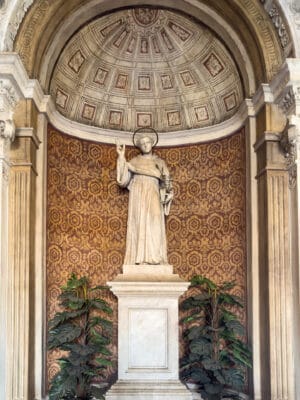
The basilica was begun shortly after the death of Saint Anthony in 1231 and completed by the end of the 13th century. Anthony was a Franciscan friar, born in Lisbon but deeply connected to Padua, where he lived and preached. Known for his eloquence, compassion, and miracles, he was canonized just a year after his death- a rarity. To this day, pilgrims flock to his tomb seeking healing or offering thanks.
Did You Know? Fun Facts about Saint Anthony of Padua
- Patron Saint of Lost Things: Legend says a stolen book was returned after Anthony prayed for its recovery.
- He Preached to the Fish: When ignored by villagers, he preached to the sea—and fish gathered to listen.
- His Tongue Didn’t Decay: Found intact 30 years after his death, it’s displayed in a reliquary.
- From Lisbon to Padua: Though born in Portugal, both cities celebrate his legacy.
- Visions of Christ: He is often depicted with the baby Jesus, said to have appeared to him in prayer.
- The Wonder-Worker: Stories of healing, food multiplication, and saving lives define his sainthood.
- Hammer of Heretics: Known for bold sermons defending the Catholic faith.
Exploring the Basilica
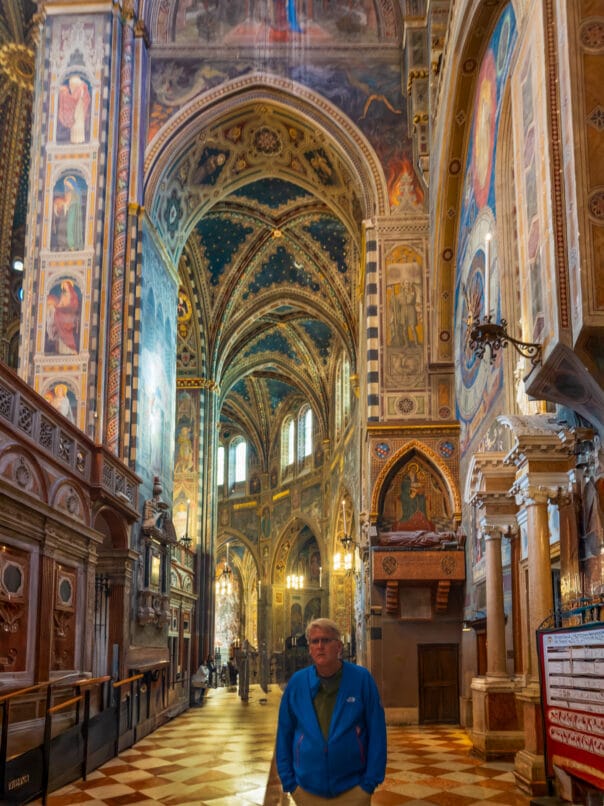
As I entered, the cool air and dim light offered relief from the sun and the noise outside. A hush fell, not only because of the sacred setting, but from the sheer awe the interior. The church is immense, yet feels warm—dark stone columns stretch skyward, supporting the domes that let in soft, filtered light.
The Chapel and Relics of Saint Anthony
I followed the small crowd toward the Chapel of Saint Anthony. The most poignant moment came at the saint’s tomb lies beneath a baroque altar. Visitors circle the tomb in silent prayer, often placing hands upon the marble or leaving written notes. I saw some weep, others simply paused in reverence. Even if you’re not Catholic, the energy here within is palpable.Nearby, the Chapel of Relics displays items associated with the saint: his tongue, jawbone, and vocal cords, all considered incorruptible and miraculous. While these might seem macabre, and a bit weird, in context they serve as sacred objects. St. Antony was known as a powerful preacher.

Artistic Treasures
For non-pilgrims, the basilica is a treasure chest of art. Donatello’s influence doesn’t stop at the square—his bronze reliefs on the high altar are some of his greatest works. Sadly, I missed seeing this as mass was being held.
The frescoes by Altichiero da Zevio in the adjacent Oratory of Saint George (often missed by casual visitors) rival those of Giotto in their storytelling and color.( Link here for my post about Giotto’s art in Padua’s Scrovegni Chapel.)
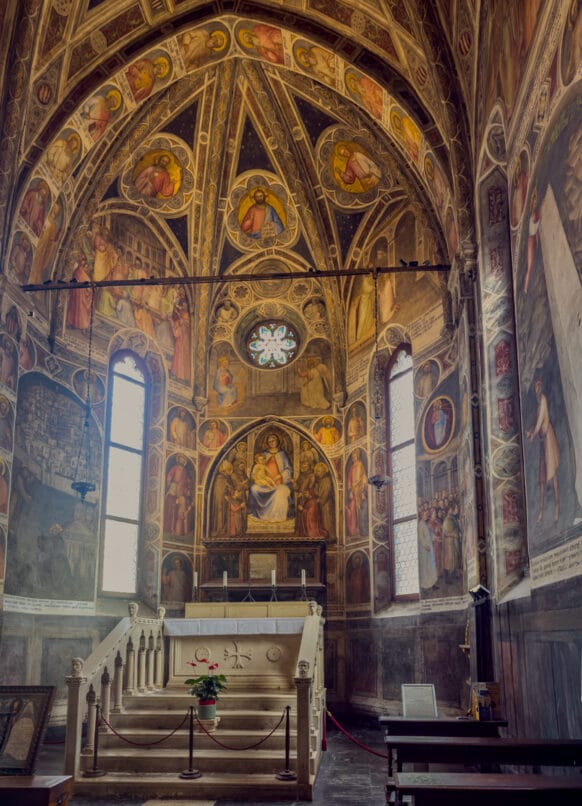
Every corner of the basilica seems to reveal another hidden gem: intricately carved chapels, stained-glass windows glowing with medieval hues, and vaulted ceilings adorned with especially stunning celestial patterns. The mixture of Gothic and Romanesque architecture adds layers to the visual journey.
A Living Church
What struck me most is how alive the basilica feels. This isn’t a museum—it’s an active place of worship. Daily Mass was being held, (so I missed getting a close look at Donatello’s altarpiece), candles flicker in quiet alcoves, and the friars of the Franciscan order still maintain the basilica and its missions. Tourists mingle with locals who come to pray. It’s a space that honors both history and present-day devotion.

Outside, the basilica’s cloisters offer a peaceful retreat. I wandered through the Cloister of the Magnolia, named for the towering tree at its center, and sat for a while.
Planning Your Visit
- Entry is free, but donations are welcomed, especially if visiting the Chapel of Relics or Oratory of Saint George.
- Modest dress is required—no bare shoulders or short shorts.
- The Piazza del Santo offers shops and cafés for a break before or after your visit.
- Don’t miss the Basilica Museum and Botanical Garden, both nearby.
- I used Rick Steves Venice Guidebook, the section about day trips to Padua.
Final Reflections
The Basilica of Saint Anthony is one of those rare places that transcends tourism. You don’t just visit it—you feel it. Whether you come for the art, the architecture, or the quiet pull of faith, you leave changed. Padua may be famous for its university and frescoes, but in this sacred space, it touches you.
FAQs about Visiting the Basilica of Saint Anthony in Padua
Q: Is photography allowed inside the basilica?
A: Photography is permitted in most areas, but flash and tripods are prohibited. Some chapels may request no photos out of respect.
Q: Can non-Catholics visit or attend Mass?
A: Absolutely. The basilica welcomes visitors of all backgrounds. Attending Mass can be a beautiful cultural experience.
Q: How long should I plan to spend at the basilica?
A: 1–2 hours is sufficient for the basilica, but budget more time if visiting the museum, oratory, and cloisters.
Q: What’s the best time to visit?
A: Weekday mornings are quieter. Avoid Sundays if you’re hoping to view the high altar or take photos, as services may limit access.
Q: Is the basilica wheelchair accessible?
A: Yes. The basilica is mostly accessible, and assistance is available upon request.


