Category Archives: Travel Journal/Blog

Savannah 1779: Where the Revolution Turned International

By Debi Lander
Bylandersea.com | Bylandersea America 250

This article is part of my ongoing Bylandersea America 250 series, exploring the Road to Revolution as we approach the nation’s 250th anniversary.

A Southern City of Grace and a Forgotten Battlefield

Savannah is easy to love.

Spanish moss drapes from live oaks like soft gray lace. Sunlight filters through cathedral canopies of green. Brick paths lead past wrought-iron balconies and pastel townhouses that seem untouched by time.

But history is rarely as gentle as the light.

In 1779, these serene squares filled with smoke. Cannon fire echoed between orderly streets. French and American soldiers charged across open ground while British defenses thundered back.

Savannah was not always graceful. It was once a battlefield.

After the stalemate at the Battle of Monmouth (read my previous post here) in 1778, the British shifted their focus south. Convinced that Loyalist support would secure victory, they targeted Georgia first. In December 1778, British forces captured Savannah with stunning speed.

The war had moved to the Deep South.

Within a year, Savannah would become the site of one of the bloodiest and most significant assaults of the Revolutionary War.

Spanish moss hangs from live oaks along the streets of Savannah. Photo ©Bylandersea

The Siege of Savannah, 1779

In October 1779, American forces under General Benjamin Lincoln joined French troops commanded by Admiral d’Estaing to retake the city. This was one of the earliest major Franco-American operations after France formally allied with the United States in 1778.

It was ambitious.
It was bold.
It failed.

Instead of continuing a slow siege, allied leaders chose a direct frontal assault on British defenses at Spring Hill redoubt. In less than an hour, nearly 1,000 allied troops were killed or wounded.

Among the fallen was Casimir Pulaski, the Polish nobleman who helped organize the Continental cavalry. He later died from wounds received in the attack. Today, Savannah honors him with a monument in Monterey Square and another pictured below in Washington, DC.
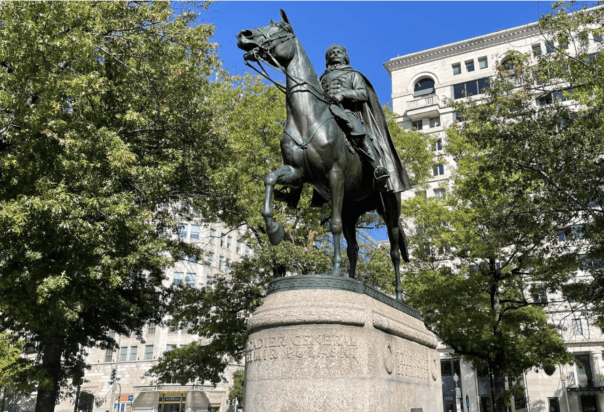
Statue of Casimir Pulaski in Washington, DC.

Savannah would remain in British hands until 1782.

But something larger had happened here.

The Revolution was no longer simply a colonial rebellion. It was now international.

French ships and soldiers had crossed the Atlantic. Caribbean bases supported the effort. European rivalries now shaped American battlefields. Savannah marked the widening of the war.


Why Savannah Matters in the America 250 Story

The army that had endured the winter at Valley Forge was now fighting far from its northern strongholds.

Savannah represents three major turning points:

  1. The beginning of the British Southern Strategy
  2. One of the first large-scale Franco-American military collaborations
  3. Proof that early alliance efforts did not guarantee success

The defeat here stung. Charleston would fall the following year in an even greater disaster. British confidence surged.

Yet the Southern campaign that began in Savannah would eventually exhaust British forces and push them toward Yorktown.

Failure did not end the Revolution. It hardened it.


Walking Revolutionary Savannah Today

Savannah does not preserve its battlefield in the dramatic way that Saratoga or Yorktown does. The Spring Hill redoubt area is largely absorbed into modern neighborhoods, marked by plaques rather than open fields.

Savannah requires imagination.

Stand in Monterey Square beneath Pulaski’s monument.
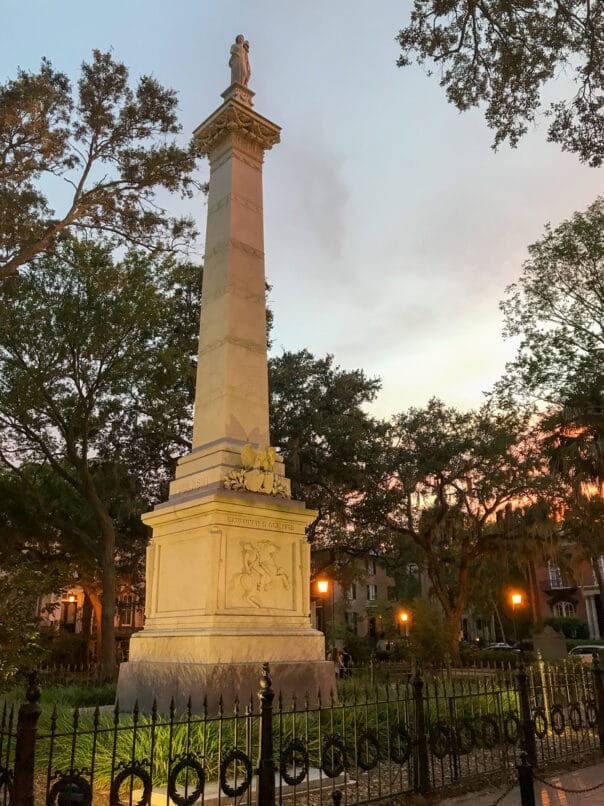
Pulaski’s Monument in Monterey Square, Savannah. Photo ©Bylandersea


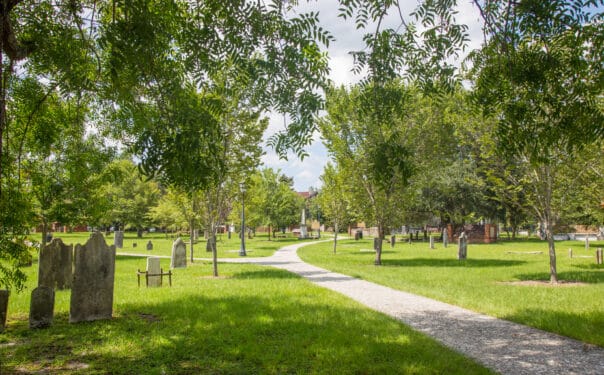
Walk Colonial Park Cemetery where soldiers rest beneath weathered stones.
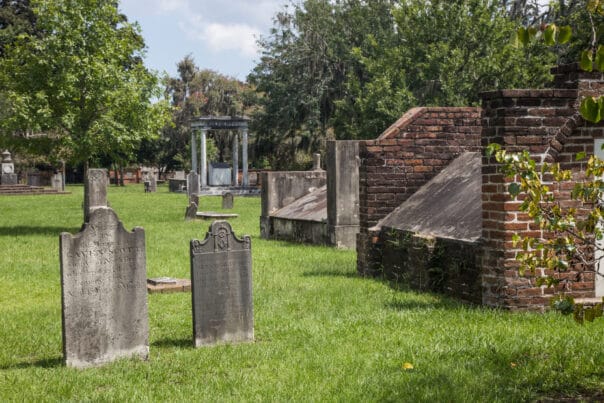
Colonial Park Cemetery in downtown historic Savannah. Photo ©Bylandersea


Trace James Oglethorpe’s original city grid and consider how this orderly plan became a wartime stronghold.
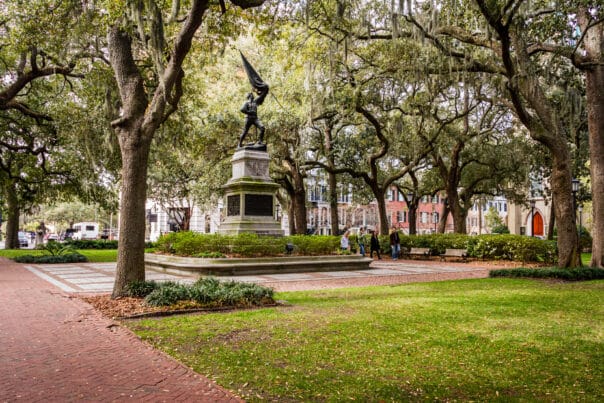
This photo shows the city grid and one of the squares from the original city plan. Photo ©Bylandersea

Savannah does not shout its Revolutionary history. It whispers.


What to See in Revolutionary Savannah

Savannah today is a layered city where several eras of American history exist side by side. Walking through the historic district, visitors encounter a blend of colonial foundations, elegant antebellum homes from the Civil War era, Victorian architecture from the late nineteenth century, and carefully preserved buildings that continue to serve modern life. The city’s famous squares, laid out in 1733 by General James Oglethorpe, still organize the streets beneath sweeping live oaks draped with Spanish moss. Around them stand churches, townhouses, monuments, and museums that tell the story of a city shaped by colonial ambition, Revolutionary struggle, Civil War survival, and ongoing renewal.

To understand Savannah fully, it helps to begin with its Revolutionary past. The sites connected to that era reveal how the city and its people played a role in the fight for American independence.

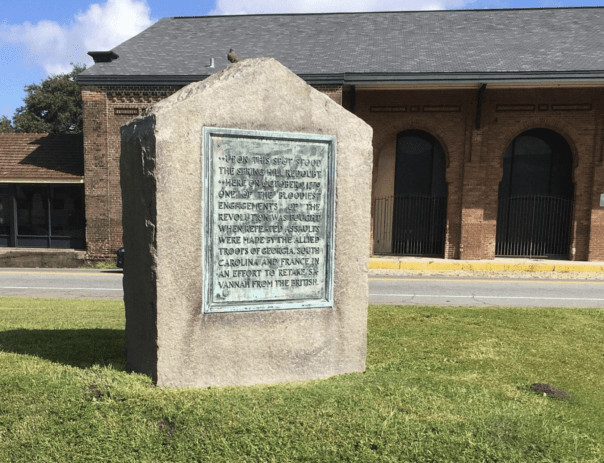
Spring Hill Redoubt Site

Historical markers identify the area where the 1779 assault occurred.

The marker reads, “Upon this spot stood the Spring Hill Redoubt. Here on October 9, 1779 one of the bloodiest engagements of the Revolution was fought when repeated assaults were made by the allied troops of Georgia, South Carolina and France in an effort to retake Savannah from the British.” (Ponder the fact that 1,000 soliders lost their lives there.)
Monterey Square

Home to the Pulaski Monument honoring the fallen cavalry officer.

Colonial Park Cemetery

Established in 1750 and containing graves from the Revolutionary period.
Savannah History Museum

The Savannah History Museum includes excellent exhibits on the Revolutionary era and the Southern Campaign.
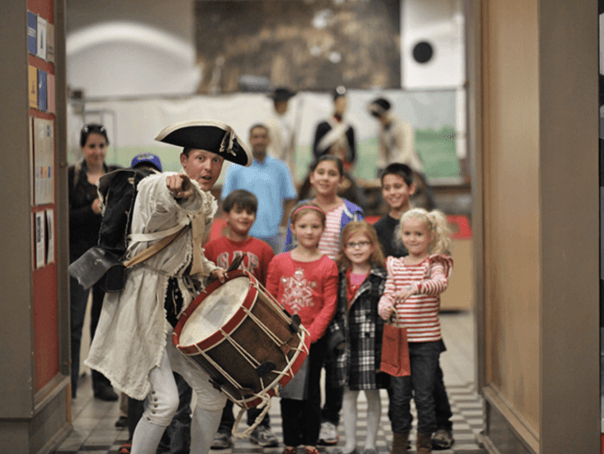
Photo provided by the Coastal Heritage Society.

Fort Pulaski National Monument

The Fort Pulaski National Monument, maintained by the US National Park Service, is located outside the city on Cockspur Island. Though best known for its Civil War history, it honors Pulaski’s name and offers sweeping coastal views.


Travel Planning Tips

Best time to visit: March through May for blooming azaleas and comfortable temperatures. October is also lovely for photography. Warning: The summer is HOT and humid.

How long to stay: Two to three days allows time for history, architecture, and unhurried wandering.

Savannah layers its stories. Colonial. Revolutionary. Civil War. Gilded Age.

I highly recommend reading Midnight in the Garden of Good and Evil by John Berendt or at least watch the movie with the same title, before visiting Savannah. You will learn about the city’s culture and history through a fabulously interesting story, and it will make Savannah come alive. Be sure to visit the Mercer Williams house, Forsyth Fountain, Bonaventure Cemetery, and dine at Mrs. Wilkes Boarding House.

Do not rush Savannah. Linger in the seductive city.

Don’t miss seeing the gorgeous Forsyth Fountain in Forsyth Park, Savannah. Photo available at: https://pixels.com/featured/morning-walk-to-forsyth-fountain-savannah-ga-debi-lander.html

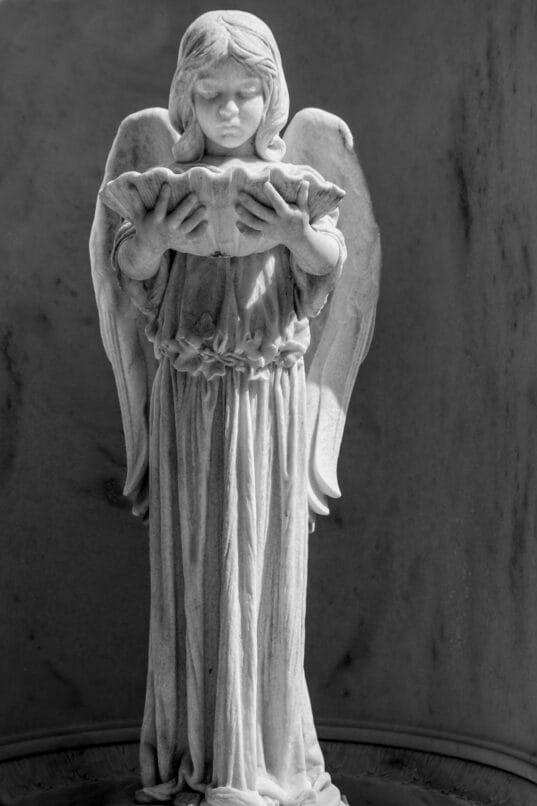
Statue at Bonaventure Cemetery. Photo ©Bylandersea
Mrs. Wilkes Dining Room opens for lunch and serves fried chicken family style with so many side dishes, you won’t need to eat dinner. Photo ©Bylandersea
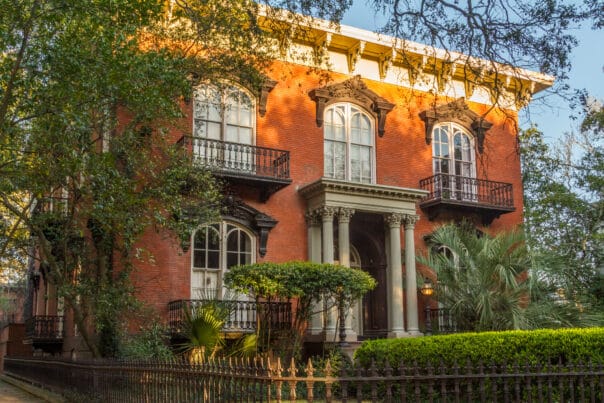
The Mercer-Williams Home can be toured. Photo ©Bylandersea
This is the book cover, the statue is kept in the Telfair Museum in Savannah.

Next in Bylandersea America 250

The Revolutionary War next moves to Charleston in 1780: America’s Greatest Surrender

Because after Savannah, the war did not improve.

It worsened.

Sacred Wood of Bomarzo: Monsters, Myth, and Mystery in Lazio

by Debi Lander

Some places ask to be understood.
Bomarzo Park refuses.

Hidden in the forested hills of northern Lazio, the Parco dei Mostri or Monster Park, is not a garden in the traditional sense. It is a fantasy carved from stone. A labyrinth of towering monsters, reclining gods, mythic beasts, and unsettling faces created in the 16th century not to please, but to provoke.

A winged dragon battles a snarling beast, setting the tone for a garden where myth and imagination rule.
©Debi Lander

A Garden Born from Grief and Imagination

Bomarzo Park was not created by a king or a pope, but by a grieving nobleman.

In 1552, Prince Pier Francesco “Vicino” Orsini, lord of Bomarzo, began commissioning this strange woodland after the death of his beloved wife, Giulia Farnese. Rather than building a formal Renaissance garden of symmetry and order, Orsini imagined something radically different. He envisioned a place of disorientation, emotion, and philosophical reflection.

He hired the famed Mannerist architect Pirro Ligorio to bring his vision to life. Instead of reshaping nature into geometric perfection, they carved the sculptures directly from existing volcanic rock outcroppings, allowing the forest itself to dictate form.

Orsini called it il Sacro Bosco, the Sacred Wood.

It was meant to be felt more than understood. For me, it was a place where imagination quietly returned. Time slowed. Edges softened. The practical world faded, replaced by a sense of childlike wonder I hadn’t realized I missed.

The Lady of the Sacred Wood. ©Debi Lander

A Journey Into the Unexpected

Reaching Bomarzo requires intention. Hidden in the countryside near Viterbo, it is not a place you find by chance. My taxi drove through peaceful villages and wooded hills, the road curving gently until the forest finally opened before us.

A modest visitor center greeted me. Then, I walked out the back door, and the stone giants began.

Proteo Glauco: Guardian of the Wood


One of the first figures visitors encounter is the formidable Proteo Glauco, a massive stone head emerging from the earth, crowned by a sculpted sphere. His expression is both watchful and ambiguous. Moss gathers in the creases of his face. Leaves settle in the folds of his carved hair.

He feels ancient, as if he has always belonged to the forest.

Proteo Glaucoma, a mythological sea serpent, lies near the entrance. ©Debi Lander


Tartaruga: The Moss-Crowned Turtle

Deeper into the woodland sits the great Tartaruga. A giant turtle supports a figure balanced above, an allegory open to interpretation. Slow and steady. Power? Patience?

The entire sculpture is softened by greenery, as if nature itself is reclaiming the fantasy.

I descended a staircase and came to this giant turtle covered in moss. ©Debi Lander

The Etruscan Elephant

The Panca Etrusca, often called the Etruscan Elephant, is one of Bomarzo’s most iconic sculptures. The enormous stone elephant carries a small tower on its back while grasping a fallen soldier in its trunk. This elephant is a blend of fantasy with classical symbolism. It feels both whimsical and imposing.

Even in stone, it suggests motion, as though the beast might step forward at any moment.

The enormous stone elephant named Panca Etrusca in Bormazo Park. ©Debi Lander

Ercole and Caco

I gasped when I stumbled upon the dramatic scene depicting Ercole defeating Caco, better known as Hercules and the thief. Here, a raw, muscular moment of violence is frozen in stone. The monumental scale reminds you that these sculptures were meant to overwhelm.

This powerful statue takes your breath away when you first see it. It’s huge and intimidating. ©Debi Lander

Neptune in the Sacred Wood

Up and around a bend, I found Neptune, known in Italian as Nettuno or the god of the sea, nestled behind the overhanging tree limbs.

He reconnects the garden to classical antiquity. Moss softens his features, yet his authority remains. He rests with quiet strength, weathered but dignified. Compared to the monsters, he feels almost serene.

I found myself lingering here. The balance between myth and nature felt seamless, as though Neptune had always belonged to the forest rather than the sea.

Neptune, god of the sea, at Bormazo Park.
A wide-angle shot of Neptune under autumn gold leaves. ©Debi Lander
Photo available: https://pixels.com/featured/neptune-beneath-autumn-gold-bormazo-park-italy-debi-lander.html

Casa Pendente: The Leaning House

The crooked house tilts deliberately, disorienting visitors before you even step inside. It plays with gravity and expectation, reminding you that this is not a place of rational thought.

It is a garden of sensation, and it’s fun.

Entering the crooked house is fun but disorienting. Children love it.

The Herms and Silent Faces

A line of carved herms rises from the earth in silent procession, their expressions solemn and unblinking. Beyond them, reclining figures and nymph-like forms lounge amid urns and lichen-covered stone, letting time gently settle over them.

Here, the Sacred Wood moves from menace to meditation in a single turn of the path.

A line of faces near the Leaning House.

Orcus: Where Every Thought Flies

The path bends, the light dims beneath the thick canopy, and then it appears — not gradually, but all at once. A colossal stone face emerges from the earth, its mouth stretched wide in a silent, eternal cry.

This is Orcus – the most famous sculpture of all within the park.

His gaping jaws form a doorway, an invitation and a warning at once. Carved above the lip are the words Ogni pensiero vola — “Every thought flies.” It is less a caption than a challenge.

Standing before him, I hesitated. The darkness inside felt cool and cavernous, a space meant not simply to be viewed but experienced. It was playful and unsettling at the same time. You enter the monster, and somehow emerge lighter, proof that even darkness can be transformative.

Me standing in the mouth of Orcus.

Echidna: Mother of Monsters

One of the final and more surprising figures is Echidna, the mythological Mother of Monsters. Part woman, part serpent, she is said to have birthed many of the most fearsome creatures of Greek legend.

Learning her name changed the way I saw the forest. The sculptures no longer felt isolated or eccentric; they felt connected, part of an ancient mythic lineage. I even thought of Game of Thrones, where dragons and hybrid beings dominate modern storytelling. These archetypes endure. The Sacred Wood is not random fantasy. It draws deeply from classical mythology.

The Mother of Monsters, her name makes me think Game of Thrones, ©Debi Lander
Photo for Sale: https://pixels.com/featured/echidna-mother-of-monsters-bormazo-park-italy-debi-lander.html

The Orsini Bear

The Orsini family crest appears in the form of a powerful stone bear holding a shield. It brings personal history to the Sacred Wood, a statement of identity and legacy.

A Glimpse Into the Past

Returning to the visitor center, I noticed one of the displays held a vintage black and white photograph of shepherds guiding sheep through the Sacred Wood. You see livestock grazing before the Orcus mouth and the elephant. This photo showed me that Bomarzo was once even more rustic and untamed.

The monsters were not always surrounded by ticket booths and cameras. They stood quietly in a wilder landscape.

A vintage photo of Bormarzo when it wasn’t a tourist attraction.

Why Bomarzo Matters

Bomarzo is not polished. It is not symmetrical. It does not flatter the eye in the way formal gardens might.

It unsettles yet delights. It invites curiosity. It allows imagination to roam.

In a world that often demands clarity and order, the Sacred Wood offers something rarer.

Mystery.

And like all great journeys, Bomarzo stays with you long after you leave. 

A closer look at Neptune.

Location: Bomarzo, Lazio, Italy
Closest major cities: Rome and Viterbo
Time needed: Allow at least two hours to wander slowly and let the forest reveal itself.
Best season: Spring or autumn for softer light and fewer crowds.
Family Friendly: Older children usually love it, unless they are easily frightened by oversized monsters and shadowy stone faces.

I hired a taxi driver in Viterbo who agreed to take me and return two hours later, making the visit simple and stress-free.

Orcus was my favorite ©Debi Lander.
Photo for Sale: https://pixels.com/featured/entering-orcus-in-bormazo-park-italy-debi-lander.html

From Boston to the Delaware: When the Revolution Nearly Died and Was Reborn

By Debi Lander

By the spring of 1776, the rebellion that had begun in the fields of Lexington and Concord finally forced the British out of Boston. For eleven months, the city had been trapped in a slow, grinding standoff known as the Siege of Boston, while George Washington’s newly formed Continental Army surrounded it from the hills beyond.

The turning point came in the dead of winter when Henry Knox, a young bookseller turned artillery officer, accomplished what many believed impossible. He hauled fifty-nine heavy cannons and mortars from Fort Ticonderoga across frozen rivers, mountains, and snow-covered wilderness. When the guns arrived outside Boston, Washington wasted no time.

On the night of March 4, 1776, American troops silently dragged Knox’s cannon up Dorchester Heights, overlooking the city and the British fleet. At dawn, General William Howe looked out and saw the heights bristling with artillery. The position was so strong that an assault would have been catastrophic. On March 17, 1776, the British evacuated Boston.

The Revolution had its first great victory.

But victory did not mean security.


The War Moves to New York

With Boston lost, British commanders shifted their focus. They would take New York City, whose deep harbor and strategic position made it the most important military prize in North America.

By summer, the largest British armada ever assembled filled New York Harbor. Washington rushed his army south, but his forces were untested and inexperienced. The result was disaster.

In August 1776, the Battle of Long Island ended in crushing defeat. Washington’s army barely escaped annihilation, slipping away under cover of darkness and fog. What followed was a long, exhausting retreat across Manhattan and New Jersey.

Men deserted. Supplies vanished. Morale collapsed.

By December, the Continental Army was on the brink of extinction.


A Desperate Gamble

Washington knew he had one last chance.

Washington Crossing the Delaware by Emanuel Leutze

Across the icy Delaware River, in the small town of Trenton, a force of Hessian soldiers slept in their winter quarters. Washington decided to strike on Christmas night.

Snow fell. The wind howled. Ice floes smashed against the boats as soldiers ferried cannon, horses, and men across the freezing river. Many marched barefoot, leaving blood on the snow. Muskets jammed. Powder grew wet. Some men collapsed before they reached the far shore.

Still, they marched.

In the early hours of December 26, 1776, Washington’s army descended on Trenton. The attack was swift and overwhelming. In less than an hour, nearly the entire Hessian garrison was captured.

It was not a major victory in size.
It was a victory in belief.

A week later, Washington struck again at Princeton, forcing the British to retreat from much of New Jersey. The Revolution was alive.


Why This Moment Changed Everything

The evacuation of Boston proved the British could be beaten.
The crossing of the Delaware proved the Americans would not surrender.

From the frozen trails of Henry Knox to the storm-tossed river at Trenton, the Revolution became something larger than rebellion. It became a test of endurance, sacrifice, and faith in an idea that had never before existed.

The war would grow darker still before it reached the light of independence. But on that frozen Christmas night, the American cause was saved.

Travel Guide

I sadly admit that I have not visited the New York City and New Jersey Revolutionary Sites and Museums, but I’d love to! Here’s my recommendations:

Fraunces Tavern Museum in Lower Manhattan

A must-visit for Revolutionary history in NYC. This museum preserves artifacts and tells the story of the Revolution in New York, including Washington’s farewell to his officers in 1783. For more information: frauncestavernmuseum.org

  • Revolutionary era exhibits
  • Hands-on programs and special America 250 events
  • Located in the historic Fraunces Tavern building

The New York Historical — Manhattan

While not exclusively Revolutionary, this museum houses strong collections and exhibitions related to New York’s colonial and Revolutionary history. Visit:  New-York Historical Society


Bonus Revolutionary Sites While in NYC

Even in a modern city, history survives in places and tours:

  • Historic Revolutionary Tours NYC to explore sites tied to the 1776 campaign. Check out: American Battlefield Trust
  • Brooklyn War Memorial (tribute to military service) and historical markers around the city commemorating Revolution-era events. 

Trenton, New Jersey Revolutionary History

Old Barracks Museum — Trenton

One of the finest Revolutionary War museums in New Jersey, housed in a restored 1758 military barracks used during the war. It interprets the Battle of Trenton and life during the era. Reopening March 2026.

  • British soldiers were stationed here
  • Museum tours explain the war’s impact on soldiers and civilians

Trenton Battle Monument & New Jersey State House

Nearby historic landmarks connected to Revolutionary New Jersey and its role in the fight for independence. Click Trenton Historical Society for a Self-Guided Tours of Trenton’s Revolutionary War Battlefields.


Princeton Battlefield State Park

A preserved battlefield where Washington scored a key victory shortly after Trenton. Visitors can walk the grounds where Continental soldiers advanced and British forces retreated.


Princeton Battle Monument

Princeton Battlefield Monument in Princeton, NJ depicting George Washington and his troops.  Douglas Ullman, Jr.

A towering monument commemorating the decisive Revolutionary battle in Princeton.