Text first appeared in Business Jet Traveler Magazine, October/November 2011, Updated December 2022
A Taste of France in North America
Even many of the world’s savviest travelers have yet to discover pristine Saint-Pierre and Miquelon, two sleepy but thoroughly enchanting islands 15 miles south of Newfoundland. They swirl in fog and mystery and boast the anomaly of being France’s last foothold in North America. Don’t confuse these isles with neighboring Canada–residents on these shores carry the euro, use 220 voltage and savor Brie, baguettes and Bordeaux.
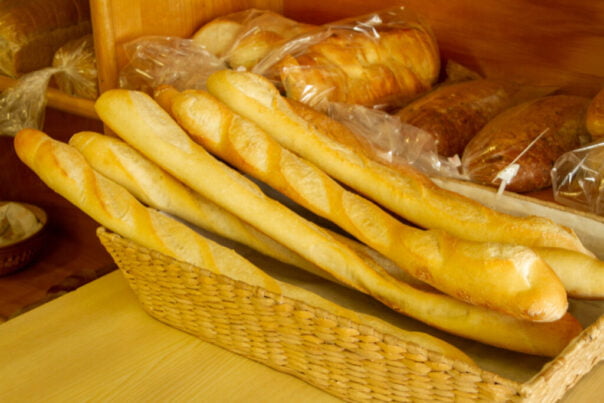
Visitors come to this charming maritime province to slow down and escape, and savor an authentic taste of France. You’ll drive alongside Renaults, Citroens and Peugeots, hear French spoken, see lace curtains hanging in windows and, perhaps best of all, enjoy the aroma of oven-fresh French bread and pastries.

St Pierre
Relative inaccessibility deters most tourists from even contemplating a visit to these isles. A ferry runs from Fortune in southern Newfoundland, although the journey by water often includes choppy and rough seas. Flights on Air St. Pierre connect from St. John’s, Newfoundland, as well as Halifax and Montreal, but schedules are erratic. However, aircraft owners can land at the modern airport, which can accommodate large business jets. It stands just a few miles from downtown Saint-Pierre–by far the archipelago’s most densely populated settlement as well as the capital. A five-minute taxi drive skirts past colorful frame homes reminiscent of those in Burano, Italy; some are painted in neon crayon hues that look exceptionally radiant on foggy day
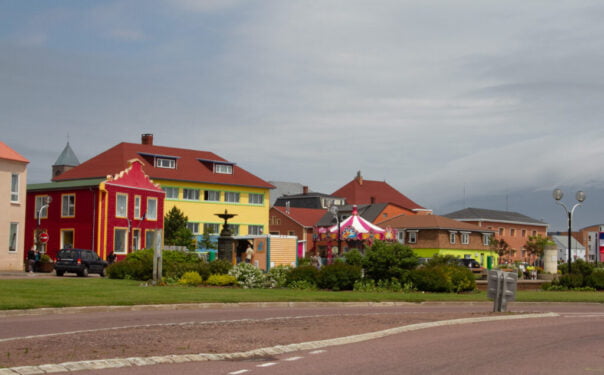
Downtown Saint-Pierre nestles against the banks of the harbor like a European village on a San Francisco incline. Cobbled brick lanes, alleys and street lanterns evoke the French Quarter of New Orleans. Canadian Dale Fuga, who vacationed here with his wife Cynthia, said, “We did not need to rent a car, as we were able to walk to all of the restaurants, shops and other attractions.”
Place de Gaulle, the town square, is near the wharf, ferry terminal and the post office, which is topped with a gabled tower. Decorative Saint-Pierre and Miquelon postage stamps attract fervent collectors who make the post office their first stop.
Thirty Paris-trained gendarmes patrol the crime-free environment. They readily volunteer for two-year stints, claiming the quaint atmosphere suits family life.

A must-do walking tour includes the red- and white-striped Point Aux Canons Lighthouse and three sentinel canons, which were formerly used to guard the harbor from British attacks. Nearby rests a poignant memorial dedicated to island sailors lost at sea. Hundreds of shipwrecks lie scattered around the treacherous rocky shores. A Catholic cathedral built in 1906 from rocks quarried on Saint-Pierre lies behind the memorial. Adorning the sanctuary are two stained-glass windows brought by President Charles de Gaulle when he visited in 1967.

Feel like a Francophile and follow your nose to the bakery and several gourmet food and wine shops up the street. Browse over bottles of French wines and champagne at European Union prices, a real bargain for many tourists. A glass cabinet displays fine chocolates and shelves are lined with imported foodstuffs such as haricot verts, escargot, white asparagus and jellies and jams. The selection of croissants and fromage is fantastic. And, don’t miss the foie gras made in Miquelon–it’s scrumptious enough for export to Parisian cafes.

Portuguese explorer Joa Alvarez Fagundes discovered the islands in 1520. On Cartier’s 1536 voyage, he claimed the territory for the king of France. For the next few centuries, the British and French squabbled over the holdings. France eventually lost its North American empire but the tiny islands were conceded by the Treaty of Paris in 1814. Since then, the French have celebrated Bastille Day on these shores.
The archipelago, which includes eight smaller islands, totals 93 square miles–about the size of Martha’s Vineyard. Miquelon, the largest in area, supports a petite village with one main street. The population of only 500 includes numerous Acadian descendants who were driven from Canada’s provinces by the British during the 18th century. Langland, another of the tiny islets, remains the most wild and green. A seven-mile-long strip of sand connects it to Miquelon–drivable depending on sea conditions. Langland serves as a summertime getaway for by about 400 Saint-Pierre residents.
The islands remain important fishing grounds due to their proximity to the legendary Grand Banks. While the French government continues to dispute the territorial fishing zone, it has no intention of abandoning the outpost. Today, the colony’s infrastructure and 6,000 residents are highly subsidized. Cod fishing copiously sustained the economy until 1992, when a ban on cod dried up the time-honored occupation. A majority of citizens now work at government-related jobs. Tourism is beginning to emerge, however, with the arrival of cruise ships that offer curious passengers a chance to touch French soil.
Be sure to visit the Heritage Museum, which showcases the island’s history. The highly visual exhibits offset the sparse English signage. Displays showcase the early 17th century Catholic immigrants and their religious practices. You’ll see models of sailing ships, old marine tools and gadgets, photographs, bottles of bootlegged alcohol and an amusing array of ’40s, ’50s and ’60s household appliances.
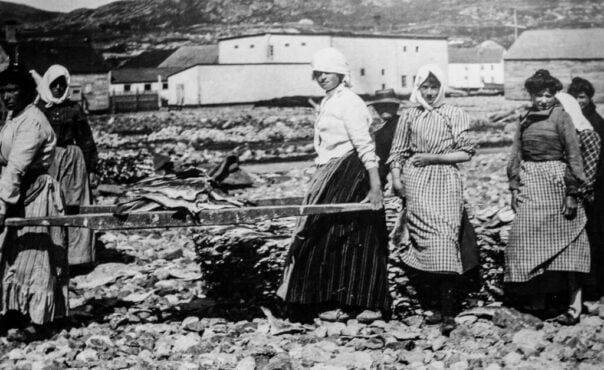
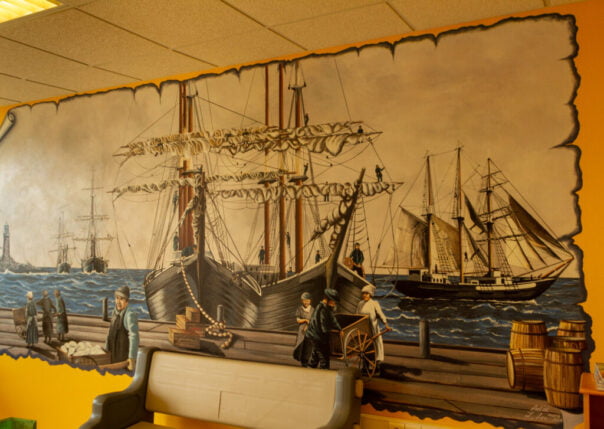
L’Arche, a public museum, features the infamous guillotine used to behead a murderer in 1889, the only one ever employed in North America. L’Arche also houses the territorial archives and displays the monumental canvas by Gaston Roullet for the 1900 Paris Exposition depicting cod fishing and drying on Saint-Pierre.
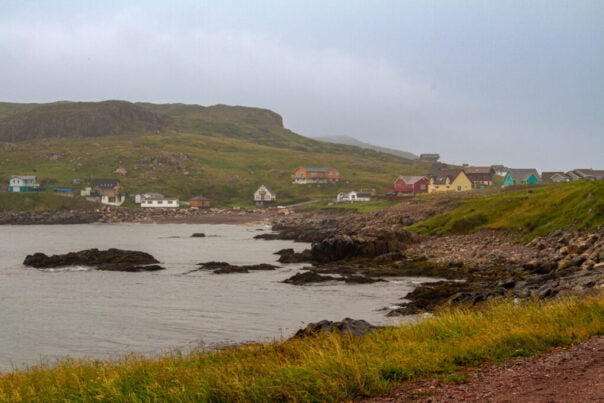
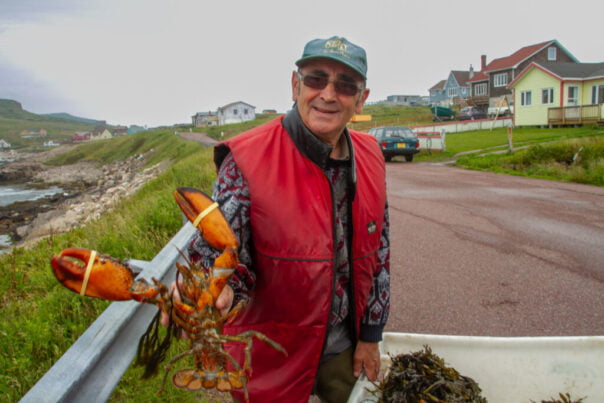
A few entrepreneurs offer guided driving tours to Pointe de Savoyard, the fringes of Saint-Pierre where horses roam free. Both humble cottages and several large homes dot the sparsely inhabited hills and bogs while ponderous surf crashes against the rocky coastline and beaches–reminiscent of coastal Maine. The view could easily be a movie set for a Scottish or English seacoast saga. As the oversized crustaceans caught by fishermen suggest, it is an excellent locale for lobster pots. Stiff Atlantic breezes blast the inland water, making Savoyard Pond a popular windsurfing spot.
During Prohibition, when alcohol was forbidden in the U.S., it was perfectly legal to import liquor to the French-owned Saint-Pierre. Thus, the island became a warehousing shop for huge stocks of Canadian whiskey. Al Capone ran a major smuggling operation, employing residents to repack 300,000 cases of alcohol each month. The noisy uncrating process was too risky state-side so workers wrapped the bottles in straw and packed them into jute sacks. Rumrunners would secret the contraband into the U.S. while locals seized the emptied cases to fuel stoves and build houses. Life truly roared on Saint-Pierre in the years before the U.S. repealed Prohibition in 1933.
Be sure to search for the Cutty Sark House, built from wooden whiskey crates hidden among overgrown scrubby brush in the Savoyard area. Local lore says bootlegging persists and formidable old warehouses remain by the harbor, but no one offered inside tours. Another legend claims that Capone once slept ashore and St. Pierrais, as the people call themselves, seem to enjoy keeping that story alive.
A short Zodiac (schooner) journey to Ile aux Marins, Sailor’s Island, whisks you to the desolate property sans cars, streets and full-time residents. The island–formerly dubbed Dog Island because of plentiful dogfish–was once home to 700 seafarers. Now, only a picturesque church and old fishing shacks remain.

Food beckons many to this unspoiled French fantasyland. Awaken for a breakfast of cafe au lait and petit pain au chocolat, or enjoy a mid-morning meal at a sidewalk cafe. Dinnertime begins around 8 o’clock and adheres to the French custom of unrushed enjoyment over multiple courses. Why hurry when a cozy Basque bistro, Ongi Etorri, sends out piping hot escargots swimming in melted Roquefort cheese, encased by fried bread crumbs? Choose from a variety of fish such as Coquilles St. Jacques, halibut (a local favorite), or lobster and snow crab. Menus also include juicy beef entrees. Desserts look sinfully delicious, but mon Dieu, it is difficult to indulge in a peach melba or crème brulée after all those croissants!
Joie de vivre and the French lifestyle abound on Saint-Pierre with its amiable partial-English speaking residents. Sojourners relax and slow down to island time with a French twist. So, why not fly over and collect one of the least-seen passport stamps available. Afterwards, you can say, “I had lunch in France.”
Traveler Fast Facts:
What It Is:
A territory of France in North America, including two inhabited islands: Saint-Pierre and Miquelon are located near the shores of Newfoundland, roughly 800 miles northeast of Boston. American visitors will need a valid US passport. The official language is French, currency is the euro and most major credit cards are accepted. Clocks are two hours ahead of Eastern standard-time. Canadian dollars are accepted but change is given in euros. www.tourisme-saint-pierre-et-miquelon.com
Climate:
June and July are typically wet and foggy, August is clearer and September offers the best weather. Very cold winters with an average annual snowfall of 118 inches and rainfall often exceeds 40 inches.
Getting There:
The Saint-Pierre airport (FSP) can handle small jets up to a Boeing 737 or Airbus A319/320. Miquelon also maintains a regional airport (MQC) with a 1,000-meter runway for turboprop and small jet aircraft.

The territory’s official carrier, Air Saint-Pierre, operates flights from the Canadian cities of St. John’s, Newfoundland; Halifax, Nova Scotia; Moncton, New Brunswick; and Montreal. The only other regularly scheduled transportation is two-hour ferry service from the port of Fortune in southern Newfoundland.
Traveler Report Card
Accommodations (B+)
Hotel Nuits Saint-Pierre, a gracious boutique style hotel conveniently located downtown. Suitable for a romantic getaway. www.nuitssaintpierre.com.
Restaurants (A+)
Ongi Etorri, a cozy Basque bistro (the name means welcome in Basque) where owners Dominique and Cecile Hacala personally greet patrons. Reservations are necessary, as they fill every night. Many consider this the best restaurant in town.
Les Delices de Josephine offers exquisite baked goods and coffee plus pizza, quiches and baguette sandwiches.
Salon de THE La Ruche- coffee, tea and fresh French pastries.

Activities (B)
Guided Mini-van Tour – Lifelong resident Jean-Claude Fouchard offers group or individual tours with the insider scoop. www.lecailloublanc.fr
L”Arche, the staff of the public museum offer guided museum tours of artifacts and sightseeing tours, usually by appointment. www.arche-musee-et-archives.net
Cathedral St. Pierre – To see the interior, locate the rear side entrance as the front doors, with interesting fish door knobs, remain locked.
Heritage Museum – Take a step through St. Pierre’s history. Worth a visit. Only euros accepted for admission. www.musee-heritage.fr
Miquelon Day-Trip– Leave Saint-Pierre at 8 am and return at 7 pm via a 55- minute ferry ride to Miquelon. You’ll cross a strait known for its strong currents, so motion sickness medicine is suggested. Why not fly!


