Growing Discontent: Taxes, Protests, and Patriot Voices
By the mid-1760s, the American colonies were thriving but restless. Prosperity had bred confidence, and confidence bred defiance. Across the Atlantic, Parliament’s new taxes and trade restrictions tested the loyalty of Britain’s subjects in North America.
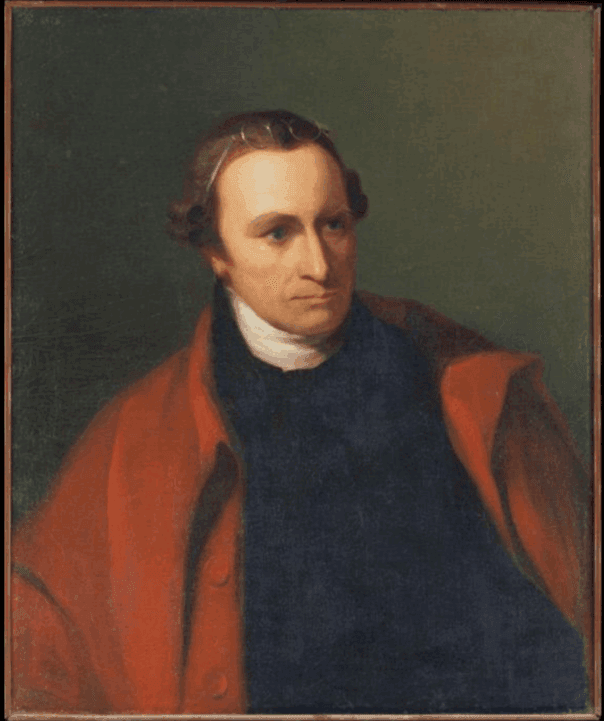
Portrait of Patrick Henry by thomas Sully, 1815, Oil on Canvas on display in the Art Museums of Colonial Williamsburg.
1764 – The Sugar Act: Seeking revenue after the French and Indian War, Parliament taxed sugar, molasses, and other goods imported to the colonies. For the first time, the goal was to raise money directly from colonists rather than regulate commerce. Boston merchant James Otis protested, declaring, “Taxation without representation is tyranny.”
1765 – The Stamp Act: A levy on paper goods—from legal documents to newspapers—sparked outrage. Patrick Henry thundered against it in Virginia’s House of Burgesses, warning that unchecked power could make King George III a tyrant. Voices in the chamber shouted “Treason!” but Henry stood firm. In Boston, Samuel Adams and the Sons of Liberty rallied crowds, while boycotts spread across the seaboard.
1766 – The Declaratory Act: When protests forced repeal of the Stamp Act, Parliament responded by asserting its right to legislate for the colonies “in all cases whatsoever.” The message was unmistakable: British authority remained absolute.
1767 – The Townshend Acts: New taxes on glass, lead, paint, and tea rekindled resistance. Colonial women calling themselves the Daughters of Liberty began weaving homespun cloth and refusing imported finery. Political debate filled taverns and churches, and pamphlets circulated widely.
By decade’s end, the colonies buzzed with debate. Printers issued fiery essays, preachers spoke of liberty from their pulpits, and taverns became centers of political discussion. The thirteen colonies were learning to think—and speak.
Before George Washington became the steadfast commander of the Continental Army and America’s first president, he was a young officer seeking glory on the rugged frontier. His first experience in battle, during the French and Indian War, brought not fame but failure. Yet those early trials would shape his sense of leadership and the destiny of a nation.
Washington’s Lesson in Humility
In 1754, twenty-two-year-old Washington led a small Virginia regiment into the wilderness of western Pennsylvania. Britain and France both claimed the Ohio Valley, and tensions teetered on war. Acting under vague orders, Washington’s men ambushed a French scouting party, a rash decision that resulted in the death of a French officer and escalated the global conflict.
George Washington as First Colonel in the Virginia Regiment, Charles Willson Peale, oil on canvas, 1772 [U1897.1.1]. Gift of George Washington Custis Lee, University Collections of Art and History, Washington & Lee University, Lexington, Virginia
Washington hastily built Fort Necessity, a crude stockade meant to hold off French retaliation. But he was soon surrounded by a superior force of French soldiers and Native American allies. Torrential rain drenched the gunpowder and the morale of his men. Facing certain defeat, Washington surrendered. Worse yet, the surrender document, written in French, contained an admission of “assassination,” tarnishing his reputation abroad.
The humiliation at Fort Necessity taught Washington the lessons of command: humility, caution, and the weight of responsibility. He never again signed a document he could not read, and he emerged from the disaster more determined, more disciplined, and wiser. Those traits would serve him well when called again in the future.
Do You Know?
Washington’s surrender at Fort Necessity in 1754 marked the only time he ever capitulated in battle. That single mistake helped ignite the French and Indian War, a conflict that spread across the globe as the Seven Years’ War and laid the groundwork for the American Revolution that followed.
Raised by His Mother’s Strength
Portrait of Mary Ball Washington attributed to Robert Edge Pine (c. 1786) as listed on Wikimedia Commons and in the public domain.
George’s character was forged long before his military career began. His father, Augustine Washington, died when George was only eleven years old. The loss profoundly affected him, leaving his mother, Mary Ball Washington, to raise five children largely on her own.
Mary was a woman of strong faith and even stronger will. She managed the family’s Ferry Farm plantation near Fredericksburg, teaching her son self-reliance, frugality, and moral resolve. Without the wealth or connections that might have come from an English education, George instead learned practical skills in surveying and agriculture. These experiences grounded him in the realities of the Virginia frontier.
After his youth in Fredericksburg, George often visited his older half-brother, Lawrence Washington, at his home overlooking the Potomac River, the estate we now know as Mount Vernon. Lawrence, a cultured and worldly man who had served with the British Navy, introduced young George to Virginia’s gentry and instilled in him an admiration for military discipline and public service.
When Lawrence died of tuberculosis in 1752, George, then age 20, inherited Mount Vernon. The property became not just his home but his lifelong refuge, a place of reflection after the Revolution and a symbol of his devotion to the land he loved.
Oil on canvas from The National Gallery of Art in the public domain.
The Fredericksburg Connection
To understand Washington’s foundations, visit Fredericksburg, Virginia, a town where his youth, family, and values still echo.
At George Washington’s Boyhood Home at Ferry Farm, visitors can walk the same bluff that overlooks the Rappahannock River and tour the reconstructed farmhouse that represents his early life. Archaeological finds tell stories of the Washington family’s daily routines, from farming tools to fragments of china, offering glimpses into the world that shaped a future president.
Across the river lies the Mary Washington House, purchased by George for his widowed mother in 1772. This modest home is filled with 18th-century furnishings and memories of a strong woman whose influence on her son was immeasurable.
A short walk leads to Kenmore, the elegant Georgian mansion built by Washington’s sister, Betty Washington Lewis, and her husband, Fielding Lewis. At the time they built the estate, they were wealthy and the house was designed to show their status. The plaster ceilings in Kenmore are among the finest in America, and every room reflects the refinement of Virginia’s elite. But Fielding’s story is one of sacrifice. He invested nearly his entire fortune in supplying the patriot cause during the Revolution. The debts he incurred crippled his estate, and he died before seeing independence realized. The family remained, but never lived a lavish lifestyle. His devotion stands as a quiet monument to the financial and personal costs of liberty.
Nearby, the Hugh Mercer Apothecary Shop offers a fascinating window into colonial medicine, with demonstrations of leeches, lancets, and herbal remedies that once treated the town’s residents.
Just a few blocks away, the Rising Sun Tavernoffers another glimpse into 18th-century life. Built in 1760 by George’s younger brother, Charles Washington, the structure originally served as his private home before being converted into a tavern in the 1790s. The Rising Sun quickly became Fredericksburg’s social hub, a place where locals, travelers, and politicians gathered to exchange news and debate the issues of the day.
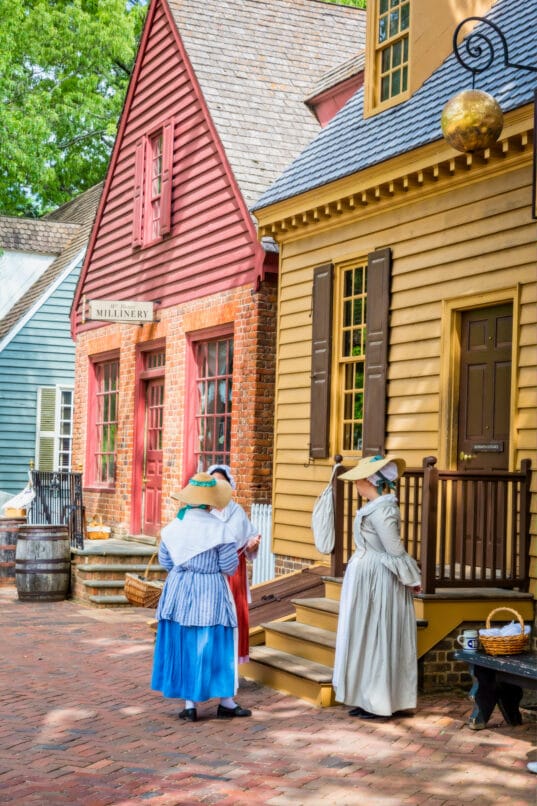
Today, costumed interpreters recreate the lively atmosphere of a colonial tavern, complete with wooden tankards, candlelight, and tales of Revolutionary-era gossip. The building’s original timbers and brick hearths remain intact, allowing visitors to step back into the era when the colonies buzzed with ideas of liberty and independence.
The tavern connects perfectly with the broader Washington story. It reflects the entrepreneurial spirit of the family and the growing identity of Virginia as a place where both ideas and independence took root.
Reflections on the Path to Greatness
In Fredericksburg, you trace the beginnings of George Washington’s strength, from the heartbreak of losing his father and the stern love of his mother to the mentorship of his brother and his lessons in failure. Here, the man behind the myth becomes real: ambitious yet humble, proud yet disciplined, and forever molded by family and place.
A visit through this region is more than a history lesson. It is a journey into the making of character and country.
George Washington’s Ferry Farm 268 Kings Highway, Fredericksburg, VA Open daily (seasonal hours vary). Tours, museum exhibits, and walking trails. Website: www.kenmore.org/ferryfarm
Mary Washington House 1200 Charles Street, Fredericksburg, VA Open Wednesday through Monday. Guided tours highlight Mary’s later life and her relationship with George. Website: www.washingtonheritagemuseums.org
Kenmore 1201 Washington Avenue, Fredericksburg, VA Open daily for tours. The home of Fielding and Betty Washington Lewis includes gardens and museum exhibits. Website: www.kenmore.org
Hugh Mercer Apothecary Shop 1020 Caroline Street, Fredericksburg, VA Living-history interpreters demonstrate 18th-century medical practices. Website: www.washingtonheritagemuseums.org
Rising Sun Tavern 1304 Caroline Street, Fredericksburg, VA Built by Charles Washington in 1760 and later converted into a tavern, the site recreates 18th-century hospitality and conversation. Website: www.washingtonheritagemuseums.org
Fort Necessity National Battlefield 1 Washington Parkway, Farmington, Pennsylvania Step onto the site of George Washington’s first military engagement and only surrender. The National Park Service site preserves the battlefield where Washington’s 1754 skirmish with the French ignited the French and Indian War. Visitors can explore the reconstructed Fort Necessity, a museum with exhibits on colonial frontier life and the global Seven Years’ War, hiking trails through the Great Meadows, and the nearby Mount Washington Tavern, once a stop on the National Road. Website: www.nps.gov/fone
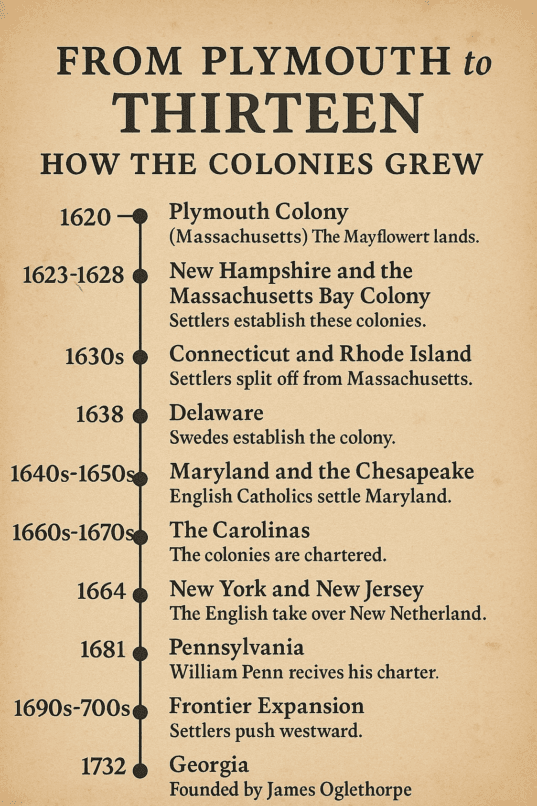
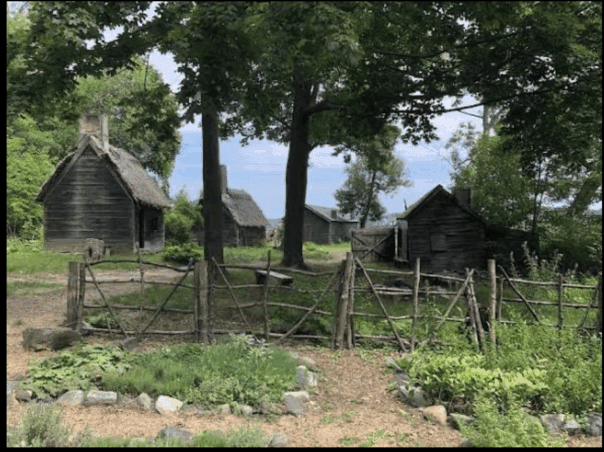
Before tea was dumped into Boston Harbor or musket fire echoed at Lexington and Concord, life in the American colonies pulsed with routine, ambition, and growing self-confidence. More than 150 years had passed since the earliest settlements at Jamestown and Plymouth. By the mid-1700s, Britain’s North American colonies flourished across varied landscapes and cultures, their growing prosperity quietly stitching together a shared identity that would soon defy the Crown.
From Frontier to Flourishing Society
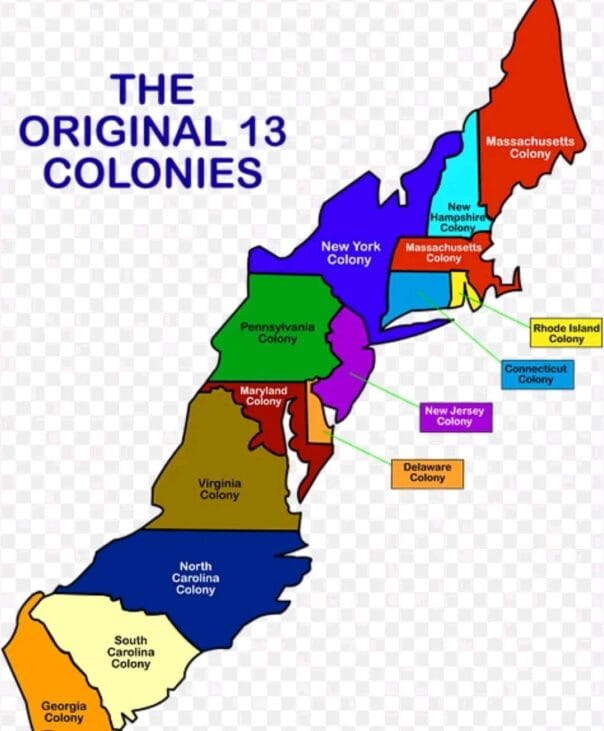
The thirteen colonies stretched along the Atlantic coast, from the rocky shores of New England to the tidewater plantations of Georgia. Though all lived under British rule, each region developed its own character shaped by geography and purpose.
New England Colonies
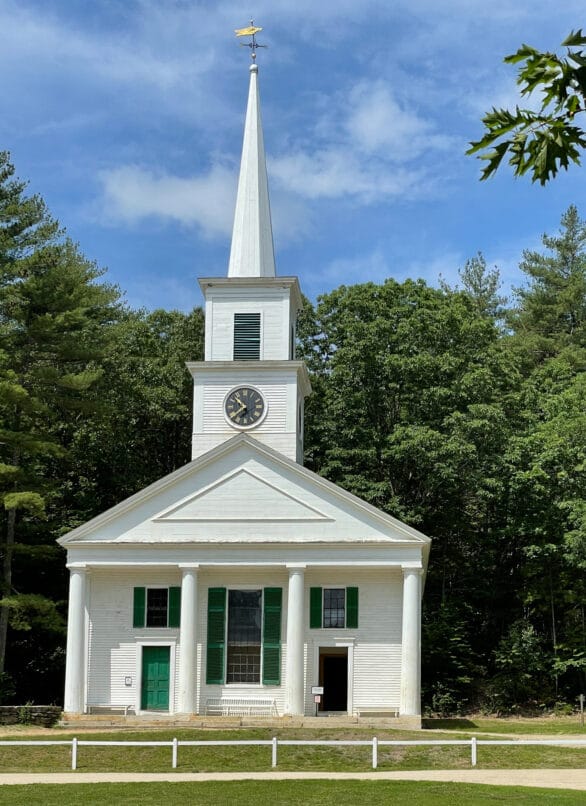
(Massachusetts, New Hampshire, Rhode Island, Connecticut) Life revolved around tight-knit towns, church life, and hard work. Poor soil and long winters made large-scale farming difficult, so New Englanders turned to the sea — fishing, whaling, and shipbuilding. Local governments held town meetings, early exercises in democracy. Education was valued; Harvard College (1636) became the first institution of higher learning in the New World.
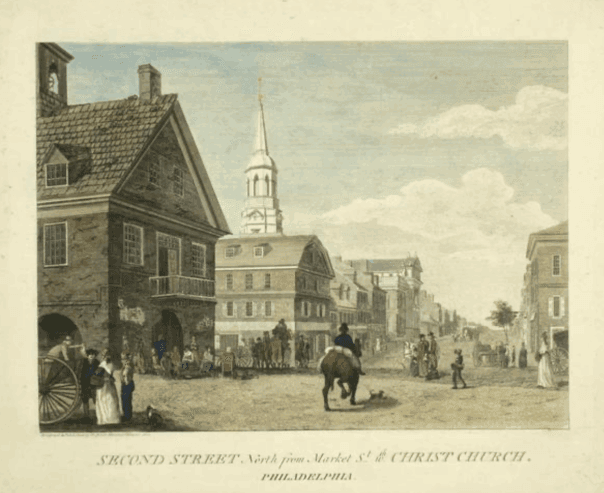
(New York, New Jersey, Pennsylvania, Delaware) Fertile land and moderate climate created the “breadbasket” of the colonies. The ports ofPhiladelphia and New York thrived on shipping, printing, and commerce. Philadelphia , founded by William Penn as a “holy experiment” in tolerance , grew into the largest city in the colonies with nearly 25,000 residents by 1775, rivaling Boston in size and sophistication.
Southern Colonies
(Maryland, Virginia, North Carolina, South Carolina, Georgia) Warm weather and long growing seasons produced tobacco, rice, and indigo. Large plantations depended heavily on enslaved labor. Charleston became the South’s leading port; Virginia, the most populous colony, dominated politics, producing men like George Washington, Thomas Jefferson, and Patrick Henry — whose fiery words, “Give me liberty, or give me death!”, would one day echo through the halls of revolution.
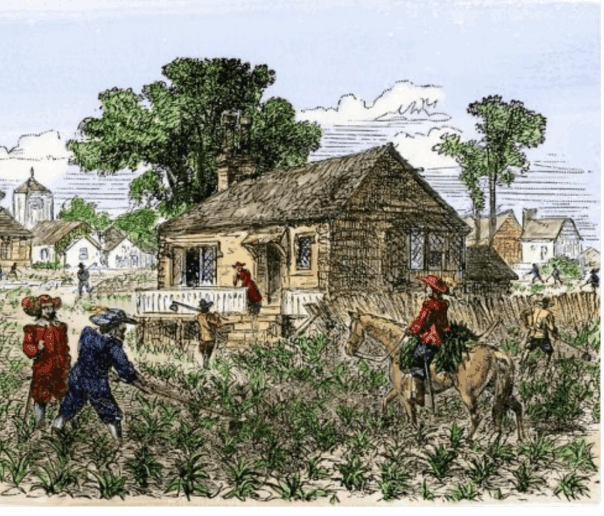
Cultivation of Tobacco in Colonial Virginia (public domain).
The Triangular Trade — Wealth and Human Suffering
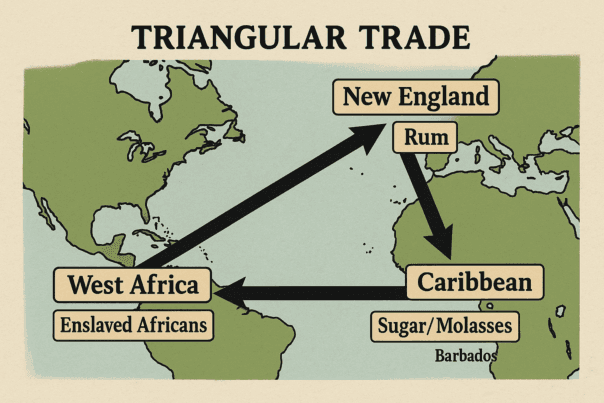
Colonial prosperity rode the currents of the Atlantic trade system, often called the Triangular Trade. Ships from New England carried molasses from the Caribbean to distilleries in Boston or Newport, where it became rum. That rum was exchanged in West Africa for enslaved Africans, who endured the brutal Middle Passage to the Americas.
From Africa to the Caribbean and North America, goods, people, and profit flowed in a three-cornered loop. The trade enriched merchants and fueled shipyards, but it also tied the colonies into the cruelty of slavery. As the musical 1776 later reminded us, “Molasses to rum to slaves” — a refrain that laid bare the contradiction between liberty and bondage.
Prosperity and Inequality
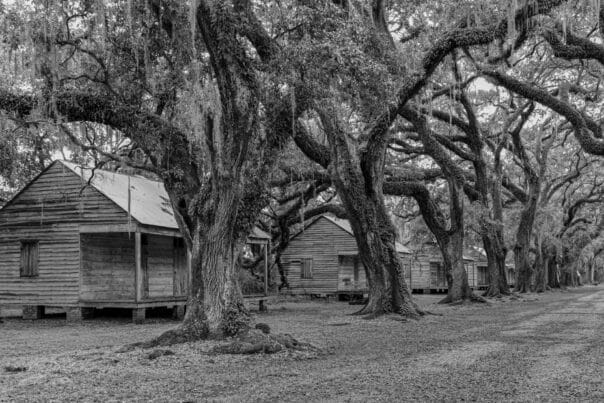
Colonial society offered opportunity but was clearly divided by wealth and social standing. Most families lived modestly, their lives shaped by faith, family, and seasonal work. In northern towns, artisans crafted silver and fine furniture; in the southern colonies, enslaved Africans endured grueling labor on vast plantations. Women managed households and farms in their husbands’ absence but held few legal rights.
By mid-century, many colonists enjoyed higher living standards than their European counterparts: more land, more food, and a growing sense of independence. Still, they considered themselves proud subjects of the British Crown.
Clouds on the Horizon: The French and Indian War (1754–1763)
The colonies’ first encounter with large-scale warfare came during the French and Indian War, the North American front of the Seven Years’ War between Britain and France.
A young George Washington, just twenty-two, led a Virginia militia into the contested Ohio River Valley. Eager and ambitious, he stumbled into a chain of misjudgments that sparked open conflict. His makeshift Fort Necessityfell after a brief siege, forcing his surrender — a humbling experience for the future commander of the Continental Army. Yet Washington learned from failure: the importance of discipline, clear communication, and respect for terrain. Those lessons would one day shape his success against Britain’s seasoned troops.
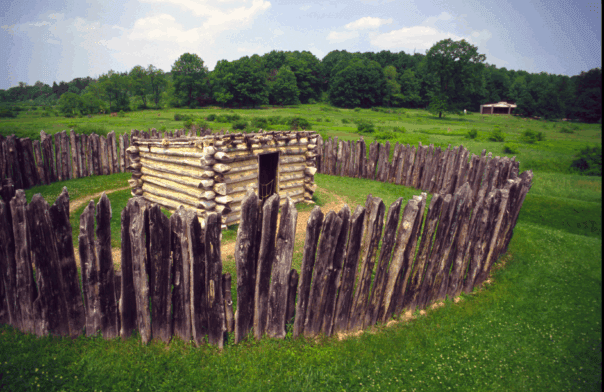
Reconstructed log-palisade at Fort Necessity National Battlefield, Pennsylvania — site of George Washington’s defeat on July 3 1754, the opening engagement of the French and Indian War.
Britain ultimately triumphed, but victory came with enormous debt. To recover costs, Parliament turned to the colonies for revenue — a decision that would light the first sparks of rebellion.
1764 – The Sugar Act Parliament imposed the first tax aimed at raising revenue directly from the colonies. Merchant James Otis denounced it, declaring, “Taxation without representation is tyranny.”
1765 – The Stamp Act A tax on paper goods — from newspapers to legal documents — ignited boycotts and riots. Patrick Henry and Samuel Adams led protests, while the Sons of Liberty rallied crowds in Boston and beyond.
1766 – The Declaratory Act After repealing the Stamp Act, Parliament asserted its full right to legislate for the colonies “in all cases whatsoever.”
1767 – The Townshend Acts Taxes on glass, lead, paint, and tea revived boycotts. Colonial women, calling themselves Daughters of Liberty, wove homespun cloth to resist imported goods.
Across the colonies, taverns buzzed with debate, pamphlets circulated, and a shared identity began to form. The scattered provinces were learning to speak with one voice.
A Shared Awakening
By 1765, the colonies had evolved from fragile outposts to a string of prosperous societies spanning a thousand miles of coast. They differed in culture and economy but were increasingly united in spirit. The colonists still toasted the King, yet they began asking a dangerous question: If we can govern ourselves here, why not entirely?
To step inside this turning point in history, watch the original movie that has been seen by millions of visitors over the years. Williamsburg: The Story of a Patriot is a landmark film created by Colonial Williamsburg in 1957. Filmed on location and starring a young Jack Lord (way before Hawaii Five-O) as a Virginia delegate torn between loyalty and liberty, it brings the debates, ideals, and tensions of the 1770s vividly to life. I know the film is vintage quality, but I still love it. Runs about 30 minutes. Watch the full film here → click on the red letters.
Expanding Your Knowledge of Early America Leaders
⚜️ Do You Know? — William Penn (1644 – 1718)
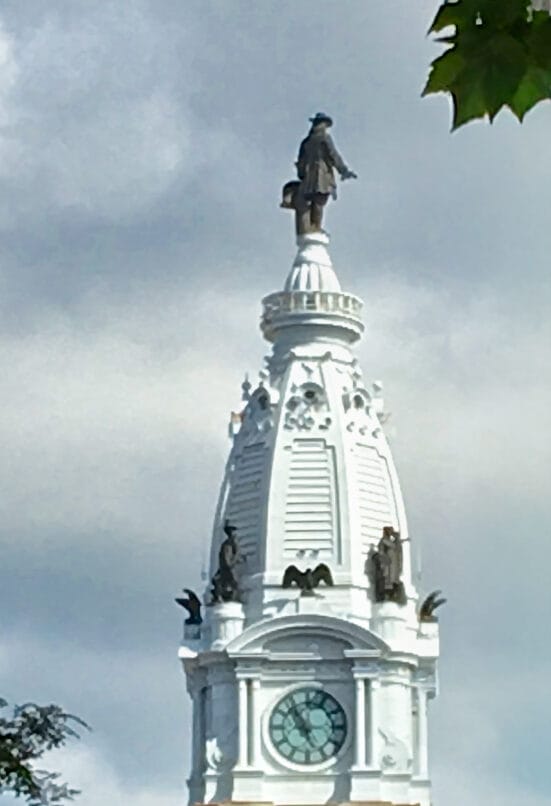
Do you know that the statue on top of Philadelphia’s City Hall is William Penn, not Ben Franklin?
Born into privilege in London, William Penn was the well-educated son of Admiral Sir William Penn, a loyal servant of King Charles II. Yet instead of following his father’s path of military prestige and royal favor, the younger Penn shocked society by joining the Society of Friends, better known as the Quakers — a group despised by England’s establishment for their radical belief in equality, pacifism, and the “inner light” within every soul.
Penn’s faith often brought him persecution and imprisonment, but it also shaped his vision for a new kind of society across the Atlantic. In 1681, the Crown granted him a vast tract of American land, a repayment of a royal debt owed to his father, and Penn named it Pennsylvania, meaning “Penn’s Woods.”
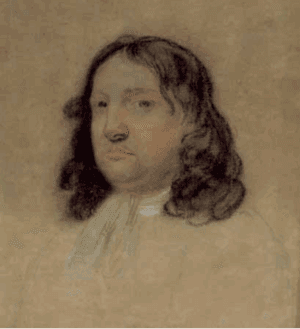
William Penn, founder of Pennsylvania, c. 1695 — chalk portrait by Francis Place. Public Domain, Historical Society of Pennsylvania.
Building the City of Brotherly Love
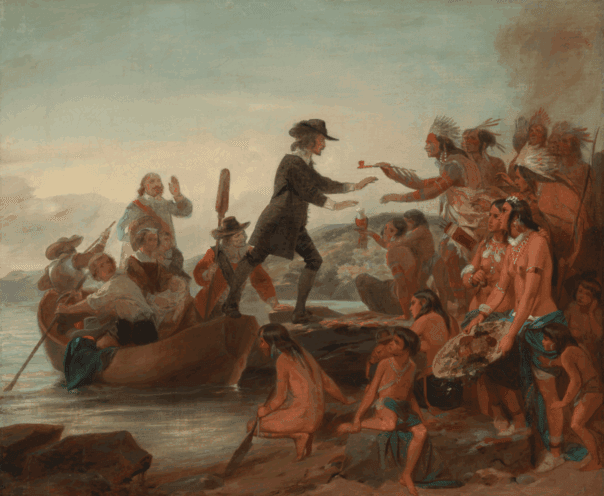
Penn sought to create a “holy experiment,” a haven where religious freedom, representative government, and fair laws could coexist. He personally designed Philadelphia — the “City of Brotherly Love” — as a “green country town” of broad streets and public squares to encourage health, harmony, and community. His treaties with Native American tribes were grounded in fairness rather than conquest, an extraordinary approach for his time.
A Legacy That Endured
Under his guidance, Pennsylvania quickly became one of the most prosperous and tolerant colonies in North America, attracting settlers of many faiths. By the mid-1700s, Philadelphia had grown into a thriving hub of commerce, ideas, and innovation — home to thinkers, printers, and reformers like Benjamin Franklin who would help light the spark of revolution.
Penn’s ideals of liberty of conscience and just government echoed through the colonies, influencing both the Declaration of Independence and the U.S. Constitution long after his death.
⚜️ Do You Know? — Patrick Henry (1736 – 1799)
Patrick Henry, 1815 — oil portrait by Thomas Sully. Public Domain, U.S. Senate Collection.
Finding His Voice
Patrick Henry grew up on Virginia’s frontier, where self-reliance and honesty shaped his character. Though he first failed as a farmer and merchant, his natural gift for persuasion soon revealed itself in the courtroom. In 1763, as a young and relatively unknown lawyer, Henry argued the Parson’s Cause, defending colonial taxpayers against unjust British interference, and his fiery words captured the colony’s imagination.
The Voice of the Revolution
Just two years later, during the Stamp Act crisis, Henry burst onto the political stage with a speech that electrified the Virginia House of Burgesses. Drawing daring parallels between King George III and tyrants of the past, he declared, “Caesar had his Brutus, Charles the First his Cromwell, and George the Third may profit by their example.” Gasps filled the chamber; some shouted “Treason!” but Henry stood undaunted.
When tensions with Britain reached a breaking point in 1775, Henry delivered his most famous oration at St. John’s Church in Richmond: “I know not what course others may take, but as for me, give me liberty, or give me death!”
Champion of Liberty
That declaration rallied Virginians to prepare for war and sealed Henry’s place in history as The Voice of the Revolution.He later served five terms as Virginia’s first post-colonial governor and remained a steadfast defender of individual liberty, warning against the dangers of centralized power.
I grew up in Virginia, and don’t recall learning the story of Roger Williams . However in 2024, I made a visit to Providence, Rhode Island and heard about this often forgotten patriot.
A Radical Voice of Conscience
Born around 1603 in London, Roger Williams grew up during a time of fierce religious conflict. Trained at Cambridge University, he became a gifted linguist and theologian. Though ordained in the Church of England, Williams embraced Puritan ideals, seeking to purify worship and return to Scripture. But even among Puritans, he stood apart. He insisted that true faith must come freely, not by compulsion — a belief that would shape the future of American liberty.
Banishment and New Beginnings
Williams emigrated to Massachusetts Bay Colony in 1631, hoping for a society built on spiritual integrity. Instead, he found the colony’s leaders enforcing religious uniformity. His sermons denounced civil interference in these matters and called for fair dealings with Native Americans, and alarmed authorities. In 1635, the General Court banished him for spreading “new and dangerous opinions.”
In the winter of 1636, he fled into the snowy wilderness, guided and sheltered by friendly Wampanoag and Narragansett tribes.
Founding Providence and a Legacy of Liberty
Williams settled along Narragansett Bay, purchased land, and named the settlement Providence, in gratitude for “God’s merciful providence,” and welcomed all who suffered “for conscience’ sake.”
In 1644, he secured a royal charter uniting Providence, Portsmouth, Newport, and Warwick as the Colony of Rhode Island and Providence Plantations, guaranteeing complete religious freedom and separation of church and state — a revolutionary idea that would not be fully realized in America until the First Amendment.
Beyond his political courage, Williams was a man of empathy and intellect. He mastered Native American languages and published A Key into the Language of America (1643), the first ethnographic study of Indigenous peoples in North America. He sought peaceful coexistence long before it became policy.
Roger Williams died in Providence in 1683, but his principles endured, influencing Jefferson, Madison, and generations of Americans who valued freedom of conscience. His colony, born from exile, became the model for a nation built on liberty of thought and belief — a reminder that sometimes the truest patriots are those who dare to dissent.
Looking Ahead
Next in the Bylandersea America 250 Series 🕯️ “The Spark: The Boston Protests and a World on the Edge of Revolution.”
I have no room in this post to include travel details, but stay tuned for future Bylandersea America 250 stories featuring Fredericksburg, Virginia, exploring George Washington’s Boyhood Home and other family sites, as well as visits to Patrick Henry’s homes, Scotchtown and Red Hill, in Virginia.