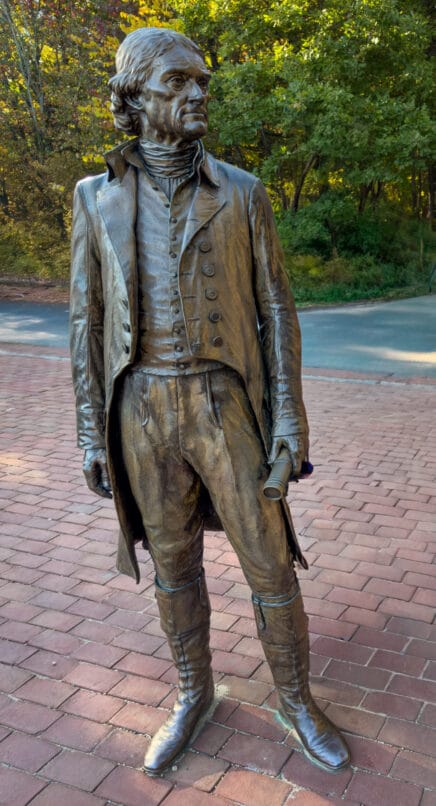
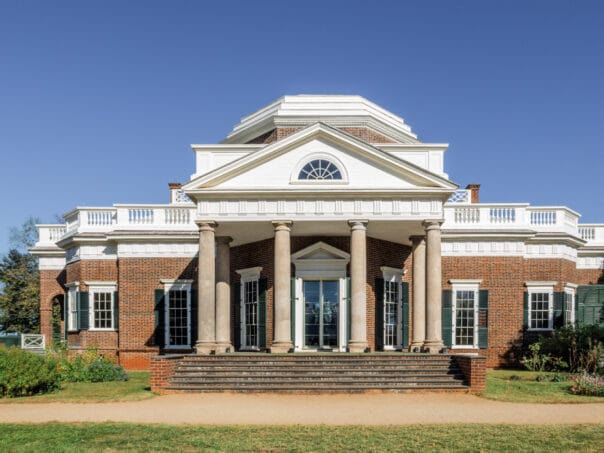
When Thomas Jefferson died on July 4, 1826, exactly fifty years after the signing of the United States Declaration of Independence, he left behind one of the most celebrated homes in America. Perched atop a small mountain outside Charlottesville, Monticello stood as a physical expression of Jefferson’s intellect and imagination. Inspired by classical architecture and the ideals of the Enlightenment, the house represented his lifelong interests in design, agriculture, science, and innovation.
Yet Jefferson also died deeply in debt.
Years of lavish building projects, extensive book purchases, and declining agricultural profits left his estate financially burdened. His beloved Monticello, which he had spent more than forty years designing and redesigning, could not remain in family hands. Jefferson’s daughter Martha and other heirs faced an agonizing reality: they lacked the resources to preserve the estate that symbolized their father’s life and accomplishments.
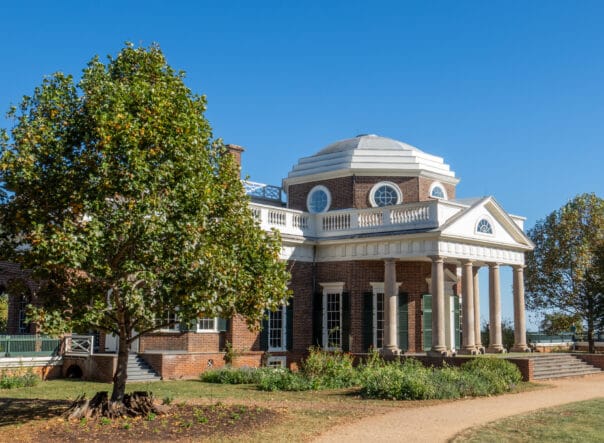
From Dream Home to Auction Block
In 1827, Monticello and much of its contents and more than 100 enslaved men and women were sold at public auction. Furniture, books, scientific instruments, and household objects were scattered. (Can you imagine being at that auction?) Jefferson’s vast library had already been sold to Congress years earlier after the Burning of Washington, but now many of the remaining possessions were dispersed as well.
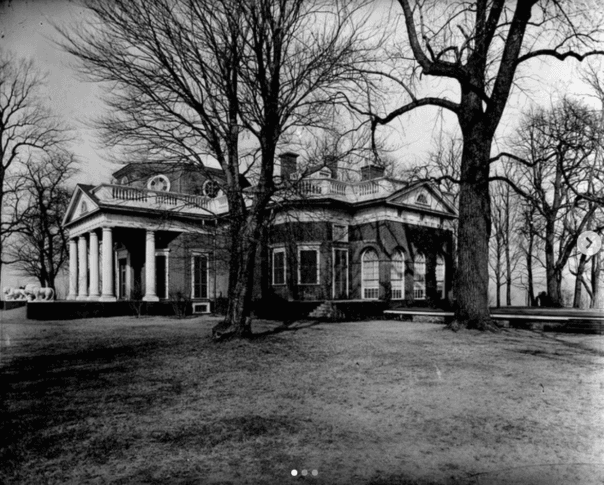
The house itself passed through several owners and gradually deteriorated. Roof leaks, neglect, and financial uncertainty threatened the survival of one of the nation’s most important landmarks. By the early 1830s, the future of Monticello looked bleak.
Its rescue came from an unexpected and deeply devoted admirer.
Uriah P. Levy and Jefferson’s Ideals
In 1834, Uriah P. Levy purchased Monticello for $2,700.
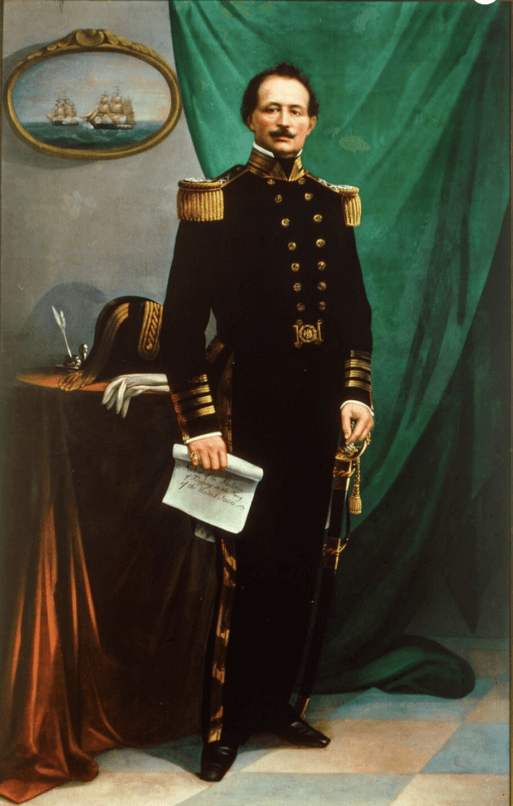
Levy was a remarkable, yet mostly unknown, figure in American history. Born in 1792 to a Jewish family in Philadelphia, he became the first Jewish commodore in the United States Navy. Throughout his career, he faced discrimination because of his faith, yet rose through perseverance and talent.
Levy admired Jefferson above all other American statesmen, not primarily for his presidency, but for his authorship of the Virginia Statute for Religious Freedom. The statute established the principle that government should neither impose religion nor discriminate based on religious belief. To Levy, living in an era when antisemitism remained common, Jefferson’s defense of religious liberty held profound personal significance.
Purchasing Monticello was an act of patriotism and gratitude.
Levy described the estate as “a shrine” to Jefferson’s ideals and undertook substantial repairs. He stabilized the structure, furnished rooms, and went to great lengths to restore the house to its former glory. He put in working order the seven-day clock that had been made to Jefferson’s specifications in 1793, and also restored the body of a two-wheel carriage that tradition, if not fact, claims to be the one Jefferson rode to Philadelphia in 1775 for the Continental Congress. He protected the property from further decline. At a time when historic preservation was almost unknown in the United States, Levy recognized that Monticello deserved to be saved for future generations.
Civil War and Family Disputes
When Uriah Levy died in 1862, Monticello became entangled in a lengthy legal dispute among his heirs. The conflict lasted for years and coincided with the turmoil of the American Civil War.
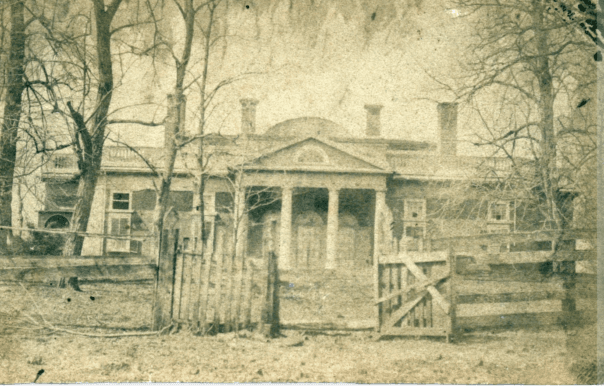
During this period, maintenance suffered and the house again declined. Paint peeled, structural problems worsened, and the estate’s future once more became uncertain.
Fortunately, another member of the Levy family stepped forward.
Jefferson Monroe Levy Restores Monticello
Jefferson Monroe Levy, Uriah Levy’s nephew (No, I did not make up that name), acquired sole ownership in 1879. His very name reflected the family’s reverence for Jefferson.
Jefferson Monroe Levy was a successful businessman, attorney, and later a congressman from New York. Recognizing Monticello’s historic importance, he invested a substantial portion of his personal fortune to restore and maintain the property.
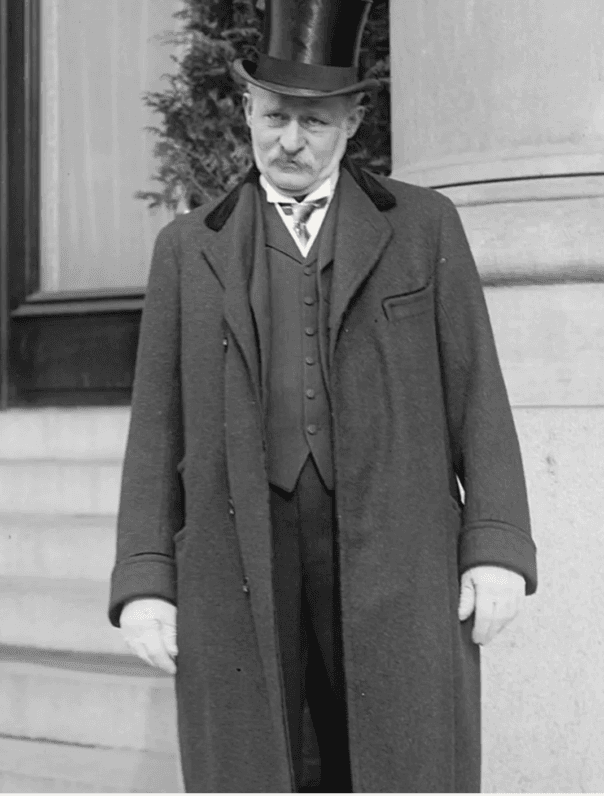
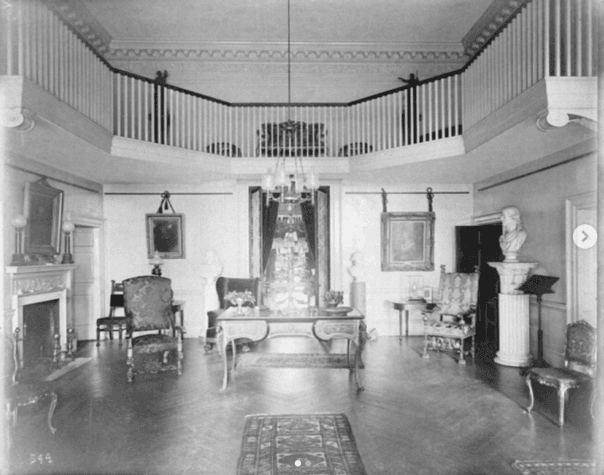
He repaired roofs and foundations, restored interiors, landscaped the grounds, and purchased adjoining acreage to protect the mountain setting. He also welcomed visitors, allowing Americans to experience Jefferson’s home decades before it became a formal museum.
Although some critics argued that the federal government should own Monticello, Jefferson Monroe Levy resisted repeated efforts to force a sale. Without his financial commitment and determination, the house might not have survived intact into the twentieth century.
The Thomas Jefferson Foundation
In 1923, the Thomas Jefferson Foundation purchased Monticello from Jefferson Monroe Levy for $500,000.
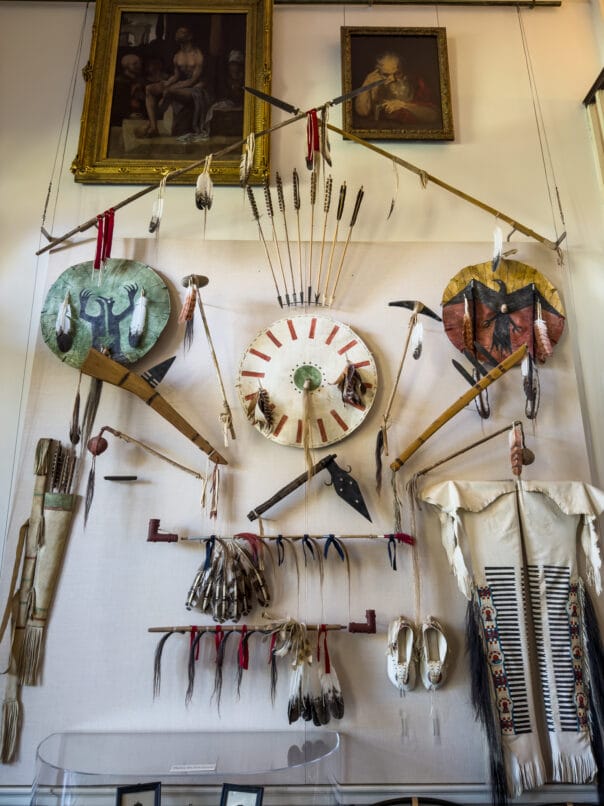
The newly formed nonprofit transformed the estate into a museum and educational institution dedicated to preserving Jefferson’s home and legacy. Since then, the foundation has conducted extensive architectural research, archaeological excavations, and conservation work to restore the house as accurately as possible.
Today, Monticello is recognized as one of America’s most significant historic sites and a popular tourist attraction. In 1987, it was designated a UNESCO World Heritage Site, an honor shared by only a handful of places in the United States.
Telling the Full Story
Modern interpretation at Monticello continues to evolve. In addition to highlighting Jefferson’s achievements as author of the Declaration of Independence and founder of the University of Virginia, the site now places strong emphasis on the lives of the more than 600 enslaved men, women, and children who lived and worked there over Jefferson’s lifetime.
Restored spaces such as Mulberry Row, reconstructed workshops, and ongoing archaeological discoveries provide visitors with a broader and more honest understanding of the plantation and the people who sustained it.
A Legacy Preserved
Monticello survives today because of extraordinary devotion across generations. Jefferson created the house, but the Levy family ensured that it endured.
Uriah P. Levy saw in Jefferson a champion of religious freedom and acted to save his home when few others cared. Jefferson Monroe Levy devoted decades and significant personal resources to restoring and protecting the estate. The Thomas Jefferson Foundation then carried that mission into the modern era.
Thanks to all their efforts, Monticello remains far more than a beautiful mansion. It is a place where visitors can explore the achievements, contradictions, ideals, and complexities that shaped the American story.