by Debi Lander for Bylandersea America 250
Before sunrise on April 19, 1775, the quiet Massachusetts towns of Lexington and Concord became the setting for the first open battles of the American Revolution. A British mission to seize colonial military supplies turned into the moment when tension and protest shifted into armed conflict. The events of this single morning spread across all thirteen colonies and placed them firmly on the path toward independence.
The Midnight Riders: More Than Paul Revere
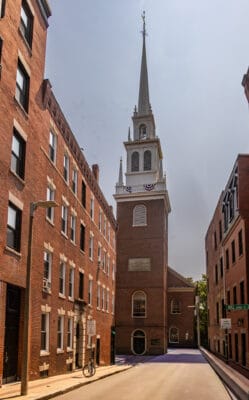
On the night of April 18, 1775, patriot leaders learned the British intended to march from Boston toward Concord. Paul Revere crossed the Charles River by rowboat, mounted a fast horse, and began spreading the alarm. Two lanterns briefly displayed in Boston’s Old North Church signaled that the British would advance by water.
Revere did not ride alone.
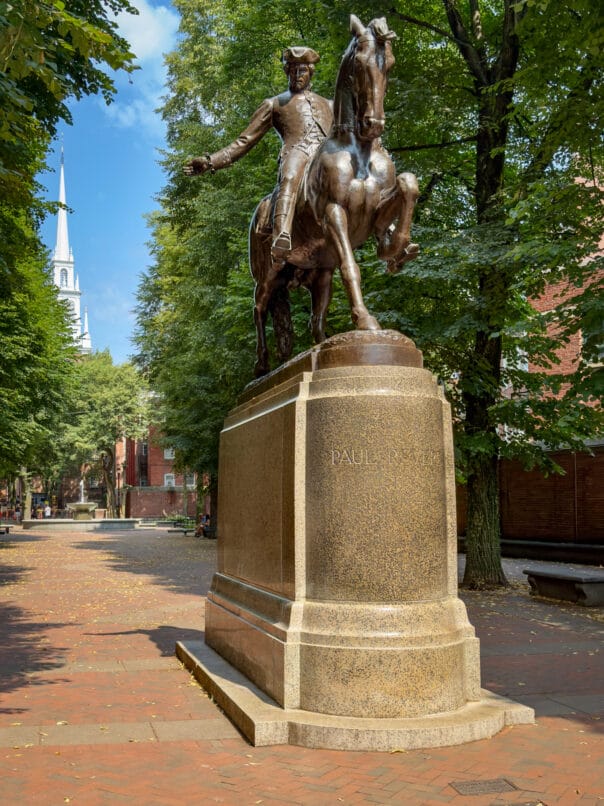
William Dawes left Boston earlier that evening using the longer land route through Roxbury. Dr. Samuel Prescott joined Revere and Dawes near Lexington after returning from a visit with his fiancée. A British patrol stopped the riders, but Prescott managed to escape. He continued to Concord and became the only rider who completed the full warning, which allowed militia units across Middlesex County to prepare before dawn.
In 1860, Henry Wadsworth Longfellow wrote the now-famous poem “Paul Revere’s Ride.” Most Americans recognize its opening line: “Listen, my children, and you shall hear of the midnight ride of Paul Revere.” Longfellow recounts how two lanterns hung in the Old North Church belfry would signal a secret message if the British were coming—one if by land, and two if by sea.
Since my last name is Lander, I’ve played on that memorable phrase by naming my website ByLanderSea. Thank you, Mr. Longfellow, for the inspiration!
Lexington Green: A Tense Early Morning
Just before sunrise, seventy local militia gathered on Lexington Green under Captain John Parker. These men were farmers, shopkeepers, and craftsmen who had answered the alarm.
Roughly 700 British regulars approached the green. Both sides faced each other in the cool morning haze. Captain Parker instructed his men not to fire unless fired upon. The British commander ordered the militia to disperse.
A single shot suddenly rang out. No one knows who pulled the trigger.
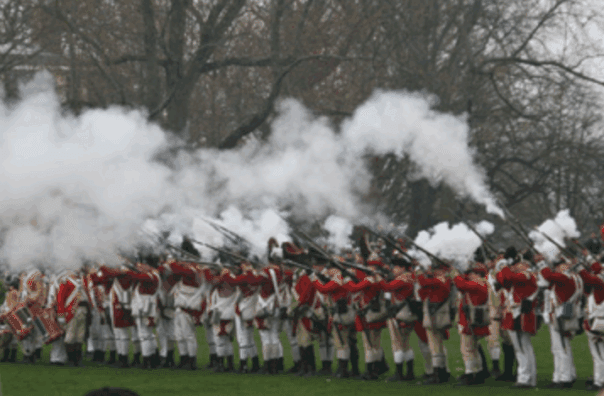
British volleys followed. Eight colonists were killed and ten wounded. The encounter was brief, yet its significance was enormous. Blood had been shed, and both sides recognized that the conflict had entered a new stage.
Concord’s North Bridge: The Militia Stands Firm
By the time British troops reached Concord, militia from nearby towns had gathered in larger numbers. Smoke rising from the village, caused by the burning of hidden supplies, led many colonists to believe the town was under attack.
Militia forces advanced toward North Bridge. British soldiers fired first. The militia returned fire and forced the British detachment to withdraw. This marked the first time colonial forces drove British regulars into retreat. Ralph Waldo Emerson later described the moment as the “shot heard round the world.”

The Long, Difficult Return to Boston
As the British column began to march back to Boston, the surrounding countryside responded. Militia companies gathered along the road and attacked from behind stone walls, fences, trees, and farm buildings. What began as a planned military expedition turned into a running battle that stretched nearly eighteen miles. The British suffered close to 300 casualties before reaching safety in Boston. The colonists had demonstrated their willingness to fight and their ability to stand against professional soldiers.

My Visit to the Lexington Reenactment in 2009
In 2009, I arrived on Lexington Green long before sunrise to witness the annual reenactment of the first shots of the Revolution. The sky was still dark and the crowd whisper-quiet. As the light grew, costumed militia took their positions on the grass while British regulars in bright red coats marched toward them.
When the muskets fired and smoke drifted across the green, the moment felt powerful and close. Young female reenactors dressed as colonial women ran forward to help the wounded after the brief clash. Although it was a reenactment, standing on the very ground where the Revolution began created a strong emotional connection. I imagined the fear, confusion, and bravery felt on that same spot the morning of April 19, 1775.
I also noticed all the old stone fences still standing along the road as I drove to and from Lexington. I regret not visiting the National Park site at North Bridge and Concord, but hopefully will someday. If interested, please read the story I wrote in 2009 about the visit: https://bylandersea.com/2009/04/a-wake-up-call-the-re-enactment-of-the-battle-of-lexington/

Why Lexington and Concord Matter for America 250
The battles of Lexington and Concord mark the true beginning of the American Revolution. When news of the fighting reached the other colonies, attitudes changed quickly. Virginia experienced its own crisis the next day during the Gunpowder Incident in Williamsburg- please read next week for that story.
Once colonists realized that British soldiers had fired on Massachusetts militia, the conflict could no longer be dismissed. These small towns became symbols of the determination to defend rights and liberty.
Tips for Visiting Today
• Attend the dawn reenactment on Patriots’ Day. Plan to arrive very early.
• Walk Battle Road in Minute Man National Historical Park. This trail follows the route of the running battle.
• Visit the North Bridge and take time to appreciate the landscape and the memorials.
• Explore the museums and historic buildings in both Lexington and Concord.
Visit Old North Church in Boston, a stop along the Freedom Trail, and Paul Revere’s House.